
Is the F-35’s Cockpit Too High Tech For Pilots? Operators Struggle With 'Useless' Advanced Features
Military Watch Magazine Editorial Staff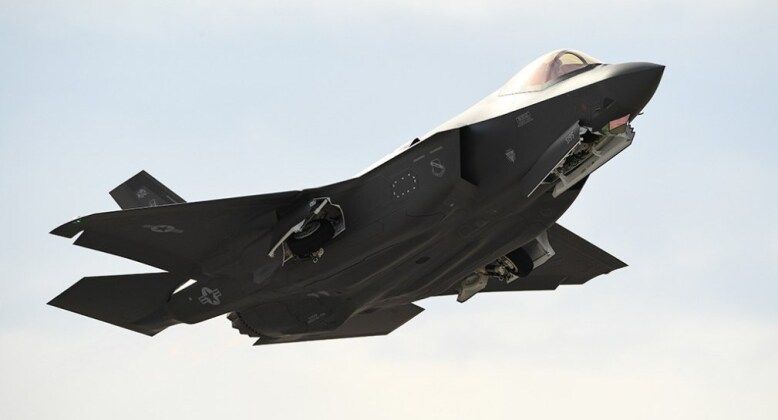
F-35 Fifth Generation Fighter
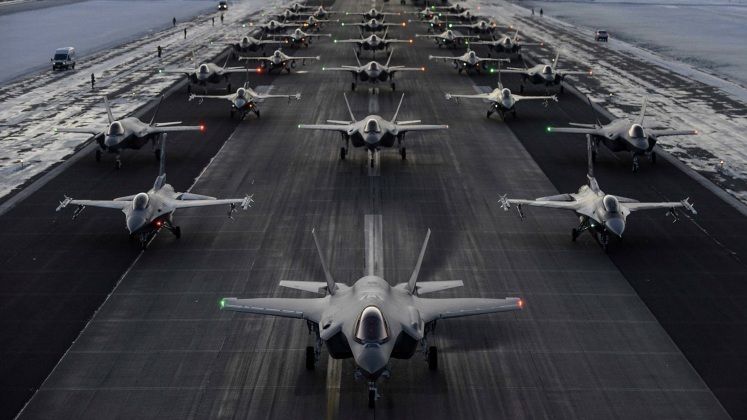
The F-35 fifth generation fighter is the most sophisticated manned combat aircraft in production in the Western world today, and the only Western fighter in production with fifth generation capabilities. The single engine aircraft was designed as a lighter and cheaper counterpart to the F-22 Raptor air superiority platform, and although the F-35 has less thrust, is less stealthy and has a far inferior flight performance, it benefits from having been developed over a decade later and making use of many much more advanced technologies particularly in terms of its avionics and electronic warfare systems. The fighter's cockpit displays and computers are accordingly among the most advanced in the world - rivalled among fifth generation fighters only by China’s J-20 platform. Despite this, an interview with a pilot conducted by American aviation magazine Hush Kit showed that many have struggle with the fighter’s interfaces and cockpit displays. These have several disadvantages relative to those on tried and tested fighter designs such as the F-16 and F-18 - the aircraft the F-35 was primarily designed to replace.
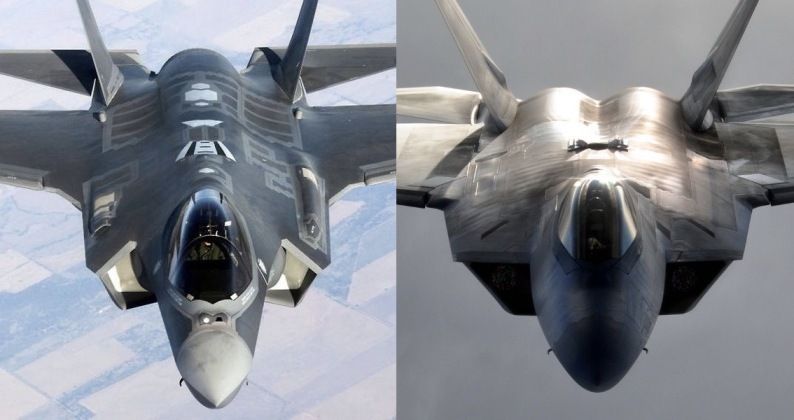
The F-35’s cockpit houses multiple screens allowing pilots to access tremendous amounts of information in battle as the fighter shares data with satellites, surveillance drones and other fighter aircraft - although notably not with the F-22 which lacks modern data links. Despite this, use of touch screens rather than switches has been cause for a number of issues. The ‘click’ of switches confirming they were successfully flipped has no equivalent on a touchscreen, and as users of touchscreen tablets and smartphones will know it is far from uncommon for a command to be coven only for nothing to happen for several seconds. The pilots interviewed anonymously stated that around 20 percent of the time the F-35’s touch screens failed to give results. He stated to this effect:
“At present I am pressing the wrong part of the screen about 20 [percent] of the time in flight due to either mis-identification, or more commonly by my finger getting jostled around in turbulence or under G. One of the biggest drawbacks is that you can’t brace your hand against anything whilst typing—think how much easier it is to type on a smartphone with your thumbs versus trying to stab at a virtual keyboard on a large tablet with just your index finger.”
Despite its advantages, difficulties using a touch screen system have the potential to reduce a pilot’s reaction time and can potentially be very dangerous in combat. A further issue the pilot noted with the F-35’s interface was the $400,000 ‘magic helmet,’ which replaced the heads up displays used on older aircraft such as the F-22 and F-16. The pilot expressed the belief that the older displays were superior as they could show information more widely rather than shrinking it to fit the helmet's field of view. He further criticised its voice recognition system which was apparently useless, stating:
“Voice input is another feature of the jet, but not one I have found to be useful. It may work well on the ground in a test rig, but under G in flight it’s not something I have found to work consistently enough to rely on. I haven’t met anyone who uses it.”
It is highly possible that many of these issues will be fixed as the F-35 continues to be improved and updated, with recent Block 4 updates seriously improving combat performance and competing power. Should pilots consistently provide similar feedback regarding the aforementioned issues, it is likely that future variants of the F-35 will be considerably superior and overcome at leats some off the current interfacing problems.
