Iranian Underground Missile Fortress Complex Unveiled in New Footage
Military Watch Magazine Editorial Staff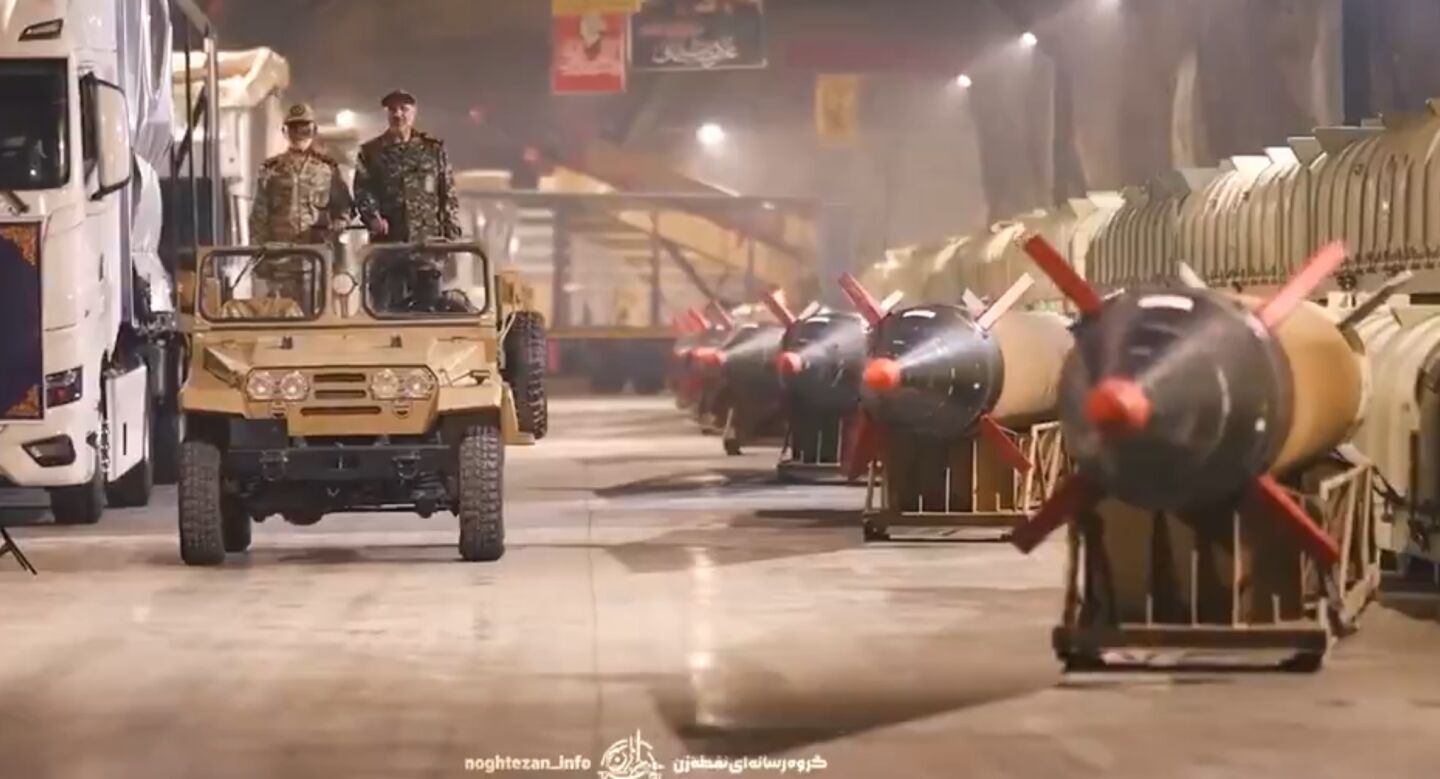
Iranian Officers Inspect Underground Missile Facility
New footage of an underground missile complex operated by the Iranian Islamic Revolutionary Guard Corps (IRGC) has provided new insight into the kinds of fortifications that are key to allowing Iran to sustain its long war with the United States, which has been ongoing since Washington initiated hostilities on February 28. The footage has shown an extensive arsenal of ballistic missiles, cruise missiles and associated launch vehicles, highlighting the limitations of U.S.-led efforts to neutralise Iranian strike capabilities. Major General Ali Abdollahi, chief of staff of Iran’s armed forces, and Brigadier General Seyed Majid Mousavi, commander of the IRGC Aerospace Force, were seen touring the facility and inspecting the armaments stored there. The unveiling comes amid renewed tensions with Washington and follows Iranian claims that missile production is increasingly being relocated to underground installations to protect the country’s arsenal and sustain manufacturing during wartime.
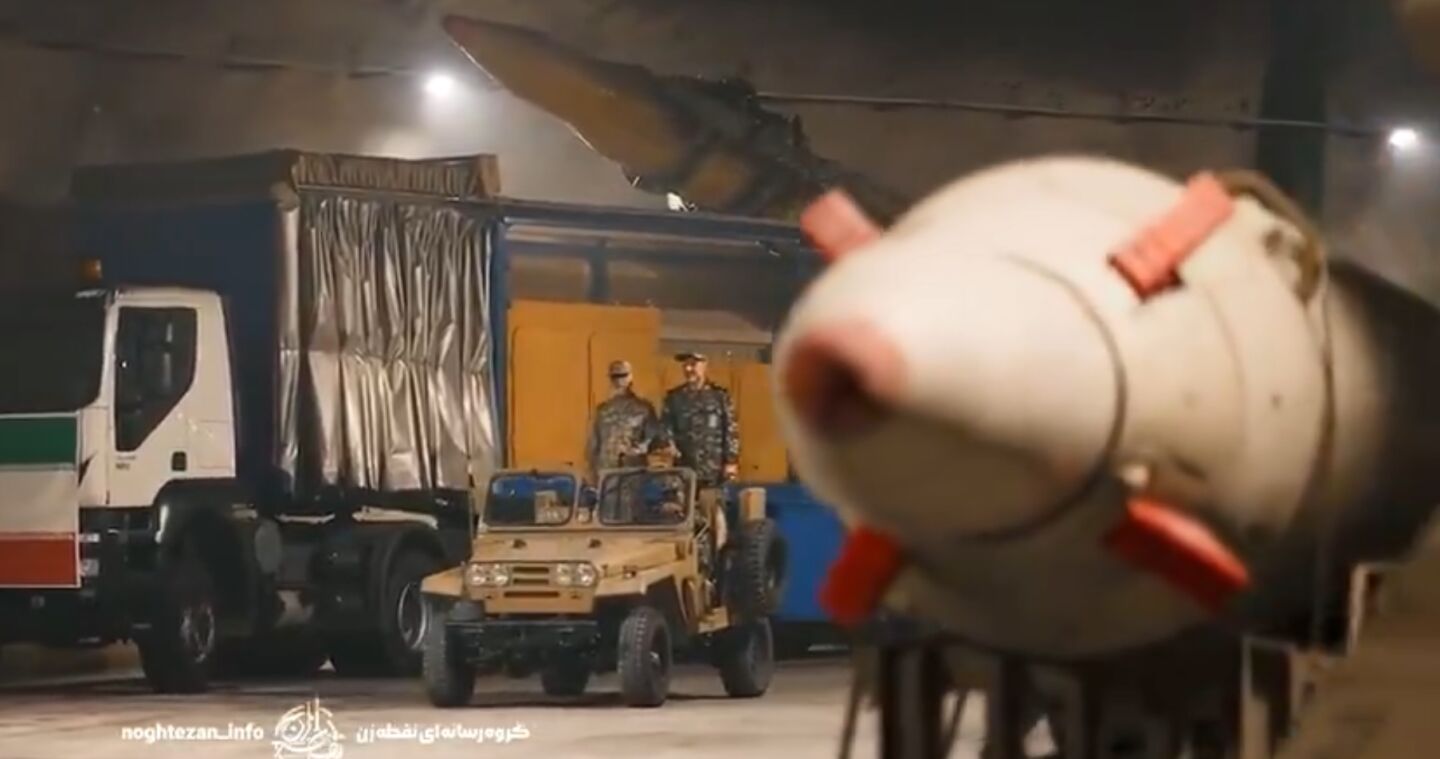
The footage appears to show a substantial collection of medium-range ballistic missiles, with independent observers identifying several weapons as members of Iran’s Fattah and Kheibar Shekan missiles. The Fattah-1, unveiled in 2023, was presented by Tehran as a hypersonic missile capable of manoeuvring during flight, with the missile having first been combat tested against targets in Israel in June 2025 to respond to Israeli air strikes. The images also appear to show separate manoeuvrable re-entry vehicles alongside complete missiles, highlighting the advanced capabilities Iranian missiles have to alter their trajectories during the terminal phase of flight. Iran is thought to have first obtained manoeuvrable reentry vehicle technologies from North Korea in the 1990s, with North Korean expertise having also been key to allowing underground fortifications to be constructed across the country.
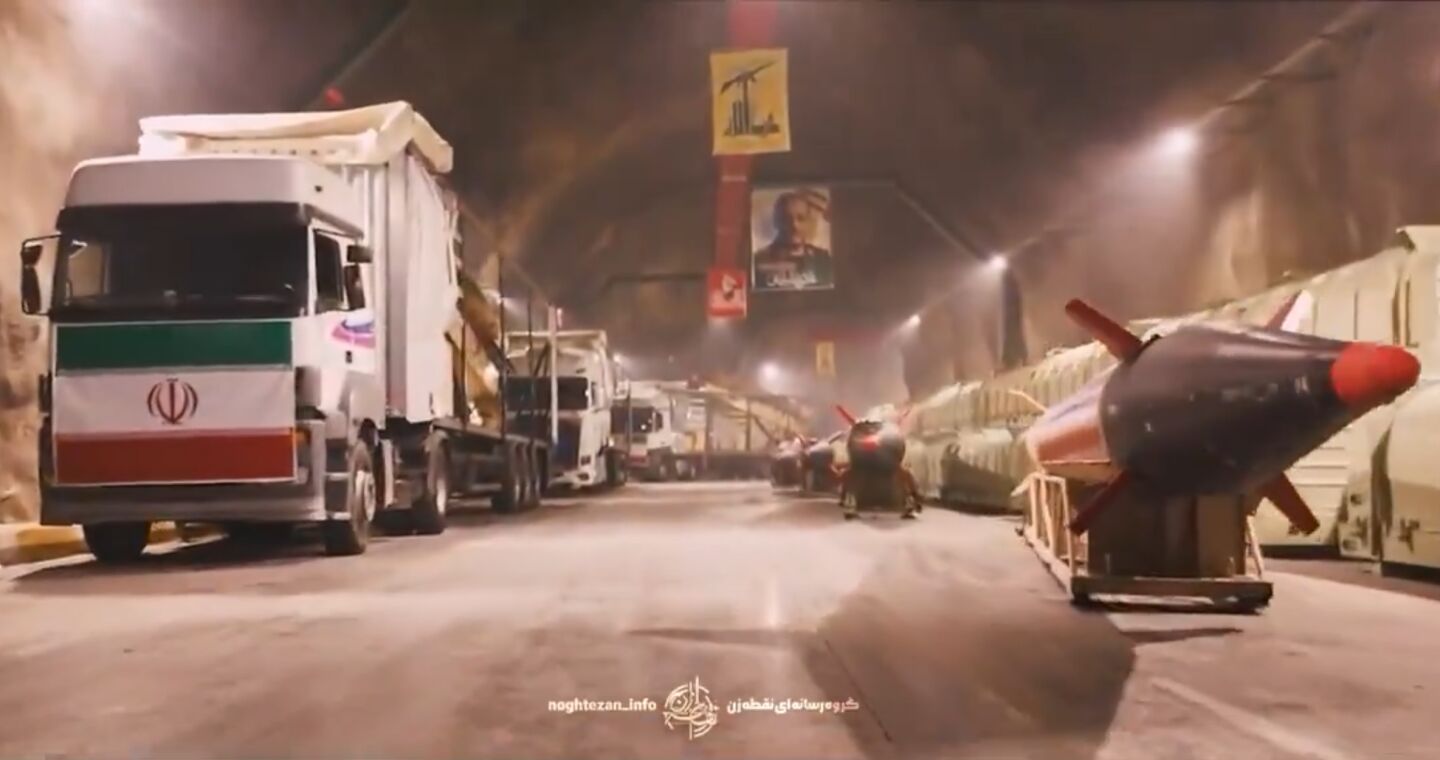
Among the most significant features of the facility is the apparent presence of different re-entry vehicle configurations. Analysts examining the footage noted that some missiles appeared to use conventional conical warheads, while other displayed components were assessed as manoeuvrable re-entry vehicles associated with newer Iranian ballistic missile designs. Such manoeuvrability can complicate interception by making a warhead’s trajectory less predictable than that of a conventional ballistic re-entry vehicle. Its effectiveness, however, depends on the vehicle’s available energy, control authority, guidance accuracy and the performance of the defending interceptor. The complex also shows transporter-erector-launchers and other vehicles used to support missile operations, with these mobile launchers relied on heavily to complicate an adversary’s efforts to locate and destroy missile forces before they can fire.
Iran’s underground missile network has been developed over several decades to protect weapons from air attack and preserve the ability to launch retaliatory strikes during a prolonged conflict. These installations, commonly described by Iranian officials as missile cities, can incorporate storage tunnels, transport routes and launch-support infrastructure beneath the surface. Their depth and construction make them extremely challenging to destroy through conventional airstrikes, particularly when entrances and ventilation systems are dispersed or reinforced. United States intelligence sources speaking to The New York Times in May confirmed that after three months of high intensity hostilities, Iran had retained approximately 70 percent of its missile arsenal, and had successfully restored operational access to 30 out of 33 missile facilities along the Strait of Hormuz, or 91 percent, and approximately 90 percent of underground storage facilities and launch pads, highlighting the difficulties U.S. forces had in targeting them.