
Iranian Missile Force Commander Reveals Reason For Prioritising Ballistic Missile Buildup Over Fighter Development
Military Watch Magazine Editorial Staff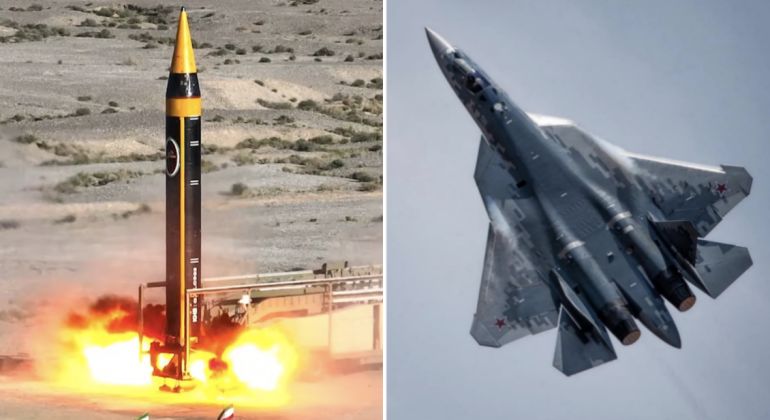
Iranian Kheibar Ballistic Missile (left) and Su-57 Fighter
Since the outbreak of open hostilities between Iranian forces, and the United States and Israel, in April 2024, followed by multiple subsequent clashes over the following years, the Iranian ballistic missile arsenal has played an indisputably central role in allowing the country to sustain its defences and limit its adversaries’ escalation through deterrence. The arsenal has been outstanding both for its sheer scale, as well as for the sophistication of many of the missile types in use, including multi-warhead missiles, and missiles with manoeuvring reentry vehicles and hypersonic glide vehicles. The advanced state of the country’s missile forces has contrasted sharply with the state of the large majority of the Iranian Armed Forces, including its armoured units, artillery, fighters fleet, and surface navy, reflecting a strong prioritisation of investment. Commander of the Iranian Islamic Revolutionary Guard Corps Aerospace Forces Amir Ali Hajizadeh, who was killed in action by Israeli forces on June 13, 2025, provided insight into the decision in a recently circulated interview which appears to have been given shortly before his death.
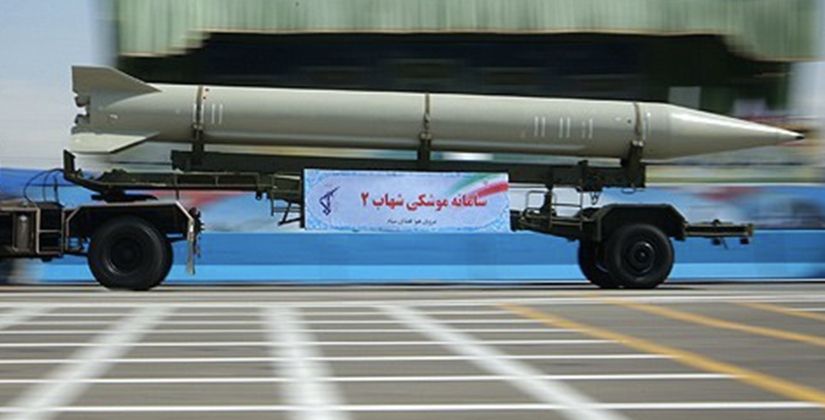
Elaborating on the origins of the Iranian missile buildup in the 1980s, Brigadier General Hajizadeh observed: “In the field of armaments, during the years after the [Iran-Iraq] war, Hazrat Agha [Supreme Leader Ali Khamenei] encouraged self-sufficiency, indigenisation, and standing on our own feet, but this is just one issue. But the question of which path to take, which weapons to indigenise, and how to do so, is a crucial matter…. we needed to choose the right direction well. For example, over the past thirty years - perhaps starting from 1984 - especially in the missile field, we see this emphasis consistently across different years.” Iran had first procured ballistic missiles from North Korea during the Iran-Iraq War, namely the Hwasong-5 and Hwasong-6, and would go on to cooperate closely with the East Asian state, procuring missiles ‘off the shelf,’ license producing them domestically, and when developing designs indigenously, purchasing a wide range of Korean technologies, components and subsystems. Several thousand North Korean missile experts resided in Iran over several decades to support a wide range of missile programs, as well as to work on other programs including fortifying missile and nuclear facilities deeply underground. Such fortifications have been key to allowing Iran to sustain its missile capabilities despite the U.S. and its strategic partners’ sustained efforts to destroy its arsenals on the ground.
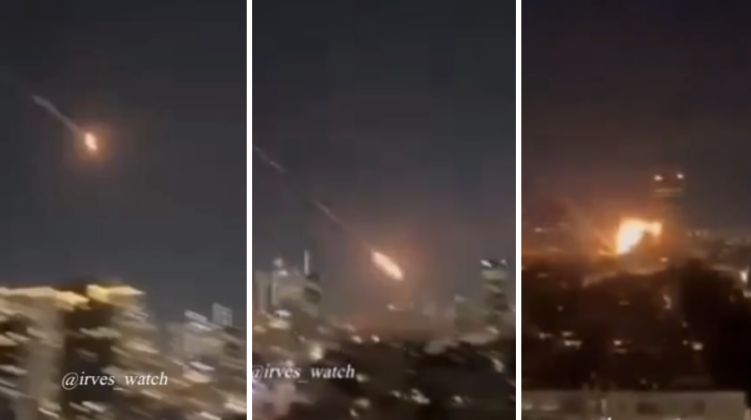
Brigadier General Hajizadeh noted that the investment in ballistic missile capabilities had yielded far more positive results for the country’s security situation than an investment in fighter aircraft would have, observing:
“If we had followed the path taken by the [rest of the] world - where both the East and West primarily pursued offensive weaponry through aircraft development. If we followed the path of the world, who have now reached, for example, fifth generation [fighter aircraft], we would likely still have been struggling at around the third generation. What does that mean? It means that whatever we did, we would always be behind them; with a lag of fifty years. But instead of falling behind the enemy and never being able to catch up, we chose a path that has now placed us face to face with them. Meaning, while we did pursue a threat-based approach in response to the danger we faced, we also developed capabilities that could effectively counter those threats.”
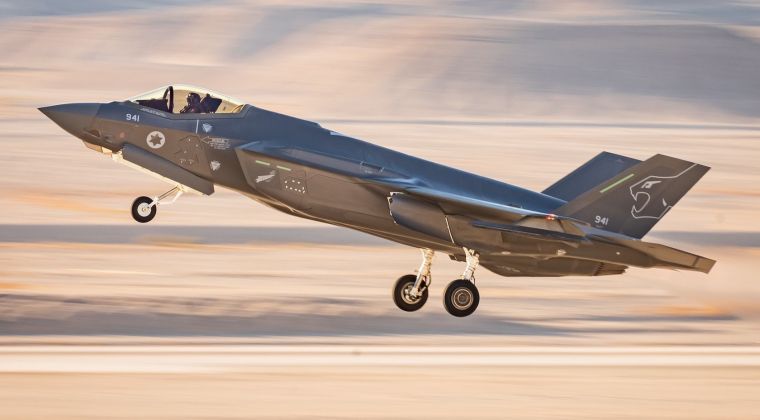
It is notable that only the United States, China and Russia have developed fifth generation fighters, while only the U.S. F-35 and Chinese J-20 and J-35 are considered truly top tier competitors. Iran’s much smaller economy, tech sector, and industrial base would have been far from well positioned to develop a peer level fighter type even to Russia’s Su-57, much less to top tier U.S. and Chinese designs.
Iran’s procurement decisions represent the results of an asymmetric investment strategy, and mirrors similar decisions taken by multiple potential targets for U.S. and Western Bloc attacks after the end of the Cold War. North Korea and Syria’s inability to procure modern combat aircraft from Russia after the Soviet Union disintegrated, due to consistent Western Bloc pressure on Moscow, led both to invest heavily in developing missile deterrents, as well as weapons of mass destruction including in Syria’s case advanced nerve gasses. Russia similarly prioritised investment in its nuclear forces and its tactical ballistic missile arsenal, although it was restricted by the Intermediate Range Nuclear Forces Treaty which prevented it from developing comparable tactical arsenals to those of Iran or North Korea until the late 2010s. The U.S.-led assault on Iran in June 2025, and second assault launch from February 2026, have provided the first large scale test of such asymmetrically oriented forces against major NATO conventional forces.
