
Iran’s Most Capable Fighters Still Operating Despite Months of U.S.-Led Attacks: MiG-29s Continue to Guard Tehran
Military Watch Magazine Editorial Staff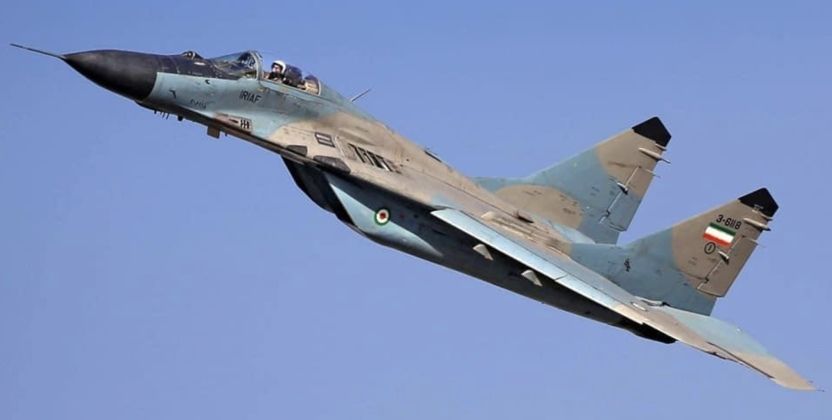
Iranian Air Force MiG-29A
The Iranian Air Force has deployed MiG-29 fighters to escort the aircraft carrying the remains of former Supreme Leader Ayatollah Ali Khamenei to Mashhad, providing one of the clearest public indications that they remain operational following sustained U.S.-led attacks on airbases across the country. Video footage released during the final stages of Khamenei's funeral showed MiG-29s flying close escort alongside the transport aircraft and visibly armed with R-73 infrared-guided air-to-air missiles. The display came after months of speculation regarding the condition of Iran's combat aviation fleet, and following widespread Western claims that the country's fighter force had been almost entirely neutralised.
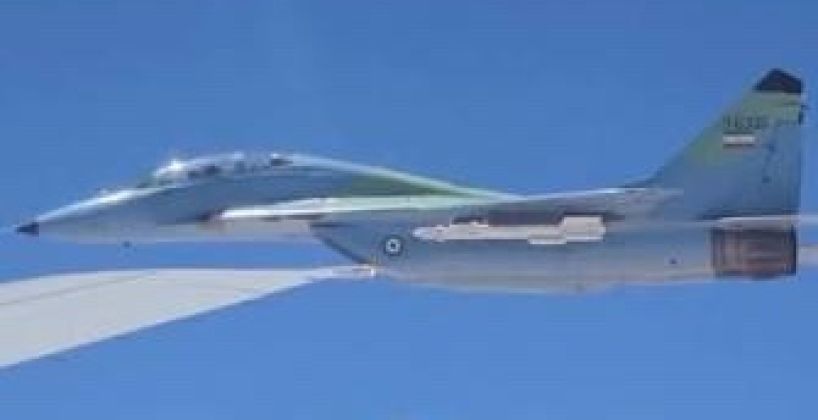
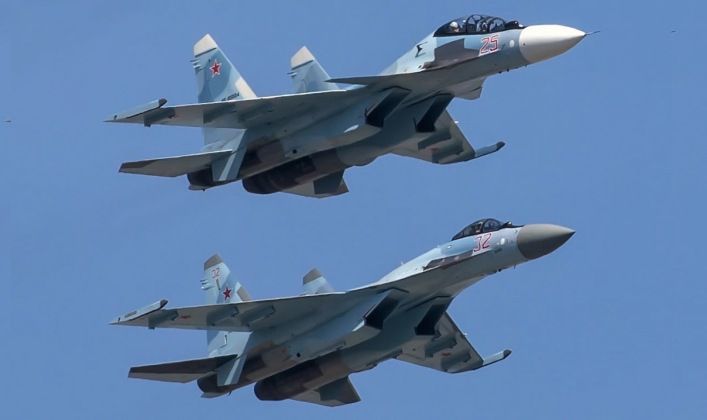
By staging an aerial escort over Mashhad during the final burial ceremonies, the Defence Ministry appears to have sought to demonstrate that its most capable fighter units are still operational. This follows multiple operations by older F-4 and F-5 fighters to achieve wholly unanticipated successes on high risk penetration strike missions attacking targets deep inside the territories of U.S.-aligned states in the Gulf region, which have forced significant reassessments of what the Iranian fleet is capable of. Iran’s ability to preserve its fighter fleet when under sustained assault is particularly significant when considering its confirmed orders for 60 modern Russian Su-30SM2 and Su-35 ‘4+ generation’ fighters and reported orders for Su-57 stealth fighters.
Iran fields only a limited number of MiG-29s, which were procured during a brief period of strong defence ties with Moscow between the death of Supreme Leader Ruhollah Khomeini in 1989, who had opposed such ties, and the USSR’s disintegration in December 1991. During this less than three year period Iran signed multiple major contracts for equipment, while the USSR actively marketed some of its most advanced new systems to the country including landing a MiG-31 long range interceptor in Iran in 1991 to demonstrate its capabilities. Post-Soviet Russia’s close alignment with the Western Bloc for decades, and unwillingness to sell equipment to Western adversaries, however, meant cooperation was until the mid-2020s never expanded beyond the sales of 1988-1991.
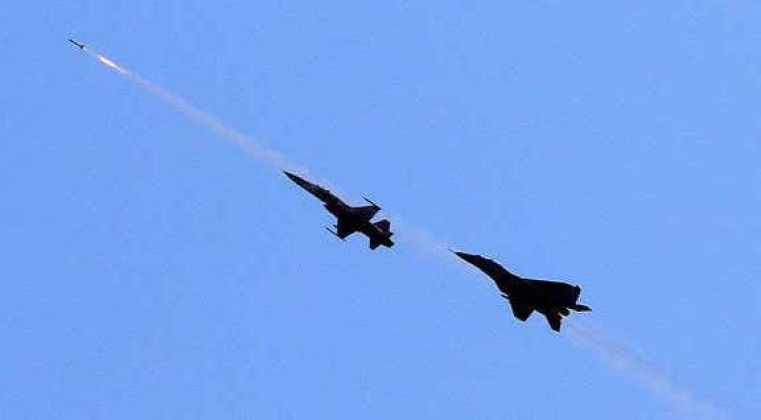
The MiG-29 first joined the Soviet Air Force in 1982, and alongside exports across the Warsaw Pact it was also supplied to Yugoslavia, India, North Korea, Cuba, Iraq and Syria. The aircraft was produced on a very large scale of over 100 aircraft per year, allowing the USSR to quickly fulfil new orders while rapidly replacing its own older frontline fighters with the new aircraft. The MiG-29 was a medium weight fighter from the same weight range as the American F-18 Hornet - larger than an F-16 but smaller than an F-15. The new Soviet jet had a far superior flight performance to any Western fighter, as well as a particularly impressive ability to operate from makeshift airfields which optimised it for distributed operations.
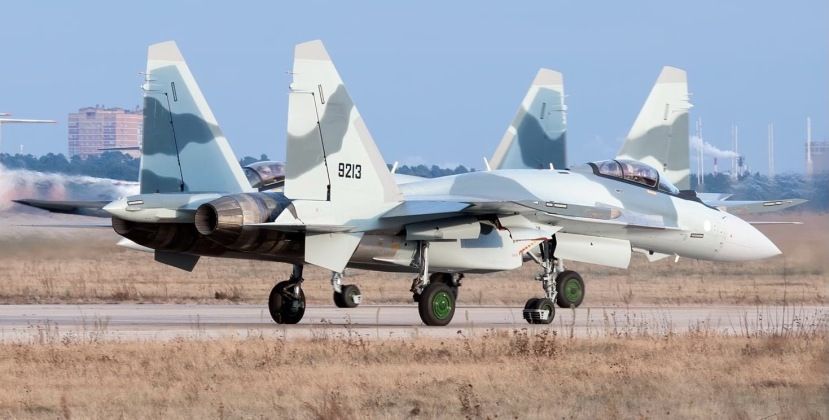
While promising, the MiG-29 program saw production sharply reduced after the USSR disintegrated and modernisation efforts cut back significantly. Iran has notably not modernised its MiG-29s to a modern standard, in contrast to neighbouring India which has brought its fleet up to the advanced MiG-29UPG standard with Russian support. The fighters thus continue to rely on obsolete sensors, data links, and weaponry, and while highly capable in anti-drone roles and against older fighter types such as Israel’s F-15C/Ds, they remain highly limited in their ability to engage modern fighters. Iran’s receipt of modern fighters, most notably Su-35s, is expected to be a game changer for the balance of power in the air, with its demonstrated ability to sustain MiG-29s under intensive attacks indicating that it will be able to do the same for its newer fighters.
