
Iran’s New Long Range Missile Strike Capability Places NATO Bases Across Europe Within Reach
Military Watch Magazine Editorial Staff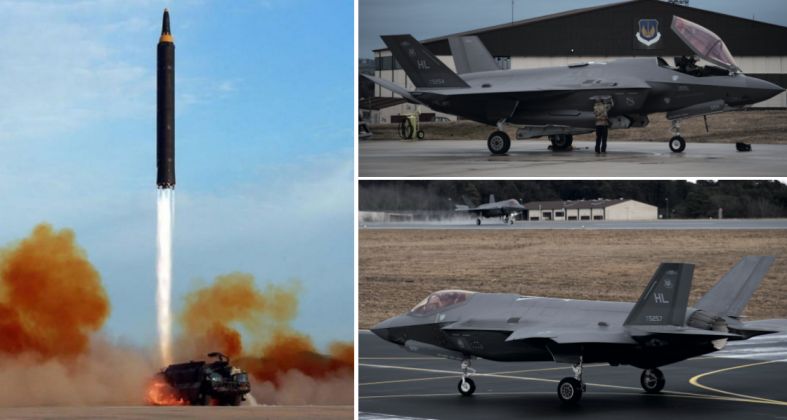
Hwasong-12 IRBM Launch and USAF F-35s at Spangdahlem Air Base, Germany
Israel Defence Forces Chief of Staff Lieutenant General Eyal Zamir has claimed that the Iranian Islamic Revolutionary Guard Corps launched a two-stage ballistic missile toward the joint U.S.-UK military base on Diego Garcia, marking the longest ranged missile launch ever attempted by the country at approximately 4,000 kilometres. The Corps had previously been thought to field missiles with ranges of up to 2,500 kilometres, meaning that if this capability is confirmed, it would transform the service’s ability to retaliate against U.S. and Western attacks by attacking military bases and other strategic targets across Europe. Iran is reported to have denied the launch, raising the possibility that it may be Israeli misinformation intended to draw European states into the war effort. Israeli officials have reportedly cited the reported launch to further press European states to provide support, claiming that Iran now poses a threat to their own territories.
Iran intentionally constrained its missile arsenal to ranges below 2,500 kilometres specifically to reduce political opposition from European states to its missile program. It has nevertheless come under sustained pressure from across the Western world to disarm, with its missile arsenal being the primary asset allowing it to retaliate against Western and Israeli attacks. Iran’s fielding of an intermediate range strike capability remains plausible, with the country having for decades procured a wide range of missile types, components and technologies from North Korea, which has fielded intermediate range ballistic missiles with 4,000 kilometre ranges for close to a decade. Earlier variants of the North Korean Hwasong-10 are reported to have been transferred to Iran in the mid-2000s, with later variants of this missile developed the following decade having 4,000 kilometre ranges.
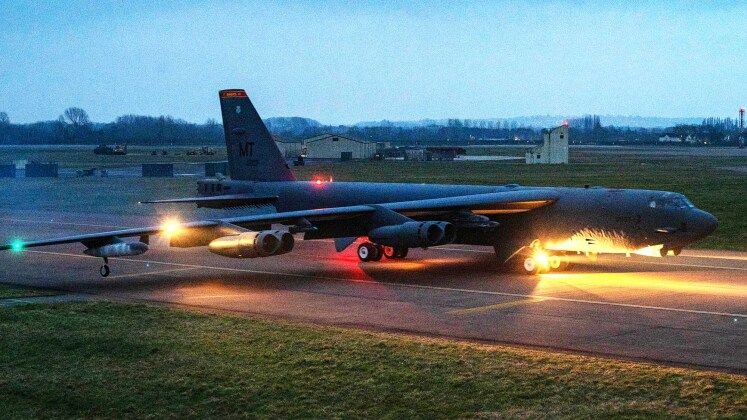
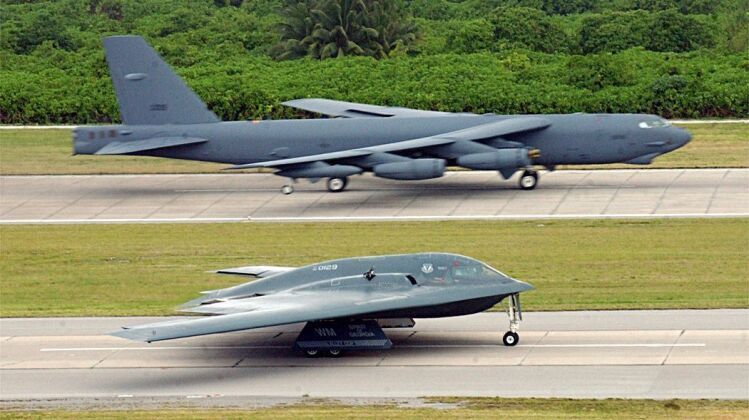
The ability to strike targets up to 4,000 kilometres away would allow the Islamic Revolutionary Guard Corps to retaliate against U.S. strategic bombers at their primary base of operations, namely Royal Air Force Fairford in the United Kingdom, where the number of B-1B and B-52H bombers has surged over the past month. These bombers are relied on particularly heavily due to the severe damage caused to U.S. air bases across the Middle East, as well as the associated missile defence network. There remains a significant possibility that should Iran expand strikes to engage targets in Europe, it could receive greater support from Russia including targeting data, with the destruction of strategic targets on the continent potentially having highly beneficial implications for the ongoing Russian war effort in the Ukrainian theatre. It remains highly uncertain whether Iran does indeed have an intermediate range strike capability, with Israeli sources having strong incentives to fabricate such claims. If such capabilities have been developed, it is also unknown on what scale such missiles are fielded, and how advanced they may be.
