
Indonesia Brings French Rafale Fighters Into Frontline Service: Fleet’s Future Still Highly Uncertain
Military Watch Magazine Editorial Staff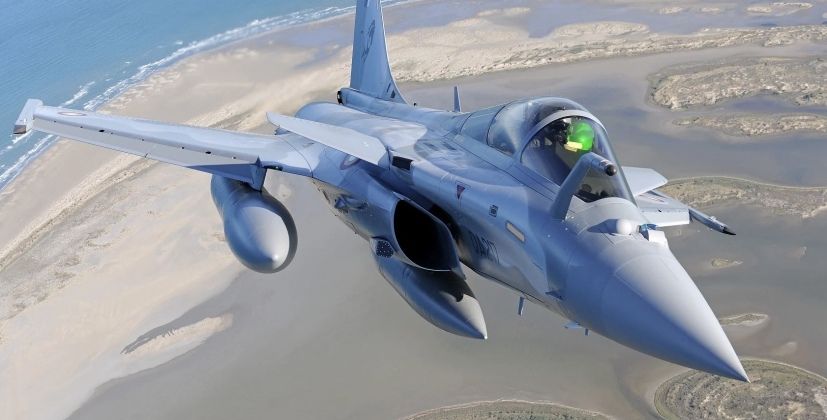
Rafale Fighter
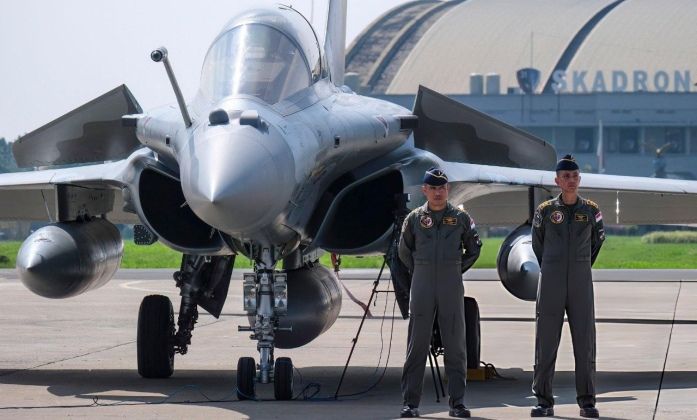
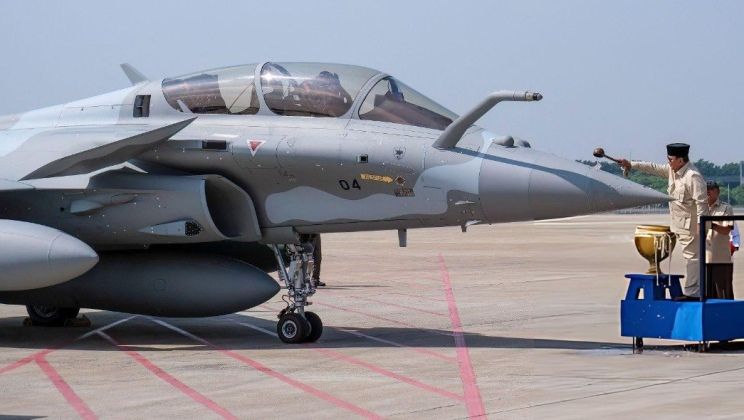
The Indonesian Air Force has formally brought the first four French-supplied Rafale fighter aircraft into service at a defence handover ceremony at Halim Perdanakusuma Air Base in Jakarta. The ceremony was attended by Indonesian President Prabowo Subianto, and included the transfer of six Rafales, four Falcon 8X business jets, one Airbus A400M MRTT, and one Thales GM403 ground-controlled interception radar. The Indonesian Defence Ministry confirmed that the six Rafales will form the inventory of Air Squadron 12, with President Prabowo having unveiled the squadron logo on the nose of the lead aircraft and performed a traditional water blessing. The service entry of the Rafale represents a major landmark in the modernisation of Indonesian Air Force’s combat capabilities, following years of uncertainty regarding the future of its fighter fleet.
The Indonesian Defence Ministry ordered 42 Rafales under an $8.1 billion contract in February 2022, with French officials having continued to lobby for followup orders to be placed over the following years. The Indonesian Air Force released the first image showing a Rafale fighter aircraft in the service’s colours in August 2025. The small size of the Indonesian fighter fleet, and the large number of Rafales ordered, has indicated that the Air Force is likely to replace all of its U.S. F-5s and F-16s, and possibly several of its Russian Su-27s and Su-30s, with the aircraft. The fighter has a comparable size and engine power to the lightweight F-16, making it very considerably smaller and shorter ranged than the heavyweight Su-27 and Su-30, which combined with the small size of its radar limits its ability to patrol or perform air defence duties across Indonesia’s vast territory.
The Indonesian Air Force had previously planned to procure Russian Su-35S fighters, which are considerably larger and longer ranged aircraft that carry radars over three times as large as the Rafale. As order was signed to procure the aircraft in February 2018. This was put on hold, however, due to threats from the United States to impose economic sanctions. The Rafale previously competed against the Su-35’s predecessor, the Su-30, for orders from Algerian, Kazakhstan and Ethiopia, and failed to gain contracts in any of the three cases, with the countries’ lower susceptibility to Western pressure considered a leading factor. While the Su-35 is not expected to be considered for future procurements, there has been significant speculation from Indonesian defence analysts that following years of efforts to ‘sanctions proof’ the country’s economy, the Su-35’s successor the Su-57 fifth generation fighter could be considered to serve as part of a high-low combination alongside the Rafale.
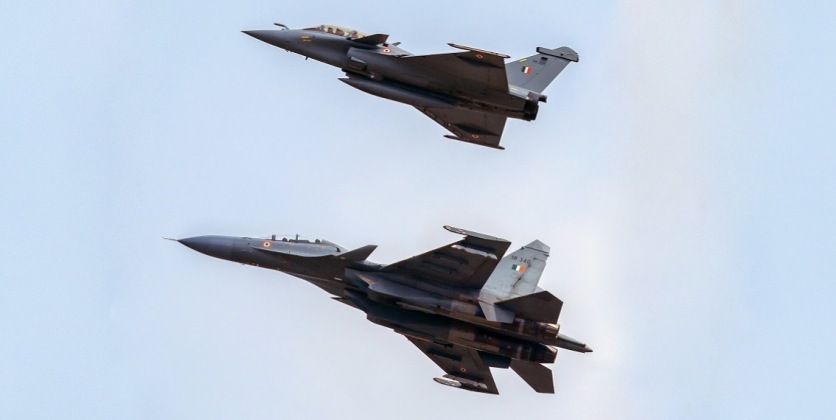
On October 16, 2025, Indonesian Defence Minister Sjafrie Sjamsoeddin and multiple other local officials confirmed that the Defence Ministry had placed an order to procure 42 Chinese J-10C ‘4+ generation’ fighter aircraft, following the type’s major successes in the hands of the Pakistan Air Force in early May in shooting down multiple Indian fighters, including 1-4 Rafales. With both the Rafale and the J-10C being relatively lightweight short ranged aircraft, however, the procurement of both would leave the Air Force without a heavyweight fighter type that can match the range of aircraft like the Su-27 and Su-30. The procurement of the Chinese J-35 fifth generation fighter, a much larger twin engine aircraft with a long range, has been widely speculated. The only heavyweight long range fighter type in the Western world, the F-15EX, was previously considered for procurement, before Boeing on February 3, 2026, confirmed a termination of talks for sales to Indonesia. The very limited autonomy which the United States allows for operators of its fighters, particularly when compared to China, and Russia, but also to a lesser extent compared to France, has limited its fighters’ ability to gain traction in neutral states.
