
Indonesia Ends Plans For U.S. F-15EX Long Range Fighter Purchase as it Looks to China’s J-10C
Military Watch Magazine Editorial Staff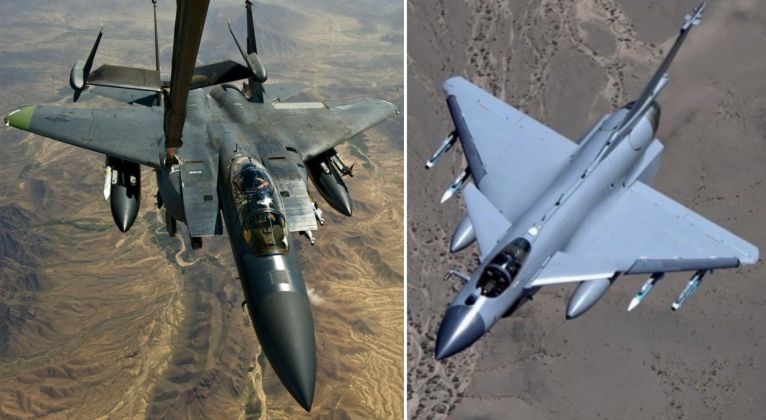
F-15E (left) and J-10C fighters
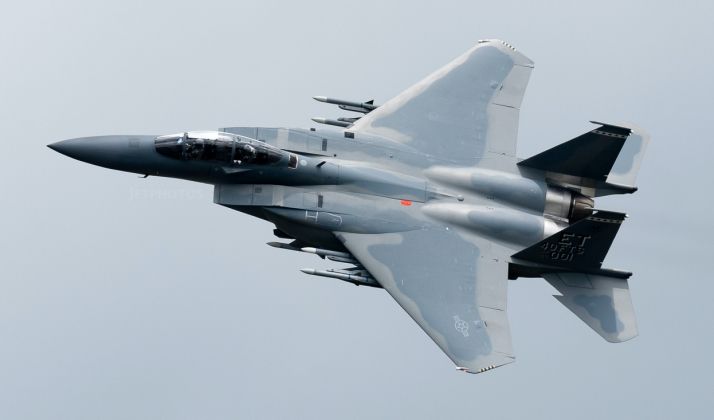
Boeing has confirmed a termination of talks for an Indonesian procurement of the F-15 fighter, with the decision disclosed on February 3 during the Singapore Airshow, ending hopes for a sale of what is by far the heaviest and most costly tactical combat aircraft produced in the Western world. “In terms of our F-15 partnership with Indonesia, it is no longer an active campaign for us,” Boeing’s vice president for business development and strategy Bernd Peters observed. Indonesia had originally signed an agreement covering the planned purchase of 24 F-15 fighter in early 2023, with the F-15IDN planned to be based on the same configuration as the F-15EX currently in production for by the U.S. Air Force, but with modifications tailored to Indonesian operational requirements. The F-15EX currently has only one foreign client, namely the Israeli Defence Ministry, with Boeing having begun work on the aircraft ordered by Israel in late December.
Relations between Jakarta and Washington have worsened significantly since 2023, with Indonesian sources widely reporting that the United States was playing a central role in organising mass riots across much of the country from August 2025. Jakarta’s close economic and tech sector ties with China have led countries across much of the Western world to seek to impose pressure on it, including using threats of economic sanctions. Indonesia’s interest in the F-15 was thought to be a result of a perceived requirement for a modern heavyweight long range fighter to succeed the Su-27 and Su-30 in service, with only China, Russia, and the United States, producing such aircraft, while China does not offer its own for export. The Air Force had previously planned to procure the Russian Su-35, rather than the F-15, before threats of U.S. sanctions collapsed the deal.
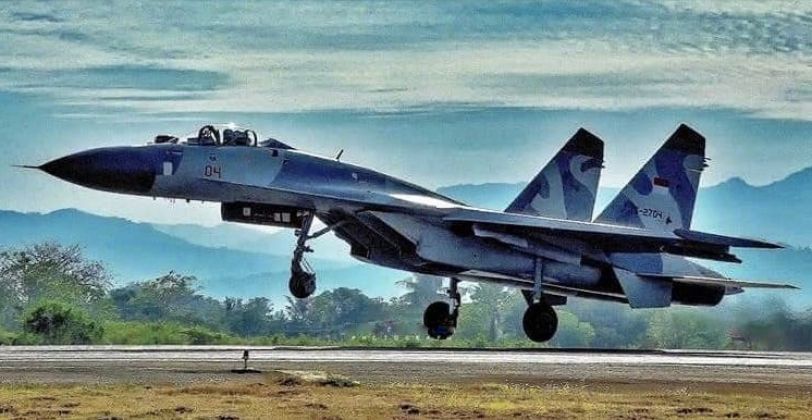
The Indonesian Defence Ministry ordered 11 Russian Su-35S fighters in February 2018 , with further procurements of the type expected in order to equip multiple squadrons. In August 2018 the Indonesian Trade Ministry International Trade Director General Oke Nurwan confirmed that “the U.S. is trying to intervene” to scupper a deal under which Su-35s would be paid for by barter trade. The $1.1 billion deal was confirmed in 2024 to have been put on hold, primarily due to Washington’s sanctions threats made under the Countering American Adversaries Through Sanctions Act (CAATSA). These threats were considered among the factors that led the Indonesian government to seek to ‘sanctions proof’ its economy, which it did particularly rapidly from early 2022 with through such as reducing reliance on Western payment systems.
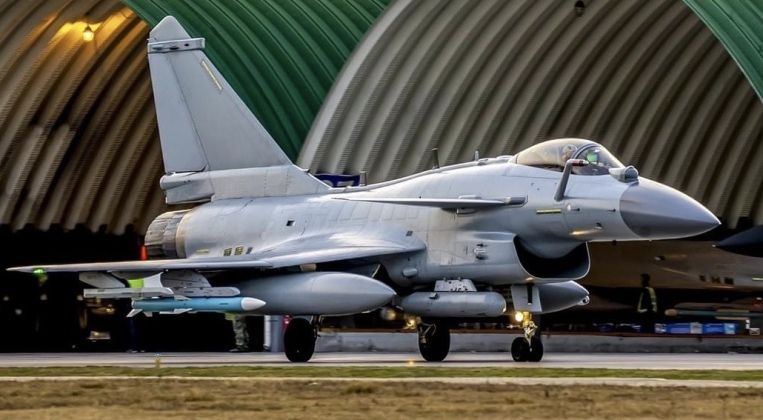
In October 2025 Indonesian Defence Minister Sjafrie Sjamsoeddin and multiple other local officials confirmed that the Defence Ministry had placed an order to procure 42 Chinese J-10C ‘4+ generation’ fighter aircraft. This followed the J-10C’s reported major successes in the hands of the Pakistan Air Force in early May in shooting down multiple Indian fighters, including at least one Rafale. Although the J-10C is a much shorter ranged aircraft than the F-15 or the Su-35, its sustainment costs and maintenance needs are very significantly lower, allowing the aircraft to be procured in much greater numbers for operations from multiple bases across the country. The J-10C’s armaments and avionics are significantly more advanced than those of the Su-35, and broadly on par with those of the F-15EX, although the expected extensive downgrading of fighters delivered by the Untied States means that the J-10s will likely provide a superior combat capacity at a fraction of the cost.
