
Indian Defence Ministry Reports S-400 Deal in Final Stages; New Missile System Will Revolutionise Country’s Defences
Military Watch Magazine Editorial Staff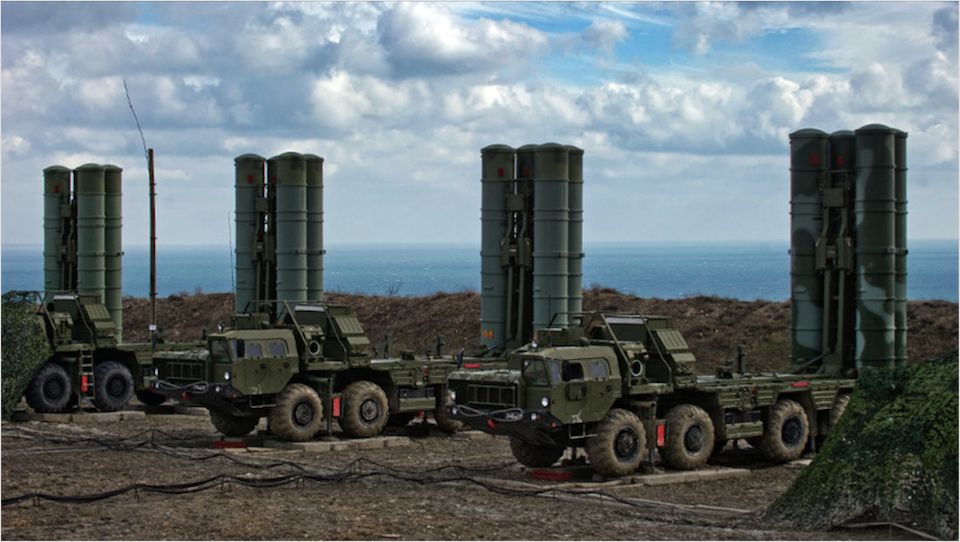
S-400 Missile Batteries
India’s Defence Ministry has reported that negotiations with Russia to acquire five regiments of the S-400 surface to air missile system have neared their final stage, with a contract expected to be signed by the end of the year and deliveries expected to begin by the end of 2020. Defence minister Nirmala Sitharaman stated at a press conference in regards to the development: "The negotiation with Russia on the S-400 have reached almost the final stage; we'll have to see it if it's signed before the Russian President's visit. But the negotiations are almost complete.” India’s decision to proceed with the acquisition has come despite considerable pressure from the United States to abandon the deal, with Washington threatening sanctions on Delhi in an attempt both to carve out a greater share of the Indian arms market, the second largest importer in the world, for its own defence manufacturers - while also stripping the Russian defence sector and defence manufacturer Almaz Antey of valuable funds. This has come as part of a broader effort by Washington to press existing and potential clients for Russian arms to abandon purchases of advanced weapons systems - with Iraq, Turkey and Indonesia being among the several states targeted in such a way, the first two over plans to acquire the very same weapons system.
In response to threats of economic sanctions, India’s defence minister had criticised the unilateral nature of the actions of the United States - noting that U.S. law was not UN law and India was not obliged to curtail its purchases on Washington’s demand. "Our defence relation with Russia has endured several decades, and we have conveyed about it to a US Congressional delegation which visited India recently,” she stated. The Untied States for its part has offered its own air defence system THAAD as an alternative to the S-400, though an analysis of its capabilities indicates that it is of little use for the Indian armed forces - lacking the ability to defend against aircraft whatsoever and with only half the range of the S-400, no counter stealth capabilities, no low altitude capabilities and only a single type of munition - where the S-400 deploys over seven.
The S-400 is set to revolutionise India’s defences, and will make its airspace among the most secure in the world alongside other air defence platforms already deployed by India. The weapons platform provides a much needed counter stealth capability, particularly useful against Chinese stealth fighters such as the J-20 or the upcoming Sino-Pakistani stealth jet being developed under Project AZM. With the S-400 capable of engaging up to 80 targets simultaneously with 160 interceptors, including a combination of aircraft and both ballistic and cruise missiles, the weapons seriously undermines potential adversaries' ability to penetrate Indian airspace. The system’s 400km maximum range allows it to reach deep into Chinese or Pakistani airspace if deployed near the border - while its 600km detection range against non stealth targets can provide India with valuable intelligence on its two neighbours. Intercepting projectiles at hypersonic speeds, depending on the munition used, the S-400 will also provide a much needed defence against ballistic missile attacks from Pakistani platforms such as the Ghauri or Chinese Dongfeng-11.
