
Indian Air Force Decommissions Last MiG-27 Strike Fighter Squadron
Military Watch Magazine Editorial Staff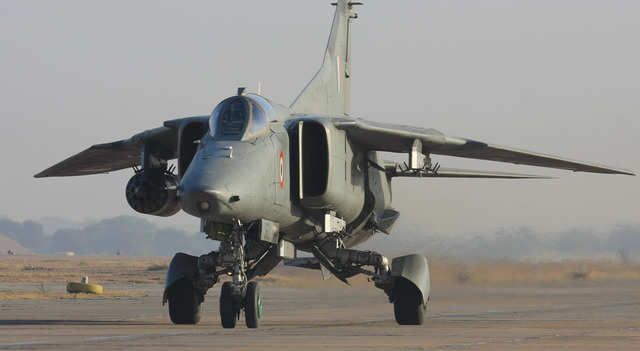
Indian Air Force MiG-27 Strike Fighter
The Indian Air Force has decommissioned its last squadron of MiG-27 Flogger strike fighters, after operating the aircraft and their multirole variants the MiG-23 for over 40 years. India was the largest operator of the class during the Cold War other than the Soviet Union, and manufactured 165 aircraft domestically under listen until the mid 1980s. The Floggers were favoured over the heavier Su-24 and Su-22 strike platform which were exported far more widely to Soviet defence clients, in part due to their similarity to the MiG-23 and comparability with it’s maintenance infrastructure which made the MiG-27 easy to integrate into service. The fighters saw service in the Kargil War where they were reported to have taken a heavy toll on Pakistani ground forces and Kashmiri militias, and they have been prized for their wide range of modern munitions and powerful sensors which allow them to strike with high precision. The decommissioning of the last MiG-27 squadron leaves Kazakhstan as the final operator, having inherited the jets from the Soviet era and maintained approximately a dozen in service.
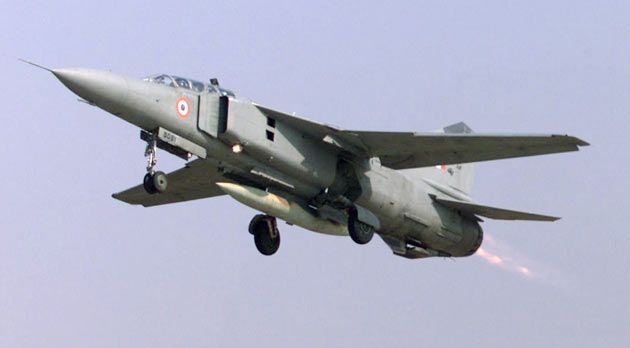
With India planning an ambitious expansion of its fighter fleet over the coming decade, it remains uncertain which platform will replace the MiG-27 in a strike role. Indian Jaguar attack jets, which currently perform a similar role, are also set to be phased out of service in the near future, and the replacement for these platforms also remains uncertain. The Su-34 has been highlighted as a potential replacement, as has the Su-30MKI which can be outfitted for a strike role. India is likely to field over 300 Su-30MKI fighters by the mid 2020s, with orders continuing to be placed as the jets are licence produced domestically. A contract for a more advanced next generation fighter is also under negotiation for the FGFA program, which would see a versatile heavyweight jet developed based on the Russian Su-57 - but in a twin seat configuration to better optimise it for a strike role. As the MiG-27s see their last day in service, over 45 years after the design was first deployed, the future of the Indian strike fleet remains uncertain.
