
Russia Tried to Pitch a Su-35 Fighter License Production Deal to India: Why Did It Fail?
Military Watch Magazine Editorial Staff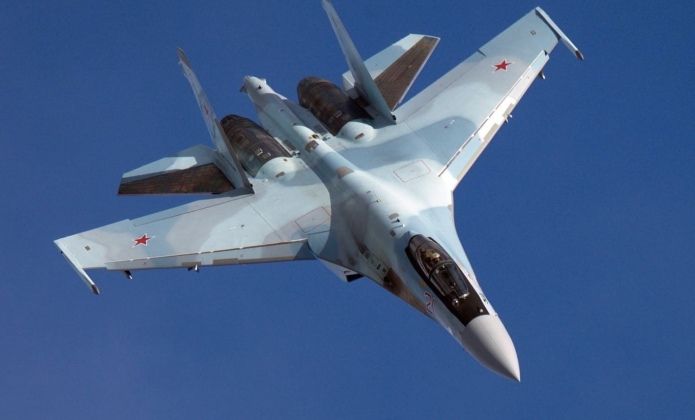
Russian Aerospace Forces Su-35 Fighter
Russian and Indian sources have recently confirmed significant progress in talks regarding the license production of the Su-57 fighter generation fighter in India, which would see production lines previously established to produce over 220 Su-30MKI ‘4+ generation’ fighters modernised to build the new aircraft. The potential this likely deal has for the Indian combat fleet and for its defence sector has increasingly drawn comparisons to a prior license production deal that was considered for the Su-35 fighter in the 2010s, after Russia pitched the aircraft for the Indian Air Force’s Medium Multi-Role Combat Aircraft (MMRCA) tender as a more costly alternative to the MiG-35 medium weight fighter. A contract under the tender had the potential to be the largest ever signed for the Su-35, and a major turning point for the program.
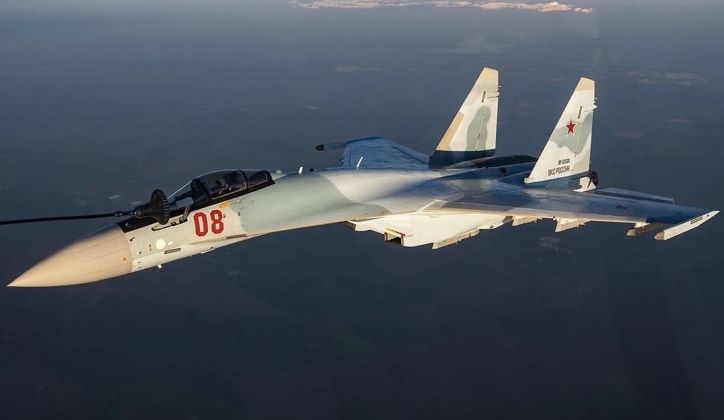
The Su-35 was an unusual entry into the MMRCA tender, with four of the other six aircraft being medium weight designs, while the fifth and sixth, the American F-16/-21 and the Swedish Gripen, were lightweights. The Su-35 could very comfortably outperform all other contestants across a broad range of parameters, with a higher weapons carrying capacity, far larger and more powerful radar, longer range, higher altitude ceiling, and three dimensional thrust vectoring engines facilitating manoeuvrability and speeds that none of the other contestants could rival. The fighter was also offered with a much lower procurement costs than all other aircraft in the tender with the exception of the MiG-35.
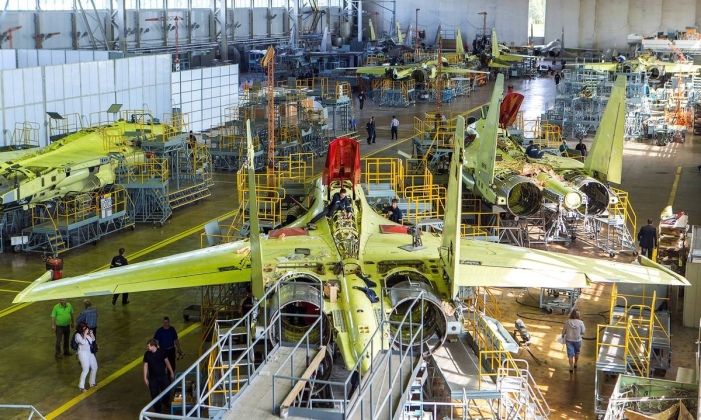
A primary drawback of the Su-35 was that as a much larger aircraft, its operational costs and maintenance needs were significantly higher than those of medium and lightweight fighters competing against it. Nevertheless, multiple aspects of the Russian offer appeared to have the potential to make it highly attractive. The fighter’s significant commonality of training and maintenance with the Su-30MKI, of which the Indian Air Force already fielded well over 200, would simplify logistics and training for both ground crews and airmen across the fleet. To further strengthen the aircraft’s appeal, an offer to manufacture 114 Su-35s in India was linked to technology transfers that would allow the Indian Air Force to modernise its existing fleet of Su-30MKI fighters to a similar capability standard.
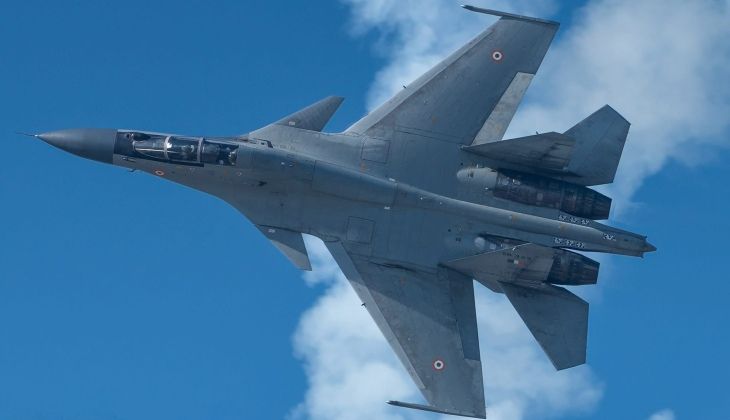
Upgrading Su-30 fighters using Su-35 technologies could include integrating the newer fighter’s AL-41F-1S engines, Irbis-E radar, and new electronic warfare systems, as well as armaments such as the R-37M and R-77M radar guided air-to-air missiles. Russian Deputy Prime Minister Yuri Borisov referred to plans to Su-35 technologies to Su-30s in Russian service as follows: “The layout of the onboard radio-electronic equipment to make the Su-35 and the Su-30SM more standardised and thus cut the cost price and standardising the airborne weapon systems, this may breathe a new life into the plane.” India ultimately cancelled the MMRCA tender, while expanding orders for Su-30MKI and MiG-29 fighters in 2020, which was a decision that paved the way for it to consider procuring the Su-57 on a large scale.
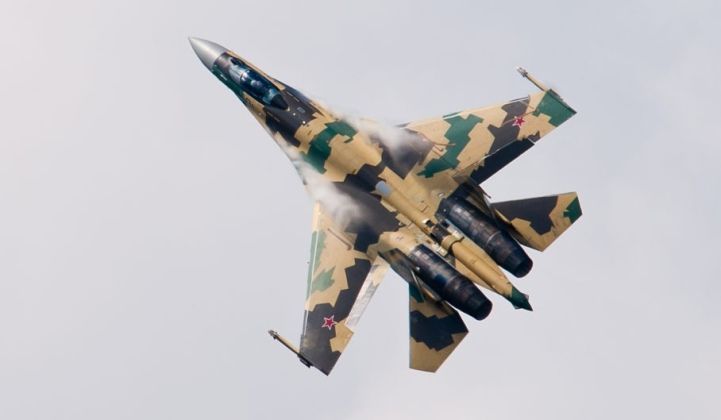
Despite its appeal, the Su-35 had several drawbacks for the Indian Air Force. While the Su-30MKI had widely been considered the world’s most capable fighter when it first entered service in 2002, the technological difference between the older aircraft and the Su-35 was relatively conservative considering the twelve years that separated their service entries. The Su-35 was the only fighter in the MMRCA tender that lacked a primary active electronically scanned array (AESA) radars, although it was also the only one to integrate triple radars, with two secondary L-band AESA radars integrated in its wing roots. It remained questionable whether it was worth integrating a new fighter type into service with capabilities that were broadly comparable to those of a heavily enhanced Su-30MKI.
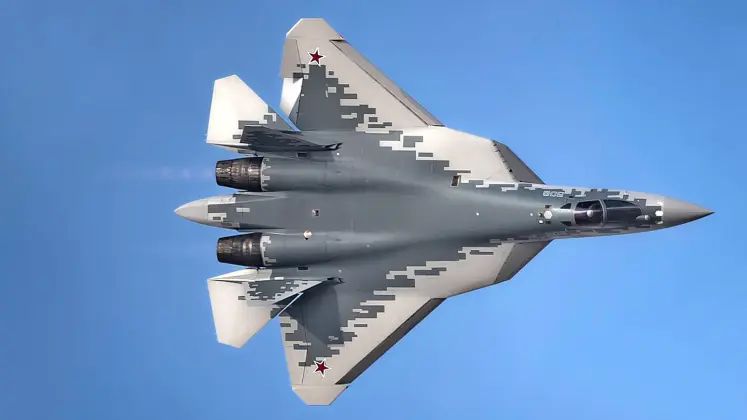
Signs of persistent Indian interest in the Su-57 may have indicated that the next generation aircraft was seen to be much more cost effective despite its significantly higher procurement cost than the Su-35. While the merits of a Su-35 procurement are questionable, there is little doubt that prioritising the Su-57 for planned orders will provide the Indian Air Force with a much greater combat potential. Although the Russian United Aircraft Corporation has made an unprecedented offer to provide the Indian Defence Ministry with full access to the Su-57’s source code, which is expected to allow for a degree of customisation that is wholly unprecedented for a fifth generation fighter program including extensive integration of local avionics, the merits similar levels of participation for Indian industry to customise the Su-35 remains uncertain. Thus while the Su-57’s fifth generation technologies are expected to bring the Indian defence sector forward considerably, supporting the indigenous AMCA program, transfers of technologies from the Su-35 would likely have had a more limited appeal.
