
Prioritising Quick Sales of F-35 Jets to Israel; How it Provides the United States with Valuable Intelligence on Its Adversaries’ Capabilities in the Syrian Theatre
Military Watch Magazine Editorial Staff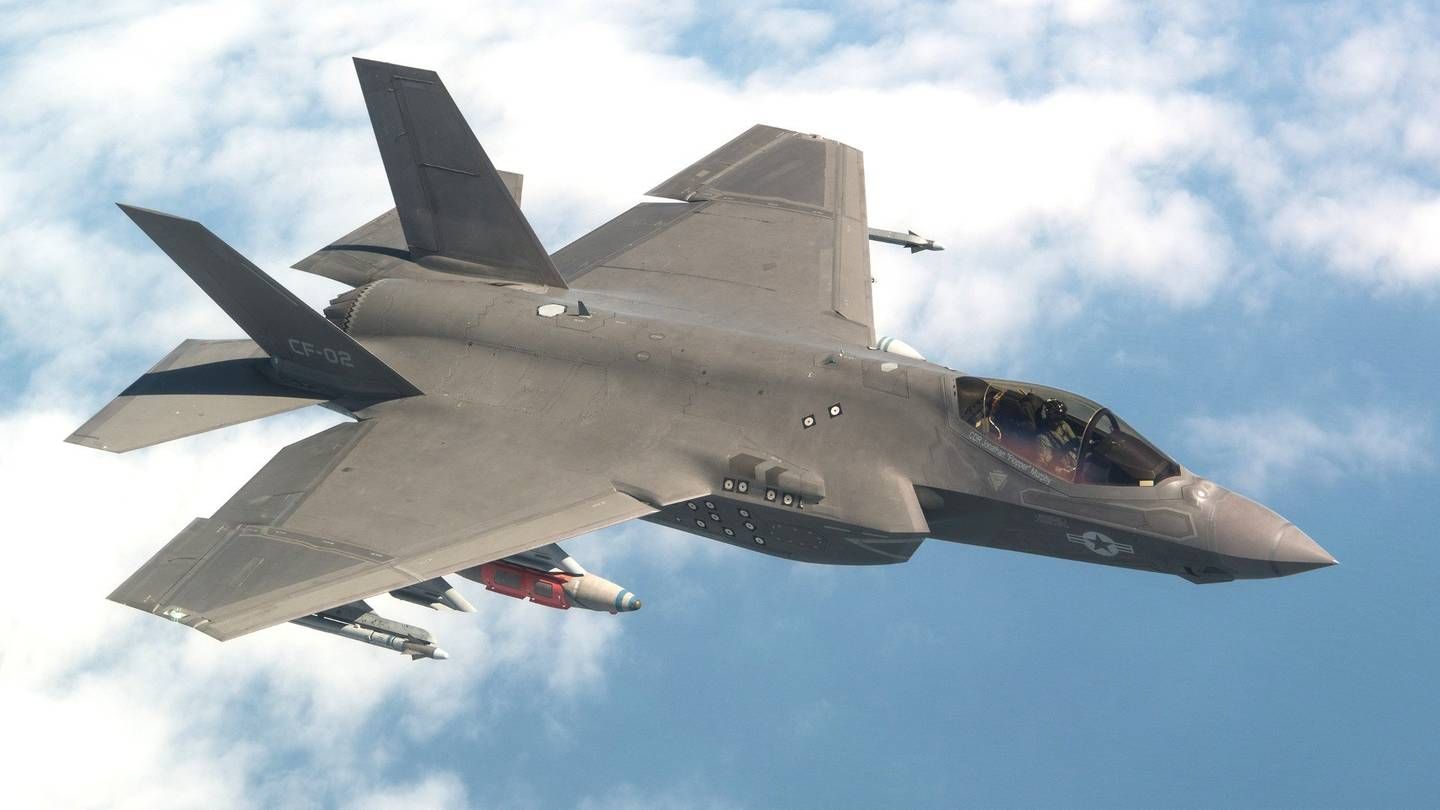
F-35 Single Engine Stealth Fighter
Despite Israel not being a partner in the F-35 program, and its involvement as a security cooperation participant having being suspended temporarily due to sales of sensitive Western technologies to the Chinese armed forces in the 1990s, the Middle Eastern state has become one of the first countries in the world to field the U.S. made stealth fighter with full operational capabilities. The Israeli Air Force is expected to have approximately a dozen of the single engine light jets in service by the end of 2018, which will be the only fifth generation fighters deployed to the region and will serve as a more sophisticated replacement to the F-16 Fighting Falcon - the aircraft's fourth generation predecessor which currently forms the mainstay of the Israeli fighter fleet. While prioritisation of sales to Israel of the F-35A appeared an unusual step for the United States, with the country having only begun to fill the orders of its own Air Force and those of several high level partners such as South Korea and Japan, providing the Israeli Air Force with the fighters as soon as possible has a number of key benefits for the United States itself - beyond the perceived need to bolster its Middle Eastern ally’s defensive capabilities.
Controversy within Israel itself regarding the acquisition of the F-35, an extremely costly aircraft both to operate and acquire which remains in many ways less capable than the older but heavier F-15 the Air Force already operates, meant that providing the country with the jets as soon as possible remained imperative. The Israeli Air Force has already indicated that the full order of 100 F-35 jets, as initially planned, is unlikely to be fulfilled - with the service instead prioritising the acquisition of other equipment - namely the F-15I strike fighter which retains considerable advantages over the F-35 across the spectrum - its sensors and radar evading capabilities being the only notable exceptions. The Israeli Air Force’s own perceived need to acquire the F-35, even if in small numbers, due to growing tensions with the Islamic Republic of Iran which, while lacking the stealth hunting S-400 air defence system, can effectively deny non stealthy older fighters such as the F-15 and F-16 access to its airspace, was also a major factor prompting a quick delivery.
Perhaps the greatest incentive for the U.S. to speed up the deliver of F-35 deliveries was the fact that the platform’s service in Israeli hands would provide valuable intelligence for both countries on the activities taking place in neighbouring countries. With Russian forces operating extensively in Syria, and the U.S. having taken their deployment as an opportunity to assess the capabilities of their latest hardware, the F-35’s advanced sensor suite provides one of the most capable assets for doing so. New Russian weapons systems, from the Su-34 and Su-35 heavy fighters Pantsir-S1 combat vehicles and Kh-101 and Kalibr cruise missiles have all seen extensive action in Syria well within range of the Israeli F-35’s sensors. With the F-35 often passing on key intelligence on its operations to its U.S. based manufacturer Lockheed Martin, often without the permission of its foreign operators, and with Israel sharing a great deal of intelligence with the United States regardless, the presence of these fighters so near the Syrian conflict remains an invaluable asset. The deployment of assets by other U.S. adversaries, namely North Korea, Iran and Hezbollah, to the Syrian theatre, also provides an opportunity to analyse the operations of these assets from the air as well.
Speaking regarding the value of the opportunity provided by conflict in Syria to analyse the capability of U.S. adversaries, head of U.S. Air Force Central Command Lt. General Jeffrey Harrigian noted that the F-35 in particular was an idea asset to take on this data collection role. The General stated: “Clearly, the F-35 is a capability that will provide us greater insight into, I’ll kind of call it the operational environment. And given its sensors, we’re going to learn some things… It vacuums up a lot of data. Take that data, we ought to be able to learn from it and then take that to improve not only F-35, but other systems across our portfolio. And I think that will really be the big advantage that at F-35 will bring to us. And again, as you're well aware of, across Syria there's multiple players that are operating in there that [having] F-35 will help us with.” With sources in the U.S. military leadership noting with some alarm that Russian assets in Syria had obtained considerable information on the operations of the American F-22 Raptor, a heavier counterpart to the F-35 which conducted a number of sorties over Iraqi territory within the range of advanced Russian sensors such as those of the S-400 air defence platform, Israeli F-35 jets have notably taken special precautions during their own deployments over their own and Lebanese territory. Avoiding direct encounters with Syrian air defences, the Israeli jets have been deployed with Luneberg Reflectors, which compromise their stealth profile and prevent Russian or other air defence systems from probing their stealthy airframes to assess their radar evading capabilities. Ultimately the presence of the F-35 in Israel, serving in a key non combat role, remains a considerable asset for the United States and its Middle Eastern ally - providing intelligence which could be key both to better understanding the modern capabilities of their potential adversaries and to refining the fighter’s design by providing operational experience near an active warzone.
