
How Capable Are the Austrian Eurofighters That Scrambled to Stop U.S. Airspace Violations?
Military Watch Magazine Editorial Staff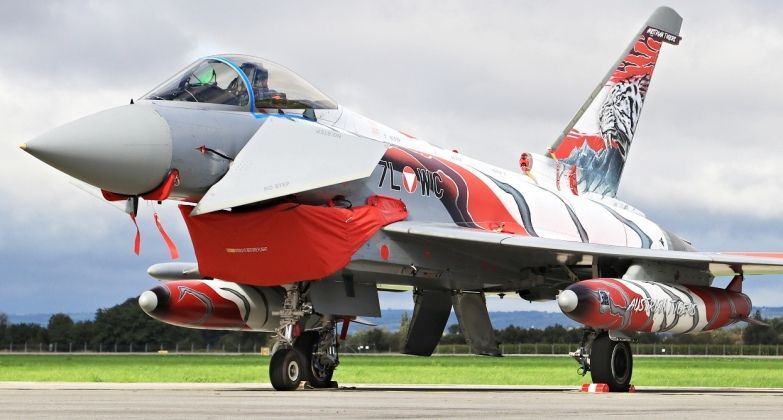
Austrian Air Force Eurofighter Tranche 1
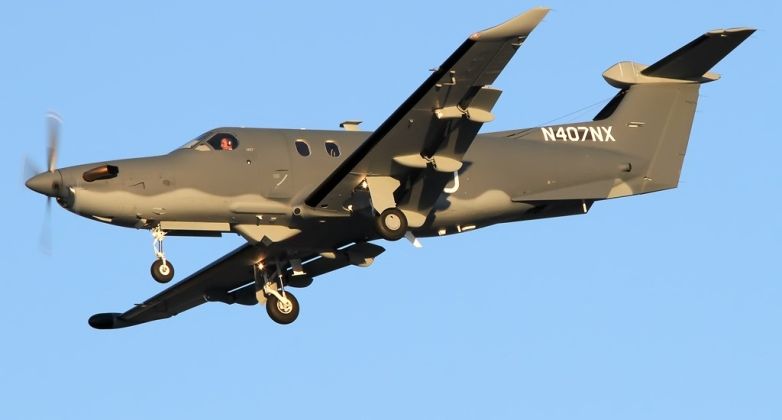
The Austrian Ministry of Defence has confirmed that the Austrian Air Force scrambled Eurofighter combat jets twice in two consecutive days to respond to violations of the country’s airspace by U.S. military aircraft, which entered without clearance. Defence Ministry spokesman Michael Bauer confirmed both incidents publicly, with the first involving a Priority A alert and the deployment of two Eurofighters after two U.S. Air Force PC-12 surveillance and special operations support aircraft aircraft crossed into Austrian airspace at 12:31 on May 10. A Priority A alert represents the highest urgency level in Austrian air defence response protocols.
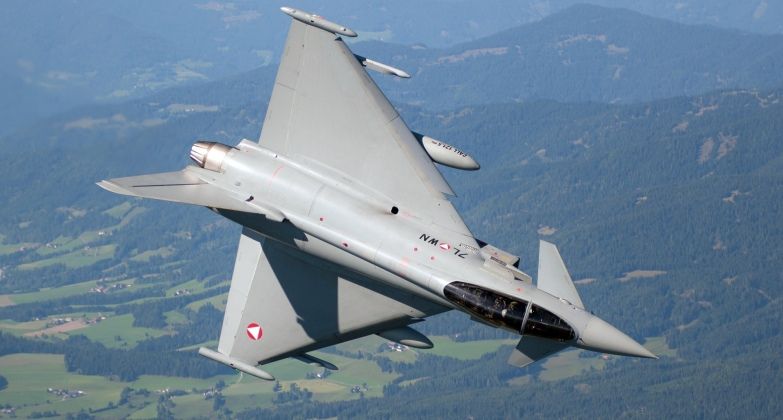
Austrian Eurofighters approached the target “for the purpose of identification,” according to the Defence Ministry’s statement, after which the U.S. aircraft turned away and returned to Munich, Germany. The following day on May 11, however, a pair of U.S. Air Force PC-12s were again detected in Austrian airspace, prompting Eurofighters to again be scrambled for interception and identification. Austria declared permanent neutrality in 1955 as a condition of the State Treaty that ended a U.S.-led occupation of its territory after the Second World War, and is one of a small minority of countries in Europe not to have joined NATO. The country was the first export client for the Eurofighter, with the Tranche 1 variants procured in the 2000s today considered long past obsolescence, and having widely been phased out of service abroad.
Eurofighter Tranche 1 aircraft were designed primarily as air-superiority fighters during the late Cold War era, and lack many of the multirole capabilities, sensors, and computing upgrades found in later Tranche 2 and Tranche 3 variants. Tranche 1 aircraft have comparatively limited air-to-ground functionality, older avionics architecture, and reduced compatibility with newer weapons and networking systems that are now central to modern aerial warfare. Many Tranche 1 airframes also face upgrade limitations due to hardware constraints and the high cost of retrofitting them to modern standards. This has been a primary factor in the decisions of several operators to retire them ahead of schedule, or else relegate them to secondary duties such as training.
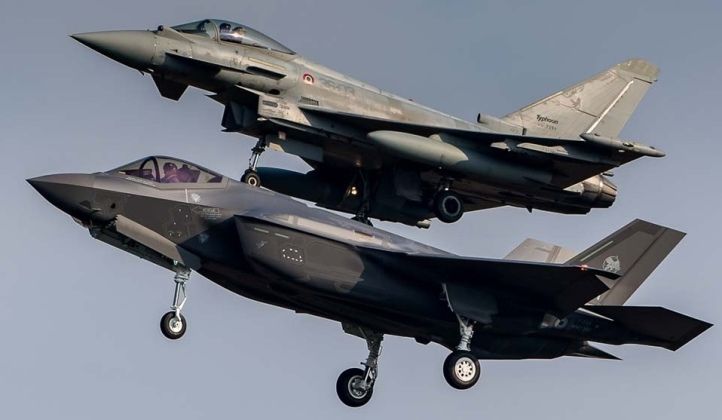
The Eurofighter, alongside the Swedish Gripen, was one of the last two fighter programs to transition way from relying on a mechanically scanned array radar, which has left all variants preceding Tranche 4 far outclassed in target tracking, electronic warfare integration, and sensor fusion, while leaving them highly vulnerable to jamming. The British Royal Air Force, which played the leading role in supporting the Eurofighter program, has continued to rapidly withdraw the aircraft from service, while in January 2026 it was revealed that the procurement of urgently needed new radars would be financed for just just 40 of the fighters. The Ministry in 2025 confirmed that there were no plans purchase further Eurofighters, with the Air Force set to continue receiving F-35A fighters, the first of which will arrive in the early 2030s. This has reflected broader trends towards the Eurofighter consistently failing to compete with modern U.S. fighter types in terms of either cost or performance, leaving partner countries forced to choose between protecting local industry with continued procurements, and maximising force capabilities by procuring U.S. fighter types.
