
How America Can ‘Turn Off’ Denmark’s F-35s in a Clash For Greenland
Military Watch Magazine Editorial Staff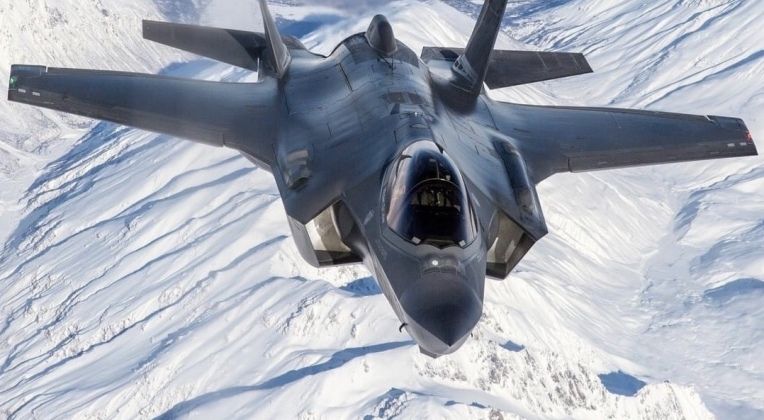
F-35A Fifth Generation Fighter
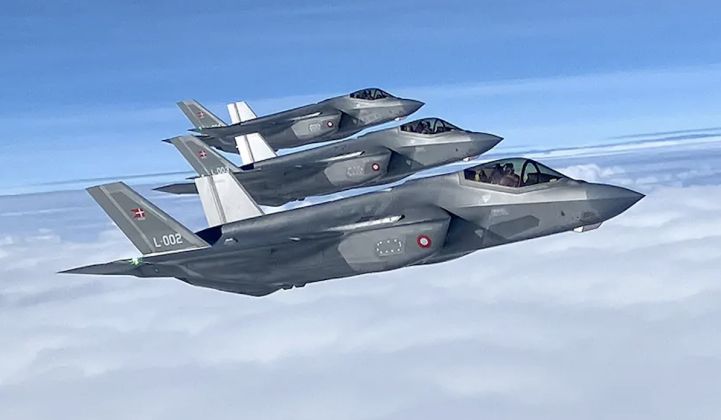
Following repeated statements by U.S. President Donald Trump that the United States is considering a wide range of options to annex Greenland, and revelations by senior officials that military options are being considered by the Trump administration, questions have been raised regarding the ability of the Danish Armed Forces to retain control over the territory. While the United States already maintains a large presence on Greenland, the bulk of Denmark’s military power and its defence budget is concentrated in its fighter fleet, which on January 18 completed its transition from obsolete Cold War era F-16A/B fighters to the F-35A fifth generation fighter. The Royal Danish Air Force is the third air force in the world to transition to a fully fifth generator fighter fleet, although the F-35 programs unprecedented and extreme levels of centralisation in the United States has raised questions regarding whether the aircraft would be able to function to defend the country’s territory against a potential American invasion.
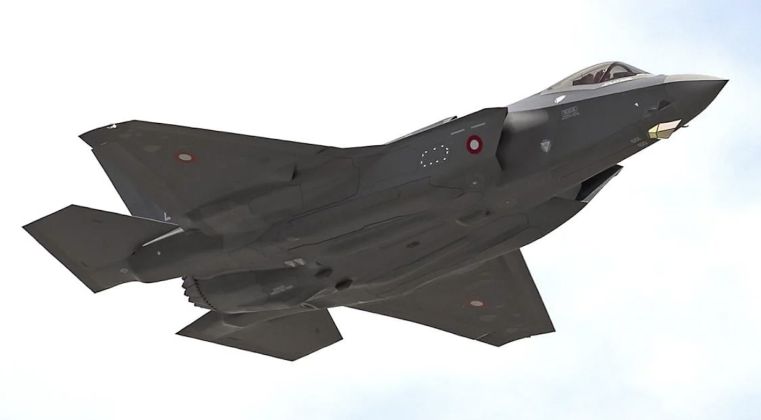
The United States has since the 1980s placed particularly extensive restrictions on the utilisation of its fighters by foreign clients, which has been pointed to as a major constraint by multiple analysts and officials. The restrictions on access to software codes, and on which bases fighters can be operated from and for what roles, has been a primary factor limiting the appeal of American fighters to neutral states such as India. The unprecedented new rift between Washington and Europe under the second Trump administration has also led to growing concerns being raised on the continent. The Autonomic Logistics Information System (ALIS) centralised IT system that manages the F-35’s operations, maintenance, training, and supply chain, and its successor the Operational Data Integrated Network (ODIN), are directly linked to Lockheed Martin’s facilities in the United States, and have been pointed to by analysts as a particularly effective avenue to disable the fighters fielded by foreign clients.
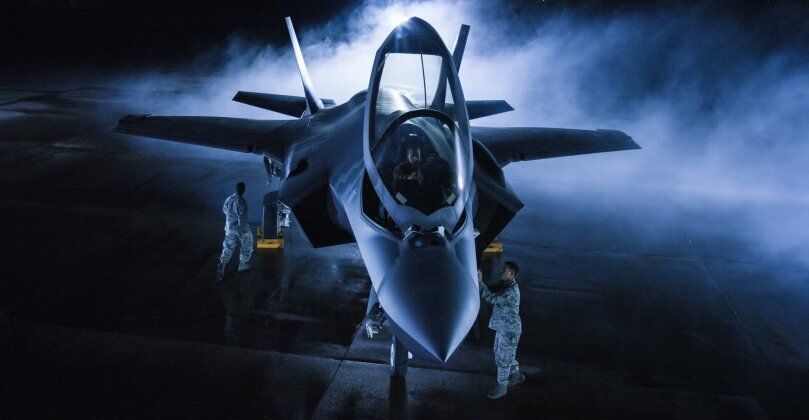
Observing the potency of ALIS and ODIN as means to control F-35 operations, expert on the F-35 program Abraham Abrams observed in his recent book F-35 Joint Strike Fighter: A Great and Terrible Program: “ALIS could be used to limit or block clients’ access to critical data such as software patches, could be used as a counterintelligence tool to tightly monitor operations such as when, where, and how F-35s were being flown, and provide a range of other advanced safeguards to curtail F-35 operations should these be seen to be against U.S. interests.” Only the United Kingdom and Israel are known to have sufficient access to the F-35’s source codes to be able to operate the aircraft with significant levels of autonomy, with the United States in both cases having initially been highly reluctant to provide this access.
Commenting on the vulnerability of F-35 operators in the event of possible hostilities with the United States, head of communications at German defence company Hensoldt, Joachim Schranzhofer, observed in early 2025: The ‘kill switch’ in the F-35 is more than just a rumour… But it’s much easier to use the mission planning system – then the plane stays on the ground.” Defence analyst Richard Aboulafia observed at the time that although the existence of a kill switch has not been confirmed, “If you postulate the existence of something that can be done with a little bit of software code, it exists.” “Most European militaries depend heavily on the U.S. for communications support, for electronic warfare support, and for ammunition resupply in any serious conflict,” Justin Bronk, a senior research fellow at the Royal United Services Institute, also noted, making the need for a ‘kill switch’ redundant.
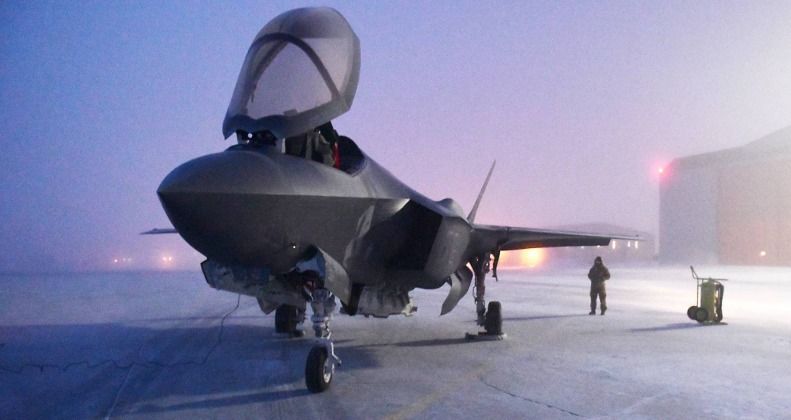
With Denmark’s military capabilities overwhelmingly centred on its F-35 fleet, the United States is guaranteed total dominance of the air in the event of a potential conflict. Nevertheless, Washington is likely to seek to avoid having to disable the F-35s, as this could serve to undermine foreign interest in the aircraft which has been a leading performer on global markets. The Danish government, too, would likely seek to reach a solution which would avoid the embarrassment of having its multi-billion dollar fighter fleet grounded from abroad. Thus while the United States’ extensive control over the Danish F-35 fleet remains a major asset in its favour, it is unlikely that either side will allow tensions to escalate to a stage where this will be used.
