
HIMARS vs. Iskander-M: Ukrainian Precision Strikes Just Took Out Three Russian Ballistic Missile Launchers
Military Watch Magazine Editorial Staff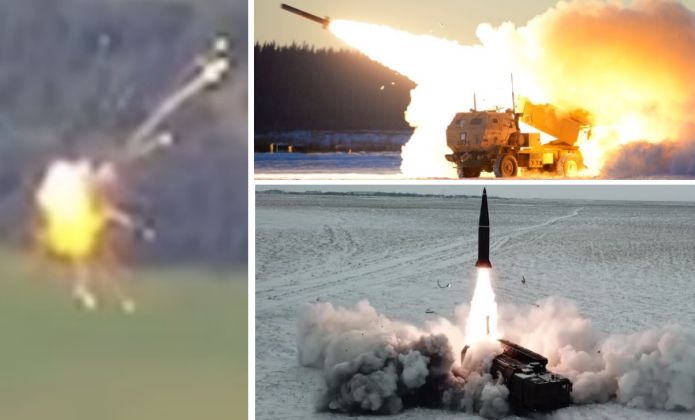
Explosion From HIMARS Hit on Iskander (left)and HIMARS (top) and Iskander Launches
Footage from the Ukrainian Bryansk region near the country’s borders with Belarus has shown a successful strike against three launch vehicles from Iskander-M ballistic missile systems operated by the Russian Army. One launcher was seen exploding, with two more reported to have been damaged in the attack. The Iskander-M systems’ long 500 kilometre engagement range having consistently allowed them to engage their targets from safe distances far behind the frontlines, which had left few opportunities for them to be targeted during the past three years of hostilities. The systems targeted in Bryansk, however, were located just 45 kilometres away from the front, possibly in order to allow them to engage targets deeper inside Ukrainian territory. The nature of the Ukrainian strikes has led a number of analysts to conclude that Ukrainian HIMARS precision guided rocket artillery systems were very likely used to neutralise the targets.
Although the HIMARS’ precision guidance capabilities have frequently proven to be far from reliable against Russian frontline targets, due to the effective use of electronic warfare to protect such positions, the systems have remained effective against targets further behind the frontlines such as air defence systems or infrastructure. The systems can be equipped with ATACMS ballistic missiles for such longer ranged attacks, although a limited ability to collect targeting data against mobile targets further away, and the very limited supplies of the missiles available, have limited Ukraine’s ability to launch such attacks.
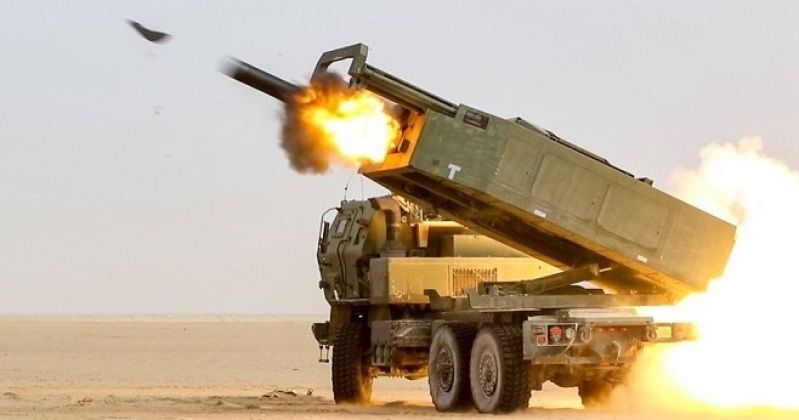
The large majority of HIMARS launchers are configured to carry six GMLRS rockets with 80 kilometre ranges, which limits opportunities to engage Iskander-M systems under most circumstances. The Iskander-M, by contrast, has been used to neutralise HIMARS launchers on multiple occasions, with an example being a successful strike on two launchers in the Sumy region on June 1. While Ukraine remains the largest foreign operator of HIMARS, only a portion of the rockets and launchers produced in the United States are allocated to the country, with neighbouring Poland being among the other clients that is also receiving the systems rapidly. The Russian Army, by contrast, not only receives almost all Iskander-M launchers and missiles produced, but has received them at a fast growing rate due to successful efforts to significantly expand production since February 2022. This has also allowed for the implementation of new tactics, such as launching ‘double strikes’ to maximise enemy casualties. Thus while Ukraine is heavily dependant on its relationship with the United States to sustain its arsenal, Russian industry can produce the Iskander-M without significant foreign inputs. Its arsenal has further been supplemented from late 2023 by the procurement of similarly capable KN-23B ballistic missiles from North Korea.
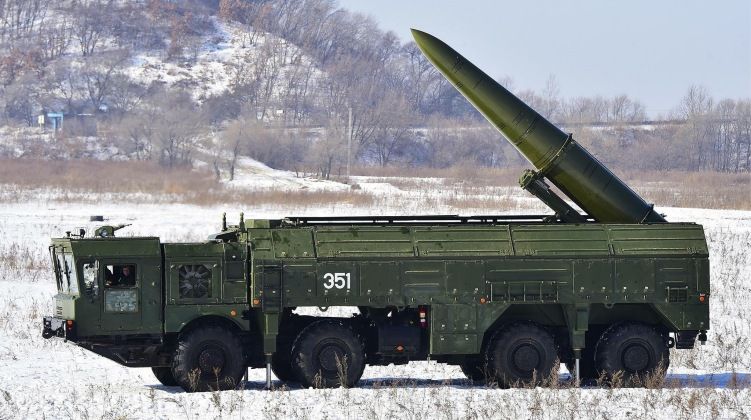
Before 2022, the Russian Armed Forces relied heavily on the Iskander-M to asymmetrically counter the much larger ground forces and air fleets fielded by NATO, with the expansion of the Western alliance and its growing force deployments near Russian borders expected to result in a much larger arsenal being permanently fielded even if hostilities in Ukraine end favourably for Russian interests. The system has recently been credited with multiple significant combat successes in the Ukrainian theatre, with its ability to reliably evade Ukrainian air defences having been highlighted as a particular strength by both Russian and Ukrainian sources. On May 26 the Ukrainian Air Force highlighted that the Iskander-M could not be intercepted by its MIM-104 Patriot long range air defence systems, the most high value assets deployed by the country’s armed forces, with the service’s official spokesman Igor Ignat observing: “The Iskander missiles perform evasive manoeuvres in the final phase, thwarting the Patriot’s trajectory calculations… In addition, the Iskander can drop decoys capable of fooling Patriot missiles.”
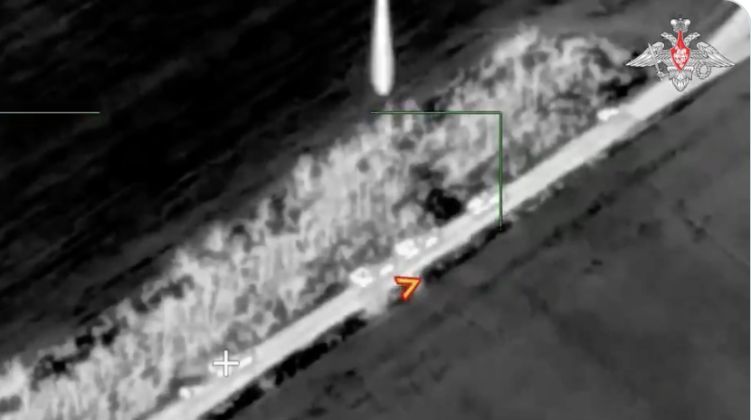
The Air Force spokesman’s statement followed the release of footage over more than a year confirming the destruction of Patriot systems in strikes by Iskander-M systems on several occasions. The first confirmed destruction of a Patriot system was confirmed on February 23, 2024, with a subsequent strike destroying another Patriot system near the Sergeevka locality on March 10 that year, which was assessed to have left ground forces in the region exposed. Alongside a long series of successful attacks on Patriot systems, the Russian systems have gained multiple kills against high value targets ranging from personnel concentrations to combat aircraft. The rare destruction of Iskander-M launchers thus represents a significant success for Ukraine’s HIMARS, although the tremendous volumes of Iskander-M systems being produced, and their relatively low production costs and training requirements, means this is not expected to significantly reduce the Russian Army’s ability to launch attacks. The primary consequence of the strike may be to lead Iskander-M units to in future exercise greater caution when deploying the systems close to the frontlines.
HIMARS have gained more notable successes against a number of higher value targets in the past, with the most notable being a strike on January 1, 2023, which killed 89 Russian military personnel after hitting a temporary barracks in the Donetsk region. The systems have nevertheless been assessed to have played a much smaller role in the conflict than the Iskander-M has, with multiple factors including their much smaller numbers, shorter ranges and struggles against Russian electronic warfare systems all contributing to this.
