
Greece Donating 32 F-16s to Ukraine - Reports
Military Watch Magazine Editorial Staff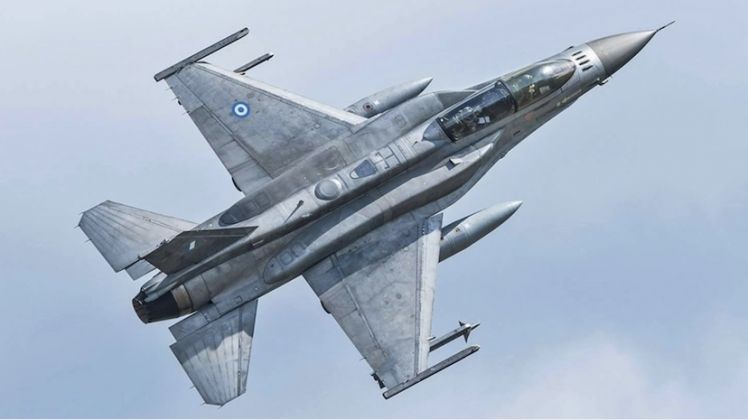
Hellenic Air Force F-16D
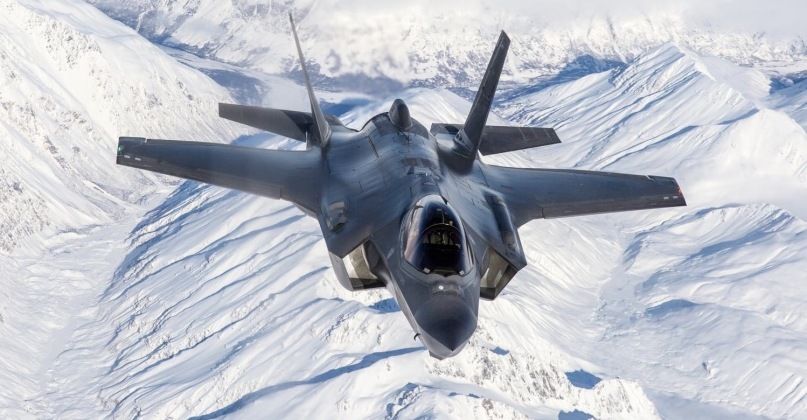
A number of Western and Middle Eastern media sources reported July 17 that 32 F-16 Block 30 fighters set to be decommissioned by the Hellenic Air Force, the official name of the Greek Armed Forces’ air arm, will be returned to the United States by the Greek government. These aircraft are set to be modernised in the U.S. before being delivered to Ukraine as aid. The deal was reportedly facilitated by the U.S. Congress’ approval for the export of 40 F-35A fifth generation fighters to Greece - an aircraft developed as direct successor to the F-35A for the U.S. Air Force and American allies. Greece is set to become the latest of multiple European states to donate F-16s to Ukraine alongside Belgium, the Netherlands and Denmark, all of which were also able to do so largely due to the receipt of F-35As to replace them. In parallel to acquisition of F-35s, the Hellenic Air Force has also begun to receive Rafale ‘4+ generation’ fighters, several of which were donated second hand from France, allowing it to maintain a mixed fleet.
The Greek government first announced the purchase of 40 F-16s in March 1985, as the aircraft quickly became NATO’s primary fighter succeeding the F-104 and F-4 of the two preceding generations. With the aircraft now close to 40 years old, not only are their avionics far out of date, but their operational costs are also particularly high due to the wear on the airframes. The donation of F-16s has fuelled speculation that the country could also donate retired Mirage 2000 fighters to Ukraine, as the French government announced in June that its own Mirage 2000s would be provided to the Ukrainian Defence Ministry to complement F-16 deliveries from elsewhere in Europe. Greece remains the only operator of the Mirage 2000 in Europe other than France, as the French aircraft failed to gain contracts on the continent primarily due to competition from the F-16, which was considered a more capable and much more cost effective aircraft.
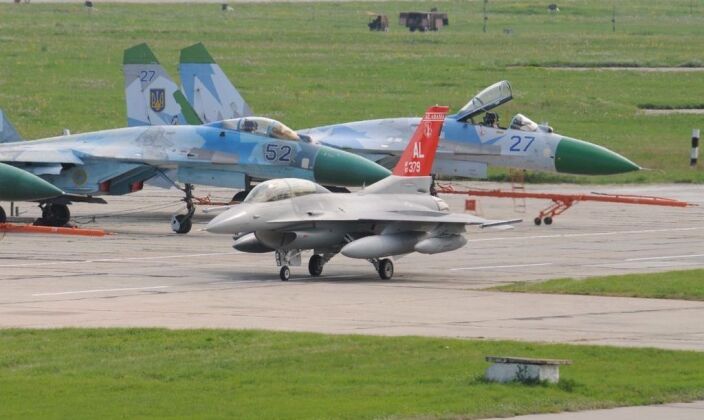
Despite the significant numbers being donated, the F-16 is not expected to transform the balance of power in the air, with its capabilities, in many ways being inferior to those of the Su-27 and MiG-29 fighters the Ukrainian Air Force already fields. While newer variants of the F-16, in particular the Block 70/72 variants, could cause serious difficulties for the Russian Air Force due to the sophistication of their avionics and weaponry, older Cold War era F-16s are significantly outmatched by Russian fighters such as the Su-30SM and Su-35S. Not only do these older F-16s use obsolete mechanically scanned array radars, where all frontline fighters in Russia use modern phased array radars, but this disadvantage is supplemented by the fact that the small F-16 can only carry a radar under one third the size of those carried by most Russian aircraft. F-16s are thus likely to deploy far from the frontlines protected by ground based air defences primarily to launch long range missiles against Russian positions, while being forced to avoid encounters with Russian combat jets.
