
Germany’s Next Generation Eurofighter Variant Makes First Flight: Major Performance Limitations Remain
Military Watch Magazine Editorial Staff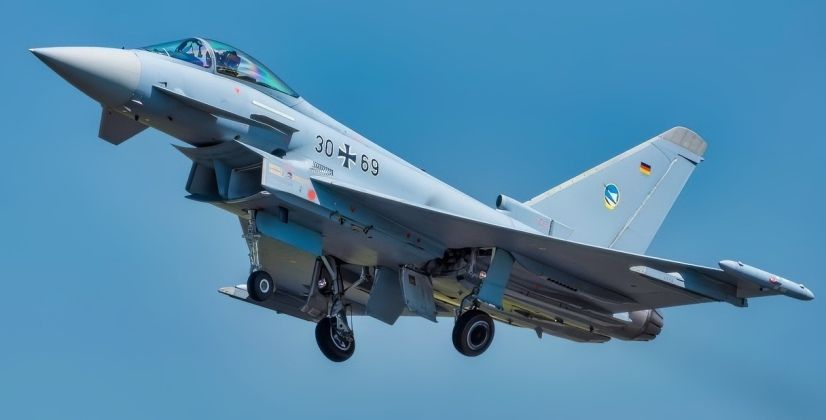
Eurofighter in German Service
Germany’s first Eurofighter built to the new Tranche 4 standard has successfully completed its maiden flight, marking a significant milestone for both the Air Force and the wider European combat aviation industry. The test flight indicates that deliveries of the enhanced fighter remain on schedule to begin later in 2026. The aircraft forms part of Germany’s Project Quadriga procurement program, under which 38 new Eurofighters were ordered in November 2020 to replace the Air Force’s oldest Tranche 1 aircraft. Although Tranche 1 fighters are only a fraction of the way through their service lives, they have long since been considered obsolete and are not cost effective to upgrade.
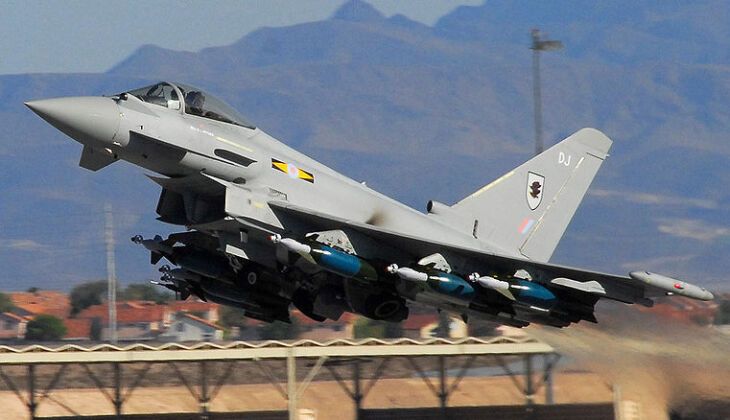
The Tranche 4 Eurofighter upgrade owes much of its existence to export customers in the Gulf, particularly Kuwait and Qatar, whose orders financed development of many of the technologies that Germany is now receiving. The most significant enhancement introduced with the Tranche 4 configuration is the integration of an Active Electronically Scanned Array (AESA) radar. Germany's aircraft will receive the Hensoldt-developed ECRS Mk 1 radar, replacing the mechanically scanned Captor-M radar carried by earlier production aircraft. The Eurofighter and the Swedish Gripen are the last fighter programs in the world to transition away from using mechanically scanned array radars, with these older radars having long left their aircraft obsolete with limited situational awareness and high vulnerability to jamming.
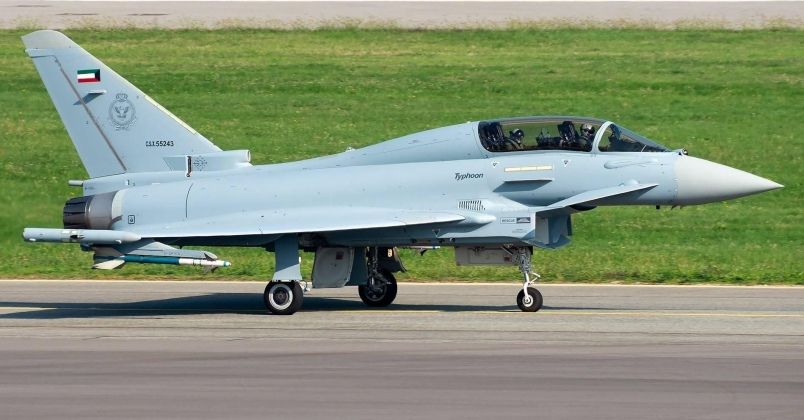
Although the Eurofighter was initially expected to serve as a pan-European combat aircraft, the fighter has consistently lost every tender in which it has competed against the U.S. F-35. Despite considerable pressure from local industry the United Kingdom, one of the fighter’s two primary developers, had permanently shelved plans to purchase more of the aircraft, and will continue to withdraw them from service ahead of schedule while ordering F-35As. Germany has compromised between protecting local industry and maximising combat capabilities by procuring both Eurofighters and F-35s in parallel.
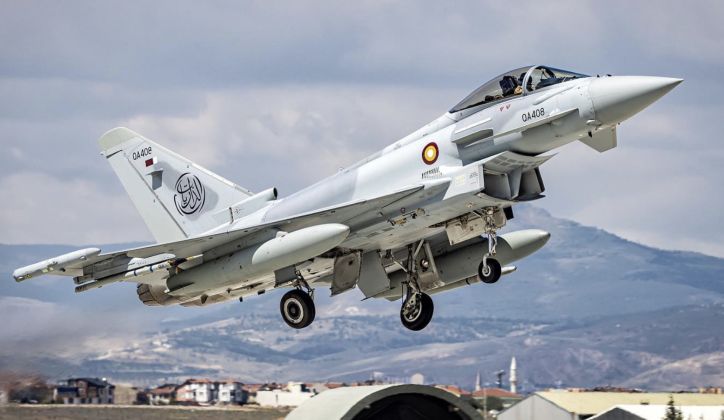
Multiple sources have in 2026 confirmed that Qatar Emiri Air Force Eurofighter combat jets, which were some of the first with Tranche 4 technologies, lost overwhelmingly to J-10C fighters operated by the Pakistan Air Force in simulated air-to-air engagements. The Zilzal-II exercises in Qatar in January 2024 saw the J-10Cs achieve a 9-0 score during engagements. In 2025 it was confirmed that the Qatar Emiri Air Force was seeking to retire its 24 Eurofighters from service, just three years after they began deliveries to the country in 2022. The result of the exercises follows longstanding concerns in Europe regarding the severe limitations of the Eurofighter, with the J-10C notably being by far the cheapest and least capable fighter type being procured by China’s air force.
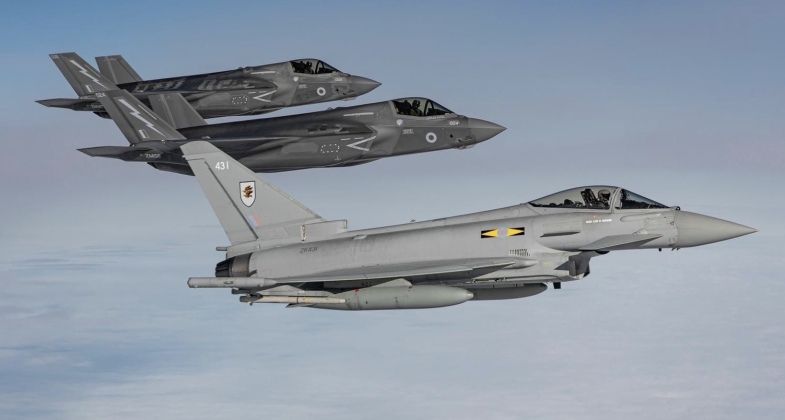
Despite their limitations, the new fighters being procured by Germany are expected to receive expanded strike capabilities through integration of the Taurus KEPD-350 long-range cruise missile. This weapon provides the Air Force with the ability to engage heavily defended targets from stand-off distances well beyond the reach of most modern air defence systems, significantly enhancing the Eurofighter's strategic strike capability compared to earlier configurations. Continued upgrades to weapons integration are expected to remain a central part of the aircraft's evolution throughout the coming decades.
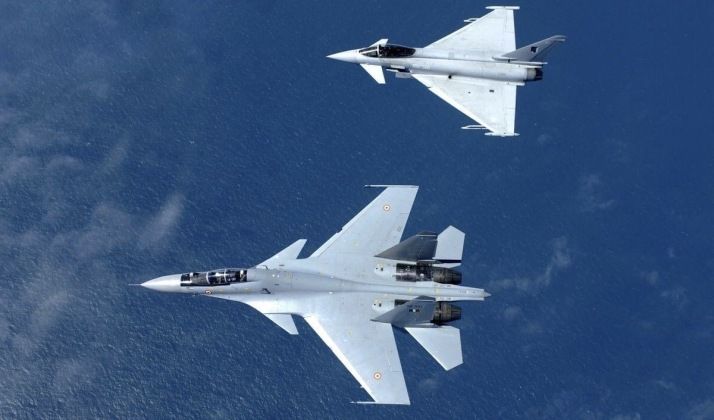
The Eurofighter continues to face fundamental limitations when compared to fifth generation fighter aircraft. Funding for the development of new subsystems remains limited compared to rival fighter programs, in particular the U.S. F-35 and F-15EX, while the design lacks low observable characteristics. It is limited by a relatively short range and small radar size, particularly when compared to the F-15 and Russian fighters such as the Su-57 and Su-30. The serious limitations of Europe’s electronics and engine industries, which remain far behind the cutting edge, mean that the Eurofighter has remained far from competitive both compared to advanced U.S. and Chinese fifth generation fighters, and compared to many of their more capable fourth generation fighter types such as the F-15EX and J-16.
