
USS Gerald Ford and Strike Group Repositions to Within Rapid Strike Range of Venezuela
Military Watch Magazine Editorial Staff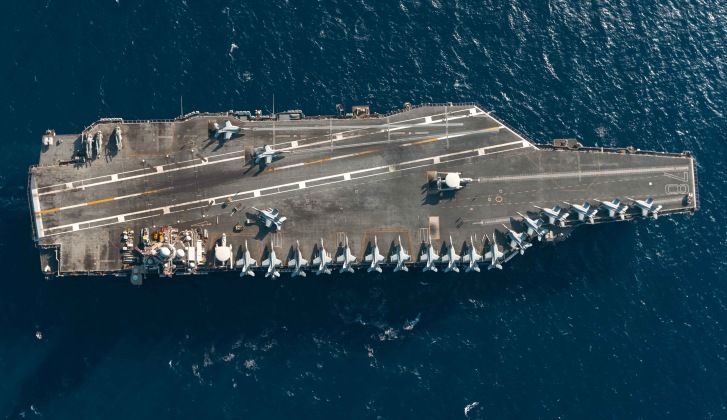
U.S. Navy Supercarrier USS Gerald Ford
The U.S. Navy supercarrier USS Gerald Ford and its strike group have repositioned to approximately around 600 kilometres south-southwest of Puerto Rico, placing them within much closer proximity to Venezuela, amid speculation that Washington could initiate attacks on its southern neighbour. Hours after the ships were repositioned, Secretary of War Pete Hegseth announced the initiation of U.S. ground operations targeting transnational drug cartels operating from within Venezuelan territory. Venezuela and much of the international community have dismissed reports of drug cartels operating from within the country as a fabricated pretext intended to justify military action, with the intention of either overthrowing the resource rich country’s socialist government by force, or crippling its economy by destroying key infrastructure to complement the effects of escalated economic sanctions. These developments have occurred shortly after U.S. forces on December 10 boarded and commandeered a Venezuelan oil tanker in international waters, which marked a major escalation in the conflict between the two states.
The USS Gerald Ford was ordered to Caribbean waters alongside much of its strike group in late October, after which images released by the U.S. Department of War in late November confirmed that the carrier’s air wing had begun to conduct flight operations in the Caribbean Sea. U.S. officials describe the operations part of an expanded readiness posture, with the F-18E/F fighters onboard reported to be simulating attacks on Venezuelan targets. The USS Gerald Ford is the sole warship of its kind, with major delays to the program having postponed the service entry of further next generation supercarriers. Preceding its deployment in the Caribbean, the warship was previously deployed to Europe, including for operations in the Arctic, at a time of high tensions between Russia and NATO.
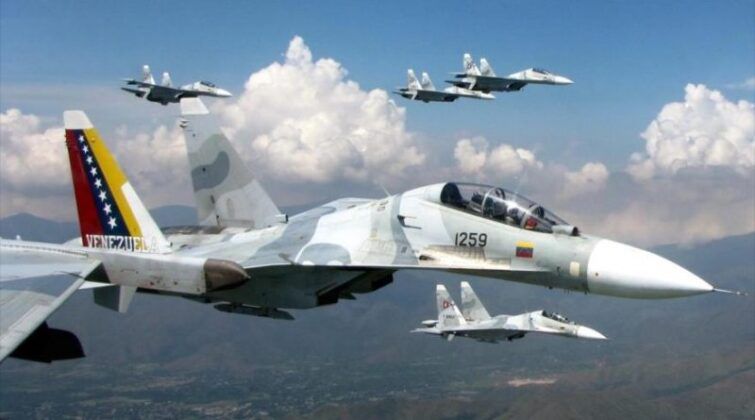
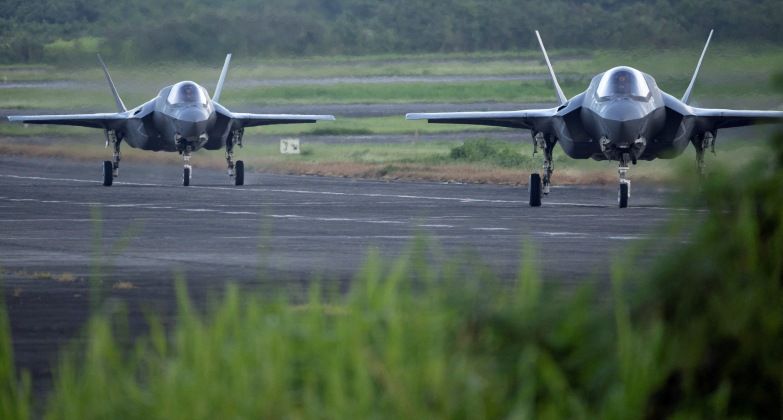
Should the United States launch strikes, the carrier strike group will be supported by a wide range of supporting warships, as well as by ground-based aircraft including E/A-18G electronic attack jets and F-35 fifth generation fighters in Puerto Rico. Delays integrating the F-35C fifth generation fighter with the USS Gerald Ford’s catapult launch system have restricted the supercarrier to operating a combat air wing exclusively made up of older F-18E/F fourth generation fighters. Venezuela fields a small fleet of 21 Su-30MK2 fighters, which are considerably more advanced than any other fighter type ever faced in combat by Western aircraft. These are supported by a ground based surface-to-air missile network built around the S-300VM long range air defence system and multiple complementary shorter ranged systems. The vast numerical advantage the American fighter fleet enjoys in the region, and the deployment of highly potent support aircraft such as the E/A-18G and the E-2D AEW&C system, are expected to place Venezuelan forces at a significant disadvantage.
