
Su-25KM 'Scorpion': The Advanced Israeli-Georgian Attack Jet Built to Fight Russia
Military Watch Magazine Editorial Staff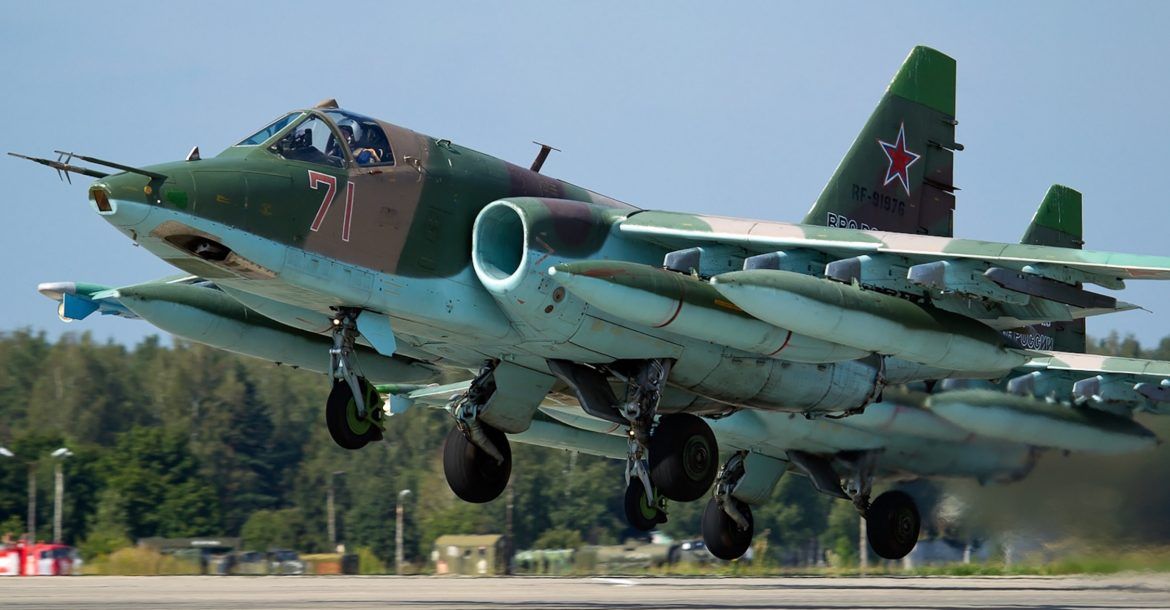
Su-25 Attack Jets
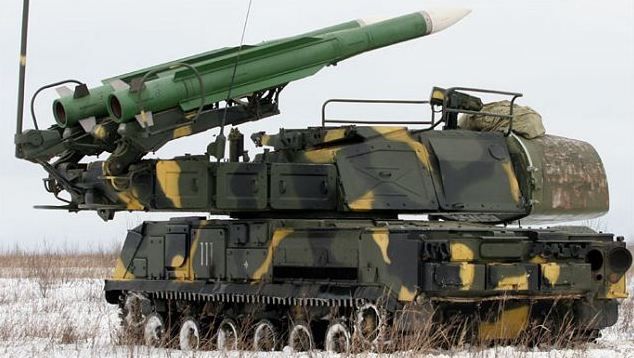
As a Soviet successor state, the small Central Asian Republic of Georgia inherited a number of advanced Soviet made weapons systems following the USSR's collapse which continue to form the bulk of the country's inventory until today. Unlike other larger successor states such as Ukraine and Kazakhstan, Georgia's armed forces received few aerial warfare systems, with the only significant acquisition being approximately twenty Su-25 attack jets. Amid growing tensions with Russia, as well as conflict with the breakaway provinces of South Ossetia and Abkhazia, the country in 2003 begun a significant military modernisation effort in close partnership with both the Western Bloc and Israel. With Georgia lacking a fighter fleet the country resorted to deploying surface to air missile systems and acquiring further missile platforms from other former Soviet defence clients, namely Ukraine, to provide some cover to its ground units. This included acquiring two battalions of BuK-M1 medium range systems from Ukraine and shorter ranged S-125 systems from Eastern European states - which would alongside existing systems form a multi layered air defence network.
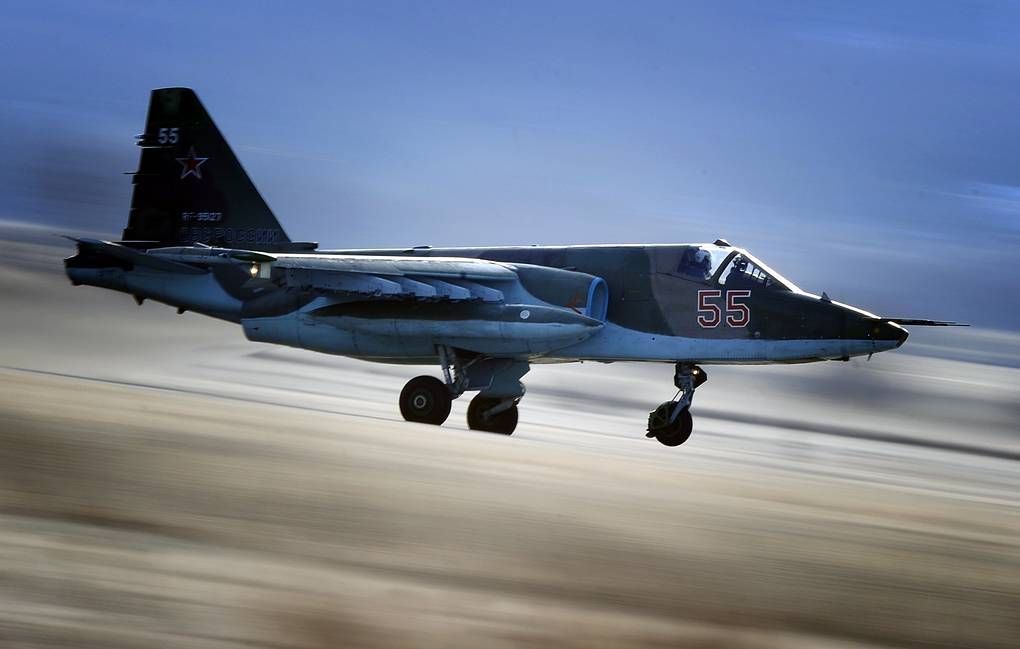
To retain some form of fixed wing military aviation, the Georgian Su-25 attack jets have been extensively modernised with Israeli assistance to keep them viable, making them invaluable assets when engaging separatist forces in South Ossetia and Abkhazia. While Georgia's armed forces have struggle to maintain advanced fighter aircraft, retiring all other platforms such as the MiG-21 inherited from the Soviet era, the Su-25's advanced capabilities combined with their hardiness, low maintenance needs and specialised air to ground role made them ideal to provide the country's ground forces with some degree of air support. The new heavily modernised attack jet would come to be known as Su-25KM 'Scorpion,' and was co developed by Tbilisi Aircraft Manufacturing in Georgia and Israel's Elbit Systems. The program represented one of many by Israel's defence industries to upgrade Cold War era weapons systems to allow them to contend in 21st century battlefields, with upgrades for Indian MiG-21 and Thai F-5 light fighters and Turkish F-4 Phantoms being but a few examples.
The first prototype of the new Scorpion attack jet flew in April 2001, and had considerably superior avionics to the original Su-25. These included a glass cockpit display, digital map generator, helmet-mounted display, complete mission pre plan capability, computerised weapons system and fully redundant backup modes. The aircraft was also equipped with a new navigation system and more accurate weapons delivery systems, as well as superior systems for night fighting. In light of Georgia's growing defence ties with the Western Bloc, which included participation in the Iraq War alongside the United States and Britain, upgrades provided by Elbit Systems also gave the Soviet built jets NATO compatability.
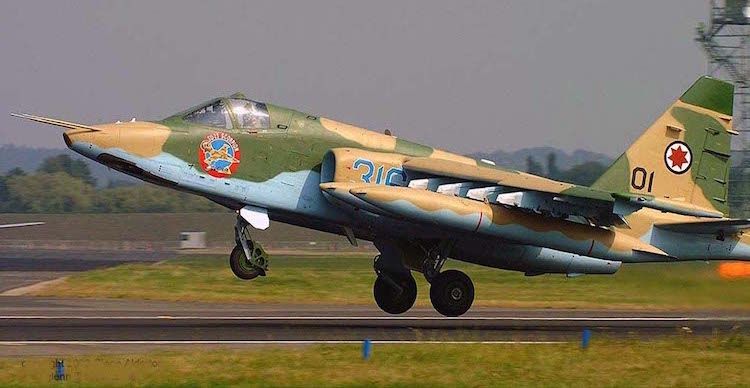
The Su-25KM is primarily designed for an air to ground role to engage enemy infantry and battle tanks, and can deploy precision munitions including Mark 82 and Mark 83 laser guided bombs to fulfil the role of a low altitude light bomber. The aircraft is highly versatile, and alongside a heavy cannon capable of penetrating tank armour the Scorpion also retains limited air to air combat capabilities - making it a truly multirole attack jet. The short range R-73 air to air missile, able to strike adversaries up to 30km away with and all aspect infrared homing guidance system at speeds of Mach 2.5, allows the Scorpion to threaten low flying drones and helicopters. With eleven hardpoints and a load of over 4,500kg, the aircraft can carry a considerable arsenal of missiles and bombs.
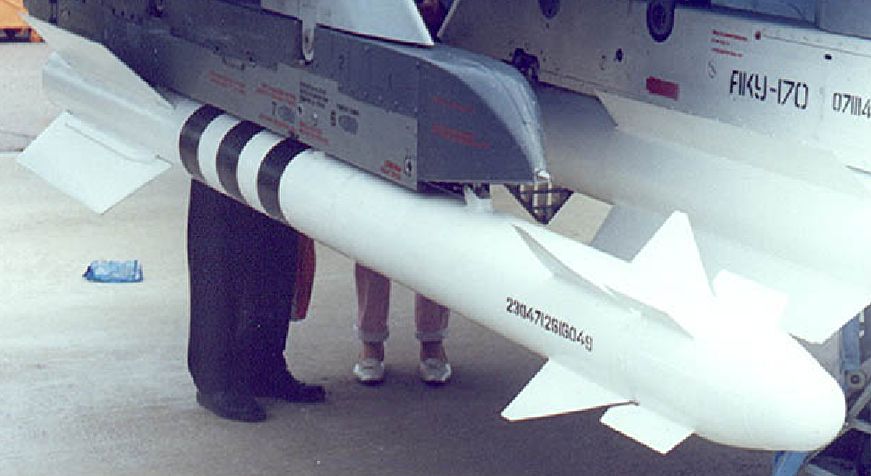
Although it is poorly suited to engaging other fixed wing combat aircraft, a role left to Georgian BuK-M1 missile platforms during the brief war with Russia, the Su-25 is nevertheless a highly capable asset to Georgia's otherwise relatively poorly armed military. It is for this reason that, in light of poor relations with Russia and alleged attacks on Russian border forces, Moscow has placed an arms embargo on Georgia and refuses to sell the country parts to service its Scorpion fleet. The Georgian military is as a result considering retiring the attack jets from service, with only nine remaining operational as of 2020, until which time it is likely to attempt to procure parts from Ukraine or Western aligned former Warsaw Pact states in Europe. The Su-25 is expected to be replaced with Israeli made attack drones such as the Harop, with the unmanned aerial vehicles facilitating the phasing of Georgia's last manned fixed wing combat aircraft out of service.
