
Thailand Selects First Fighter of its New Generation: ‘Frustrated’ Swedish-U.S. Gripen-E Program Finally Gets Export Orders
Military Watch Magazine Editorial Staff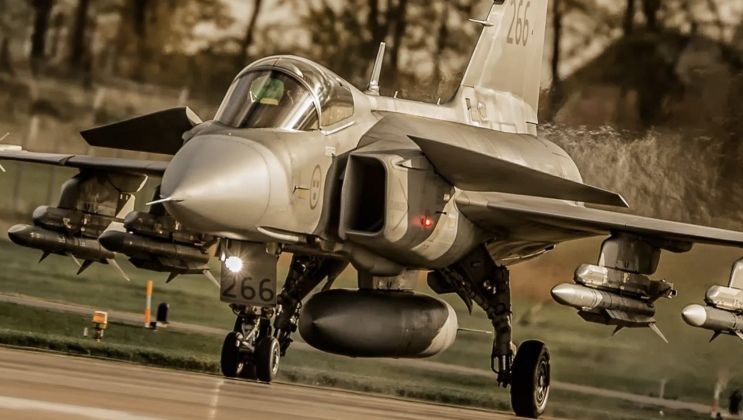
Gripen Fighter
The Royal Thai Air Force has selected the Swedish-American Gripen E/F fourth generation fighter to serve as its next combat aircraft, providing a much needed export success for the troubled program which has otherwise failed to gain traction on global markets. With 10-14 fighters set to be purchased, the Air Force reported that it had spent 10 months making the decision, and that the Gripen E/F “has the capability to match the demand of the military doctrine and the Air Force’s strategy.” A key reason for selecting the fighter is thought to be its high levels of commonality with Thailand’s existing fleet of 11 Gripen C/D fighters, which were ordered 2008 and 2010 in two separate batches. The new Gripen E/F variant uses a new American F414 engine, replacing the less powerful and more maintenance intensive F404 on the original variant, although the two engines are closely related and have significant commonality in their maintenance requirements. Aside from the new engine, the new Gripen variant’s primary improvement over the older model is its avionics, which include the Raven ES-05 active electronically scanned array radar - where the original variant used a mechanically scanned array radar long since considered obsolete the PS-05/A. The aircraft’s data links, electronic warfare systems and other avionics features are also considered to be a full generation ahead of those of the original Gripen.
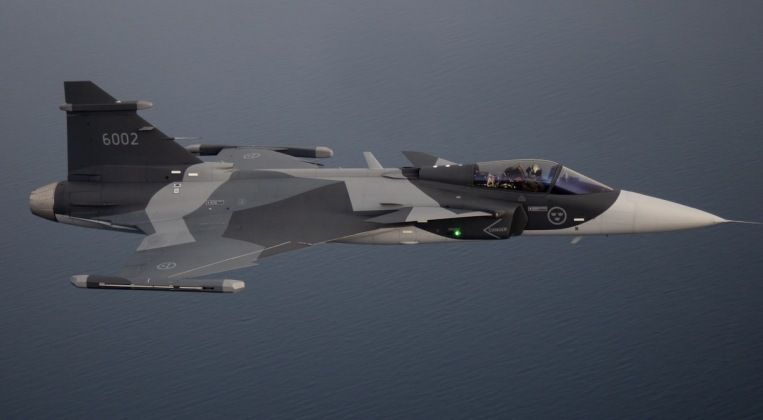
In August 2022 SAAB President and CEO Micael Johansson informed reporters of his “extreme frustration” at the lack of Gripen E/F sales, blaming political factors for the lack of sales, which reflected Stockholm’s much more limited ability to lobby for sales particularly compared to Paris and Washington. The fighter’s primary advantage over its rivals remains its very light weight, far below that of even the F-16, and accompanying very low operational costs and maintenance needs. This has allowed the Royal Thai Air Force to maintain its Gripen fleet’s availability rates at close to 100 percent, despite being an export client. To put this in perspective, the far larger and more complex American F-35 has struggled to maintain 55 percent availability rates in the U.S. Air Force itself. This serves as an effective force multiplier for Gripen fleets, ensuring that even a small fleet of 24 fighters will be able to generate sorties very rapidly in wartime. The fact that the fighters are also far better optimised than others in the Western world, with the exception of the F-35B, to operating from short or makeshift runways, is also a major factor in their favour should airfields come under attack.
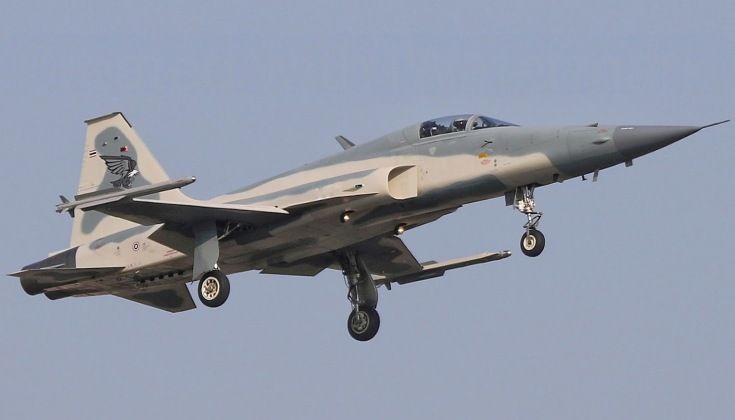
The Gripen E/F’s small size and ease of maintenance notably come at a cost, with the aircraft’s small size meaning its weapons carrying capacity remains very limited, while its ES-05 radar, although sophisticated, is one of the smallest carried by any fighter in the world and can thus provide only very limited situational awareness. The selection of the Gripen E notably follows reports that Thailand’s older Gripen C/D fighters were decisively defeated in mock engagements with the Philippine Air Force’s South Korean FA-50 fighters in Australia in July. Nevertheless, there is little doubt that the Gripen E/F will represent the most capable fighter in the Royal Thai Air Force, with Gripen C/Ds and F-16s in service using obsolete avionics, leaving the F-5TH, a third generation fighter very heavily enhanced with a modern AESA radar and ‘4+ generation’ avionics, as the country’s most potent fighter today.
Gripens are expected to replace some of the older F-16s in the Thai fleet, which alongside a major boost to combat capabilities will also significantly reduce operational costs. The Royal Thai Air Force has notably shown a strong interest in acquiring fifth generation fighters, and after being rebuffed from acquiring American F-35s, is expected to consider acquiring the rival Chinese FC-31 fighter. This would follow trends in the Army and Navy towards a fast growing reliance on Chinese equipment. The high operational costs and maintenance needs of both the F-35 and the FC-31 mean that operating a very low cost light fighter alongside them, like the Gripen E/F, would help to lower the overall Thai fleet’s operational costs maintenance needs.
