
France Transforming Nuclear Forces’ Role in European Security with New ‘Forward Deterrence’ Posture Against Russia
Military Watch Magazine Editorial Staff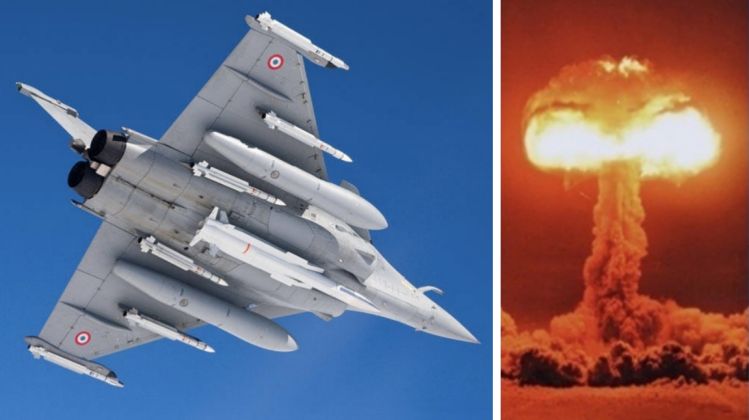
Rafale with ASMP-A Nuclear Missile (left) and Nuclear Explosion
The French Armed Forces have begun to transition the operations of their nuclear forces under a new concept of “forward deterrence,” which represents the most significant evolution in the country’s nuclear posture since the end of the Cold War. Where French doctrine has since the inception of the country’s nuclear weapons program emphasised a strictly national deterrent focused on defending vaguely defined “vital interests,” the new posture explicitly seeks to make French nuclear capabilities more visible, politically integrated with European allies, and operationally relevant to support European NATO members. This falls far short of the U.S. nuclear umbrella, and represents a middle ground towards a more collective European deterrence framework.
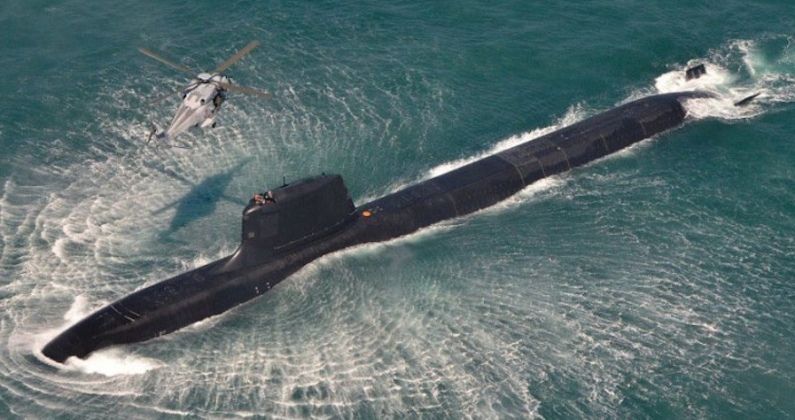
The primarily change being implemented under the new forward deterrence posture is that the French Armed Forces have begun to deploy nuclear-capable assets outside French territory, including for joint exercises with other NATO members such as Poland, as well as to conduct strategic signalling operations with these assets in Eastern Europe. As part of this shift President Emmanuel Macron has indicated that French strategic aircraft could temporarily deploy to allied countries during crises or exercises, and that European states could participate more directly in French deterrence activities. While not formally extending a nuclear umbrella, French doctrine is instead deliberately creating uncertainty about how far the country’s “vital interests” extend, implying that war involving frontline NATO members could be seen to potentially warrant a French nuclear response.
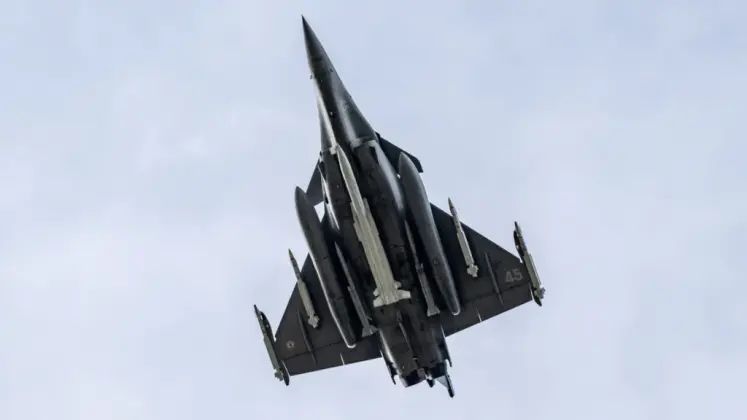
The shift in France’s nuclear posture has occurred as the United States has placed growing pressure on European states to take greater responsibility for their own security interests, as U.S. forces are increasingly thinly stretched particularly in the Pacific, and more recently in the Middle East. Nevertheless, the effects of this shift are expected to be limited by the fact that France’s arsenal remains a small fraction of the size of those of Russia and the United States, and much less diverse in the kinds of delivery vehicles that are deployed. Taking aviation as an example, the country fields a single type of air-launched nuclear weapon, and remains decades behind both the U.S. and Russia in developing a stealth fighter capable of launching nuclear strikes with greater survivability. It appears poised to become the last nuclear weapons state to be able to field post-fourth generation fighters.
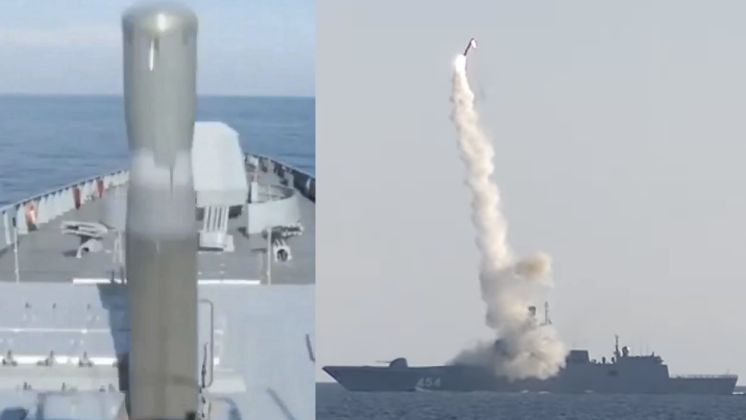
In February 2025 it was reported that the French government was considering options for the deployment of nuclear armed Rafale fighters to Germany, amid growing questions regarding the future of United States’ security guarantees to Europe. The aim of the deployment, according to British press citing an unnamed French official, would be to “send a strong message to Russia.” French President Emmanuel Macron in March 2025 announced the planned opening of a fourth airbase hosting with nuclear-capable fighter aircraft, effectively doubling the country’s nuclear-armed combat aviation fleet from 40 to 80 fighters. In January the following year the president stated that Europe needed to develop an intermediate range hypersonic missile to provide a similar capability to the Russian Oreshnik, elaborating that this would be done under the European Long-Range Strike Approach (ELSA) initiative. This is expected to also be nuclear-capable.
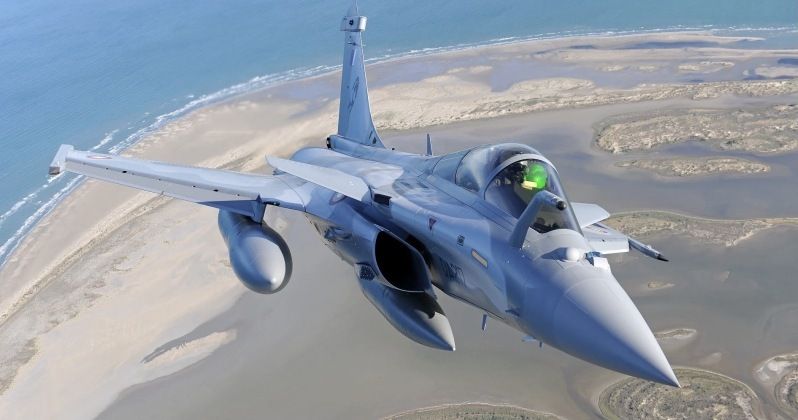
In late April it was reported that France and Poland were preparing to conduct exercises over the Baltics involving Rafale fighters equipped with nuclear warheads, which would simulate strikes on targets in Russia and Belarus, marking a major landmark in the transformation of how France used its nuclear forces. France’s adoption of a pan-European forward deterrence posture against Russia has occurred as the country has played a central role in the ongoing Russian-Ukrainian War, including with deployments of contractors on the ground, and as French officials have repeatedly indicated that the country’s forces could intervene in the conflict on a much larger scale. French President Emmanuel Macron has stated repeatedly that ground force deployments remain an option as part of a policy to “do everything necessary to prevent Russia from winning this war.” . Calls to consider a large scale ground force intervention have been widely raised by European leaders such as Estonian Prime Minister Kaja Kallas, Polish Foreign Minister Radoslaw Sikorski, Lithuanian Foreign Minister Gabrielius Landsbergis, and the Finnish Foreign Minister Elina Valtonen, among others, with the protection of France’s nuclear forces potentially expected to strengthen such calls further.
