
France Pairing Rafales with Stealth Drones to Compensate For Lack of Next Generation Fighters
Military Watch Magazine Editorial Staff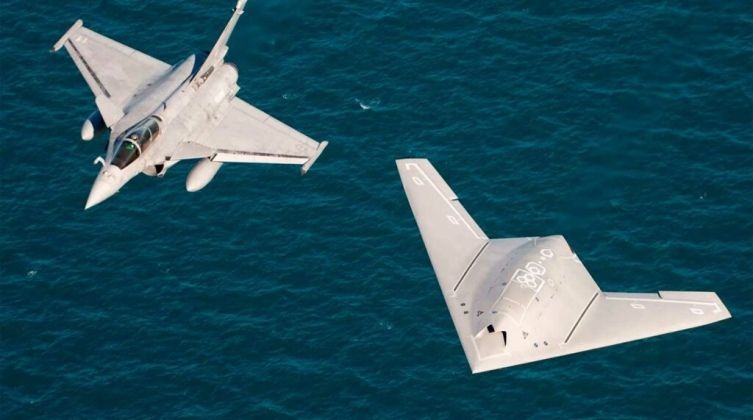
Rafale and Stealth Wingman Drone Prototype
The French Air Force is currently undertaking a restructuring to place a much greater emphasis on drone strike capabilities, including pairing its ageing Rafale fighter aircraft with ‘loyal wingman’ drones, some of which have advanced stealth capabilities. This fits into larger efforts to prevent high value platforms like the manned fighters and attack helicopters from becoming strategically brittle in a battlespace increasingly saturated by low cost drones, loitering munitions, and layered air defences, which will require the development lower-cost sovereign theatre drones. One of the complementary new higher end drones being pared with the Rafale will feature stealth, autonomous control with a human in the loop, and internal weapons carriage, in what has widely been assessed as an effort to reduce the impact of France’s falling decades behind in developing manned stealth aircraft.
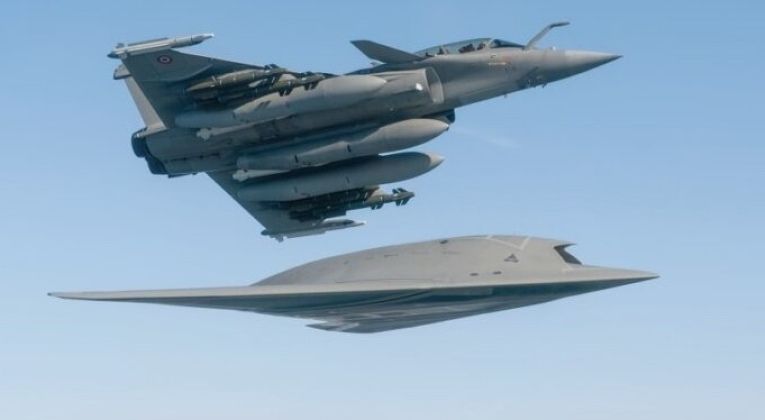
The decision to emphasise integration of the Rafale with loyal wingman unmanned aircraft is likely to have been influenced by the growing difficulties in the German and French led Future Combat Air System (FCAS) next generation fighter program has faced, which has raised questions regarding its viability. It was reported in September that officials at the German Defence Ministry were considering options to leave the program entirely. Even if it avoids collapse, the program is not expected to produce a fighter for over two decades, with Dassault CEO Eric Trappier having observed regarding as early as 2021 that “[The target of] 2040 is already missed, because we already stall, and the discussions of the next phase will surely also be long... so we rather aim for the 2050s.” As a result of these delays, the Rafale is expected to be relied on in France’s elite fighter units for at least two more decades, and likely much longer.
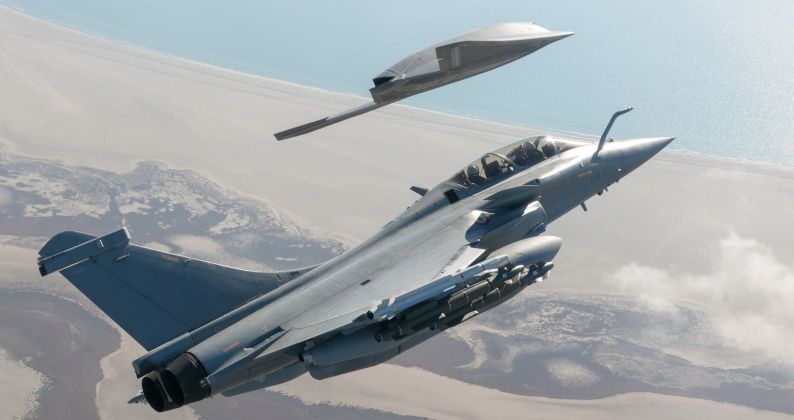
While China, the United States, and Russia have all made efforts to integrate advanced loyal wingman aircraft with their fifth and planned sixth generation fighters, France’s lack of similarly advanced aircraft has forced it to rely on integrating the ‘4+ generation’ Rafale with such aircraft. The Rafale already considered increasingly obsolete in the face of top tier competition such as the F-35 and J-20, which is an issue that will worsen as China brings its first sixth generation fighters into service in the early 2030s, closely followed by the United States with the F-47 fighter. Not only does the Rafale lack stealth capabilities, but it is also much smaller than rival fighters like the Su-57, J-20 and even the relatively light F-35, restricting it to carrying a much smaller radar, and limiting its fuel capacity and range.
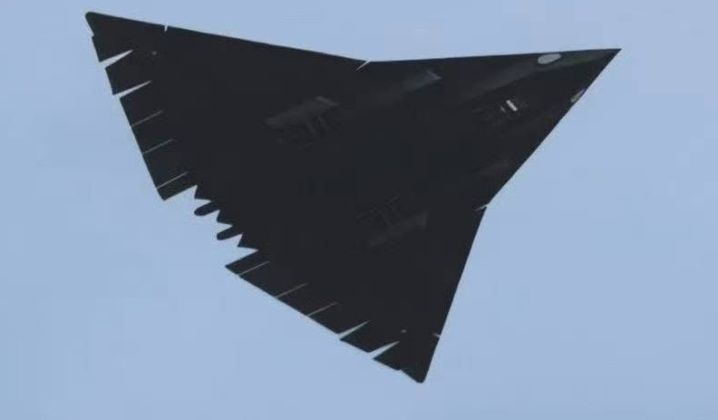
Questions regarding the Rafale’s combat potential were further raised from mid-2025, after between one and four of the fighters operated by the Indian Air Force were reported to have been shot down by the Pakistan Air Force in May that year, at least some of them by new Chinese-supplied J-10C fighters. While the Rafale is widely considered to have the highest combat potential of any European fighter type, the J-10C is by far the least capable fighter currently being procured by the Chinese People’s Liberation Army, highlighting the vast and growing discrepancy between European fighter capabilities and those of China and the U.S. With France remaining unwilling to procure U.S. F-35 fighters both for political reasons, and to protect local industry, however, the country is faced with an inevitable continued decline in the capabilities of its fighters units. The viability of pairing non-stealth fighters with stealth unmanned loyal wingman aircraft has itself widely been called to question.
