
France Prepares New Air Base to Host Expanded Nuclear-Armed Rafale Fighter Fleet
Military Watch Magazine Editorial Staff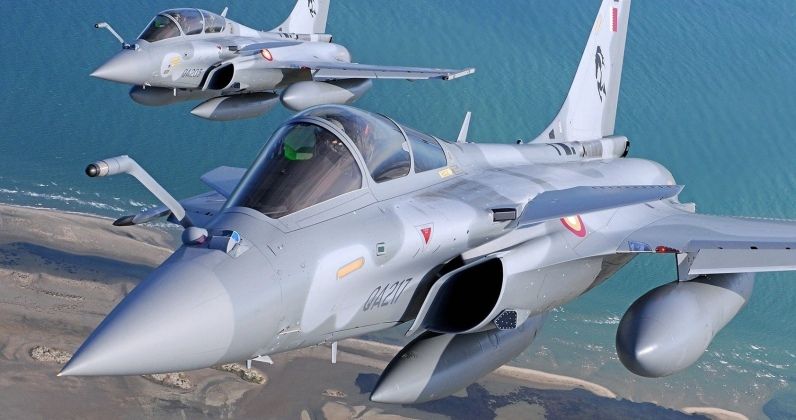
Rafale Fighters
The French Air Force has begun a major transformation of Luxeuil-Saint-Sauveur Air Base to prepare the facility to become the country’s fourth nuclear-capable air base and home to planned Rafale F5 fighters equipped with the next-generation ASN4G hypersonic nuclear missile. The €1.5 billion ($1.7 billion) reconstruction program represents one of the most significant investments in French military aviation infrastructure in decades, and reflects the prioritisation of strengthening the country’s nuclear forces. French President Emmanuel Macron in March 2025 announced that the base would return to a central role in France’s airborne nuclear mission.
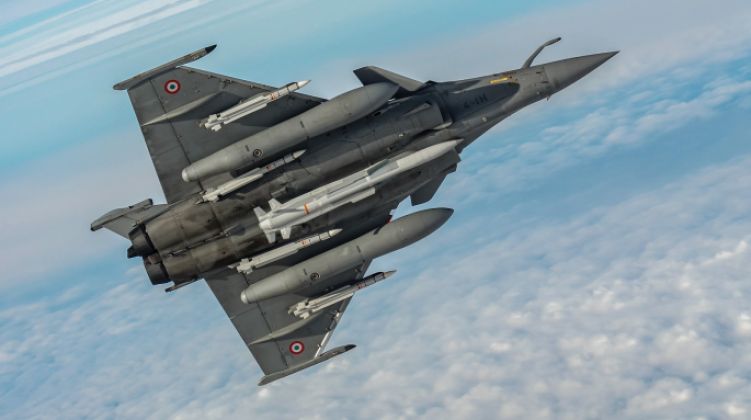
By 2035, Luxeuil is expected to host two Rafale F5 squadrons, bringing approximately 40 of the fourth generation combat aircraft to the facility. Reconstruction will involve extensive upgrades to runways, aircraft shelters, security infrastructure, operational facilities and accommodation. French defence authorities have stated that the base’s personnel numbers will increase significantly, reaching around 2,000 military and civilian personnel as the facility expands to support the additional squadrons. Preparatory work has already progressed, with initial contracts issued to begin the transformation of the installation.
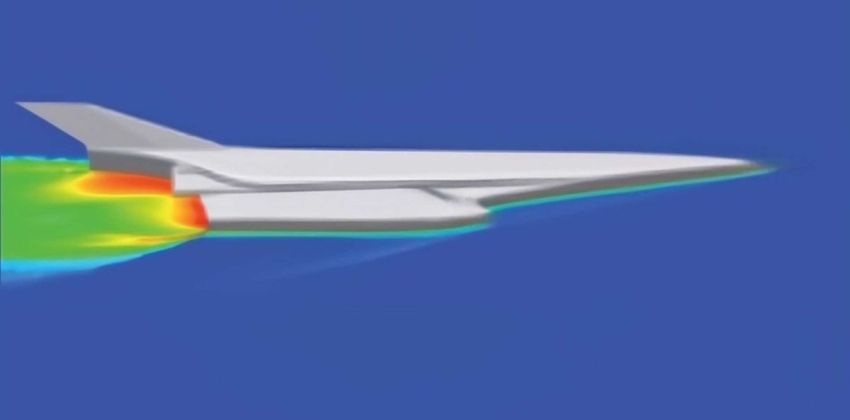
Compared to the currently operational Rafale F4, the Rafale F5 is intended to provide major improvements in connectivity, sensors, weapons integration and electronic warfare capabilities. Crucially, it will be designed to carry the ASN4G missile, which will provide the airborne component of France’s nuclear deterrent with a significantly enhanced stand-off capability against increasingly sophisticated air defence networks. The new missile is expected to replace the current ASMPA missile carried by Rafale B fighters operated by the French Strategic Air Forces. Compensating for the increasingly obsolete capabilities of the Rafale itself, including its lack of stealth capabilities, the missile will rely on hypersonic speeds, high manoeuvrability, and a long range, to allow the ageing fighters to engage targets from safe distances while maintaining a high chance of penetrating advanced air defences.
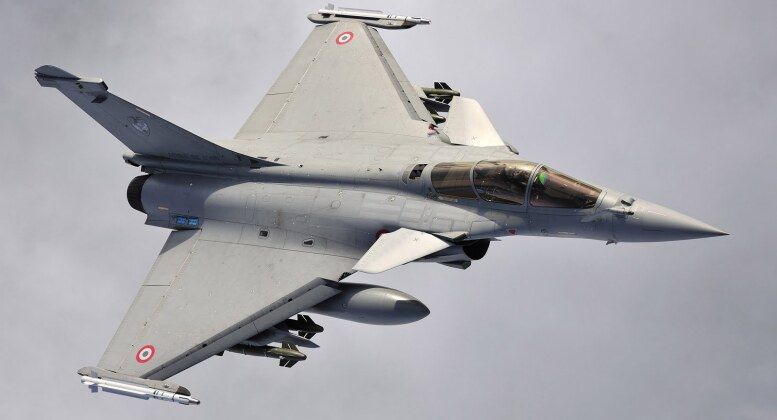
Beyond its nuclear role, the reconstruction of Luxeuil demonstrates France’s broader effort to adapt its air force infrastructure for high-intensity conflict. Future conflicts are expected to place greater emphasis on survivability, dispersed operations, hardened facilities and rapid regeneration of combat power. By investing in upgraded bases alongside next-generation aircraft and weapons systems, France aims to ensure that its air forces remain capable of operating against advanced adversaries. Investment in the facility has been made as France expands Rafale procurements, while showing no sign of being able to procure post-fourth generation fighter types within the next two decades.
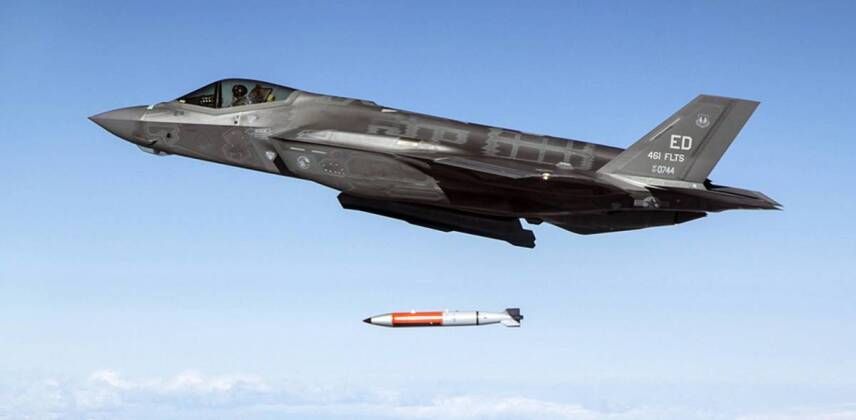
France is likely to become the world’s last nuclear weapons state without a stealth fighter capability, as Pakistan, India and North Korea are all expected to make procurements of fifth generation fighters within the next decade. The Rafale is already considered increasingly obsolete in the face of top tier competition such as the U.S. F-35 and Chinese J-20, an issue that will worsen as China brings its first sixth generation fighters into service in the early 2030s, followed by the United States with the F-47 fighter. While other air forces in Europe including Germany and the United Kingdom compromised on their prior reluctance to procure U.S. F-35A fighters, France’s unwillingness to acquire more advanced and cost effective American fighters, and inability to develop its own fifth or sixth generation fighters, will increasingly constrain the combat potential of its air force for both nuclear and conventional roles.
