
France to Develop Next Generation Successor to the Rafale Fighter Alone After Collapse of Joint European Program: Can it be Competitive?
Military Watch Magazine Editorial Staff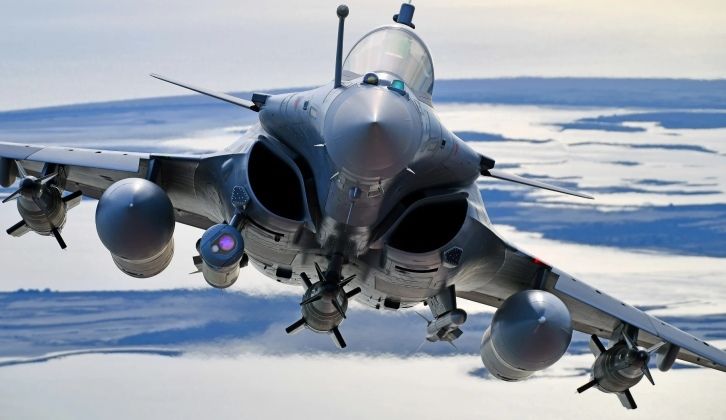
Rafale Fighter
After the Future Combat Air System (FCAS) next generation fighter program was on June 8 confirmed to have collapsed, the French defence sector, which was a partner in the program alongside those of Germany and Spain, has been widely assessed as likely to pursue development of a next generation fighter independently. A notable indication of this has been the comments of the CEO of the French firm Dassault Aviation, Eric Trappier, that France should retain the ability to independently design and produce a future generation of combat aircraft, rather than relying entirely on multinational European programs. He repeatedly stated that France possesses the expertise to develop a next generation fighter on its own if necessary, citing the country’s uninterrupted history of designing aircraft from the Mirage series to its latest fighter, the ‘4+ generation’ Rafale. Trappier said France was looking at options to develop “an extra generation independently,” in referenceto maintaining a sovereign technological path beyond the current Rafale and even beyond the troubled FCAS program.
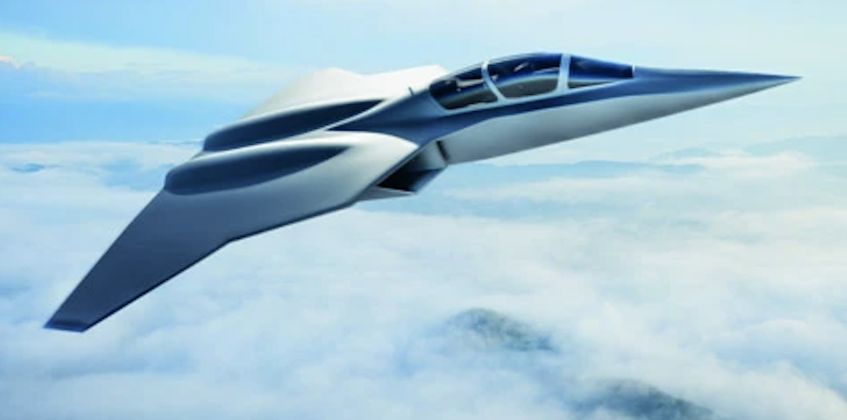
France has retained a degree of autonomy in airframe and stealth design, combat avionics and mission systems, nuclear strike certification for France’s airborne deterrent, aircraft carrier compatibility for operations from the French Navy’s future carrier, and integration of indigenous weapons and loyal-wingman drones, which allows it to develop fighters with a greater degree of independence than other European states. Trappier has thus been able to argue that dividing technical authority among multiple nations can slow development and dilute accountability, whereas a nationally led programme could move faster and better protect sensitive technologies. Unlike other European countries, France has long sought to preserve a complete domestic aerospace industrial base capable of designing and manufacturing advanced combat aircraft without foreign dependence.
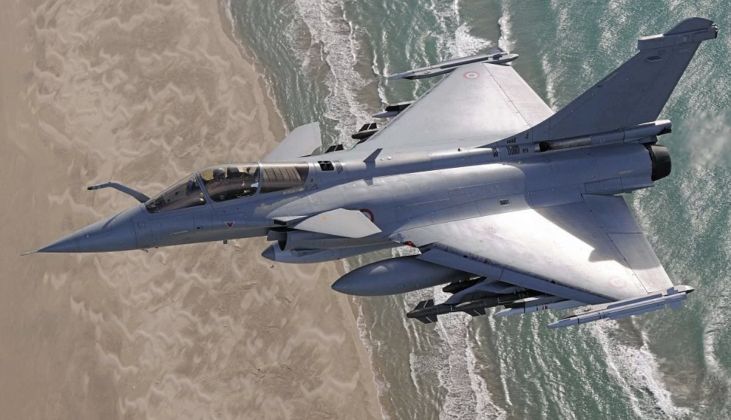
While European fighters are considered far from competitive internationally, as demonstrated by their consistent losses in tenders against aircraft like the U.S. F-35 and Russian Su-30, the French defence sector has a significantly better record than those of other European states. The Rafale was brought into service half a decade before the Eurofighter, which had been jointly developed by the United Kingdom, Germany and Italy, and combined a longer range and lower operational costs, with a far more sophisticated radar. It used a phased array radar from the outset in 2001, 20 years before the Eurofighter, and transitioned to a more advanced active electronically scanned array radar in 2013, when the Eurofighter was still being built with an obsolete sensor suite. Thus while European fighters are expected to remain far from competitive against rival U.S. and Chinese fighter types, and increasingly so, the trends seen in the fourth generation indicate that an independently developed French next generation fighter may be less problematic and less uncompetitive than a pan-European one.
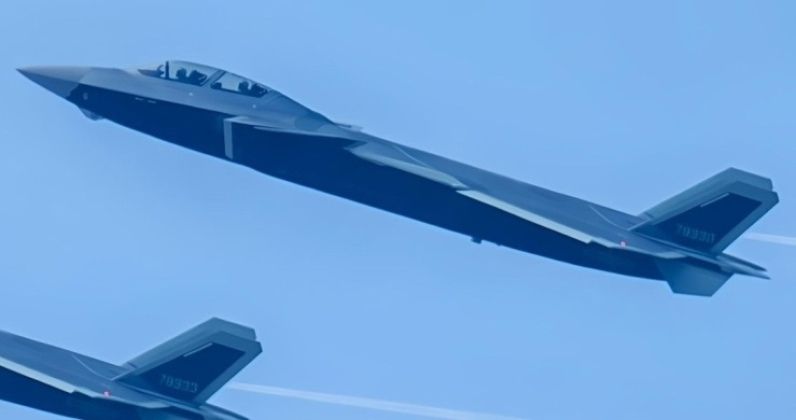
Although the FCAS and the rival Global Air Combat Programme being developed by the United Kingdom, Japan and Italy have both been marketed as sixth generation fighter programs, both are expected to produce aircraft that are at best considered ‘5+ generation,’ and are far from full parity with U.S. and Chinese sixth generation aircraft. Even the development of a ‘5+ generation’ fighter on par with future enhanced variants of the F-35 or J-20 is expected to be highly challenging for European industries, and for France alone to achieve. The financial burden of developing such aircraft is vastly greater than that of previous generations, with the F-35 having cost close over $100 billion to develop, while less efficient European defence industries have consistently required more funding to achieve similar results to U.S. industry. The much smaller scale of French industry, its very limited electronics industry, and the much more limited scale at which research and development is conducted in the country, all indicate that the country cannot produce a next generation fighter competitive with the F-35 or J-20.
