
France and Britain Deploy Rafales and Eurofighters to Support Air Campaign Against Iran
Military Watch Magazine Editorial Staff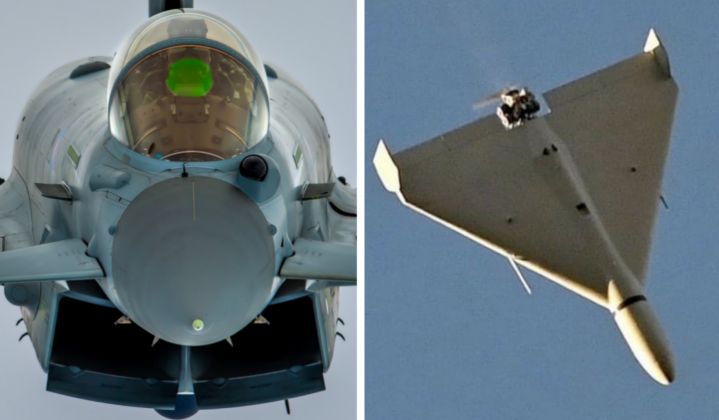
Eurofighter (left) and Iranian Shahed 136 Attack Drone
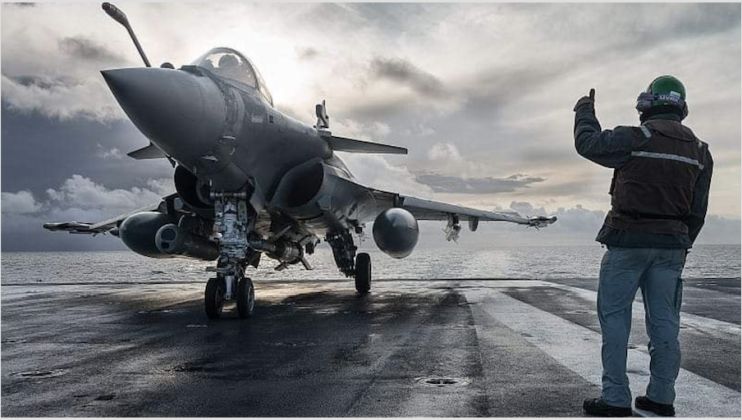
France and the United Kingdom have both deployed fighter aircraft to the Persian Gulf region to support air defence efforts against Iran, after the United States and Israel launched attacks on the country on February 28, which led Iranian forces to retaliate by striking U.S. military facilities and strategic targets across the region, and multiple high value targets in Israel. French Air Force Rafale fighters have reportedly been deployed to Al Dhafra Air Base in Abu Dhabi, where they have been conducting air-security patrols over the United Arab Emirates, a major hub for U.S. operations against Iran. The French Navy has also deployed its sole aircraft carrier, the Charles de Gaulle, to the Mediterranean, with the warship’s air wing comprised primarily of Rafale fighters expected to provide additional support to operations against Iran.
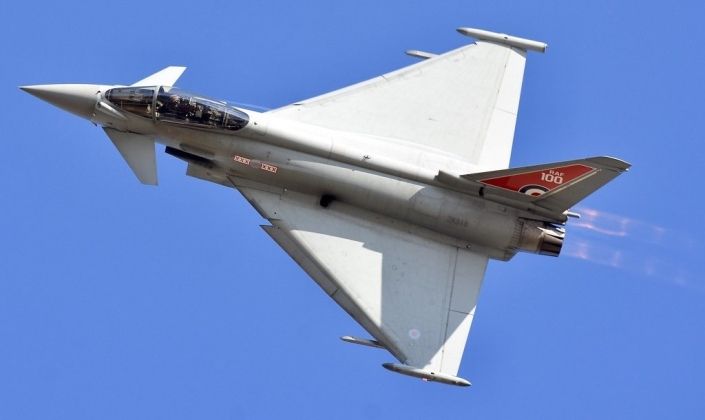
The British Royal Air Force in January pre-positioned Eurofighter FGR4 combat jets operating under No. 12 Squadron at Al Udeid Air Base in Qatar, supporting the broader and much larger scale military buildup initiated by the United States that month to prepare for attacks on Iran. These fighters have also been involved in flying defensive air patrols to intercept drone and missile attacks, with one of the fighters on March 1 reported to have shot down an Iranian single use drone. Although the Eurofighter and the Rafale both lack anti-ballistic missile capabilities, they are capable of engaging low value unmanned aircraft, such as the Shahed 136 single use attack drone, which have been launched against military and strategic targets in significant numbers.
The Eurofighter and Rafale were initially developed under a joint program, before France left to complete work independently. This has resulted in the two fighter types having very similar designs and highly comparable capabilities. The Rafale until the early 2020s had the advantage of a significantly more capable radar, with the aircraft from 2001 having used a passive electronically scanned array radar, and from 2013 an active electronically scanned array radar, providing overwhelming advantages in terms of situational awareness, targeting capabilities, and electronic warfare capabilities over the Eurofighter’s obsolete Captor mechanically scanned array radar. The large majority of Eurofighters, including all those in British service, still use these obsolete sensors.
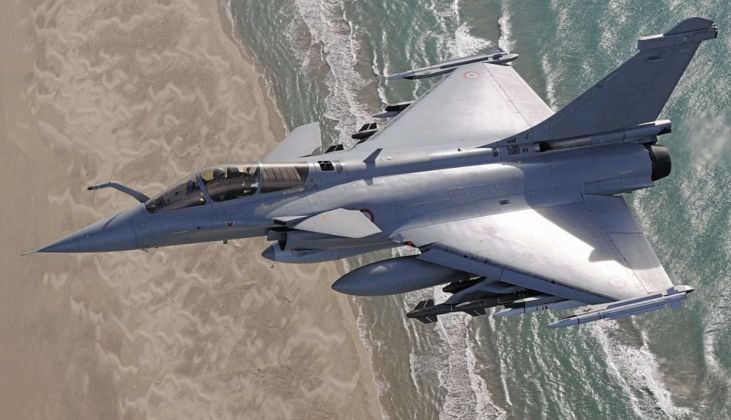
The Rafale’s superior sensors have contributed to its achieving much greater success on export markets, with the Eurofighter widely considered an export failure. Nevertheless, both fighter types are restricted to carrying radars that are small and have very limited power compared to the much larger fighters fielded by the United States, China and Russia, including the F-15 fighters sold to Qatar and Saudi Arabia, and the Su-35s which Iran was scheduled to receive later in 2026. Primary responsibility for air defence operations against Iranian drone strikes was previously assigned to U.S., Israeli and Qatari F-15 fighters, which combine very long ranges with powerful sensor suites and large weapons carrying capacities, optimising them to loiter and engage large numbers of low value targets.
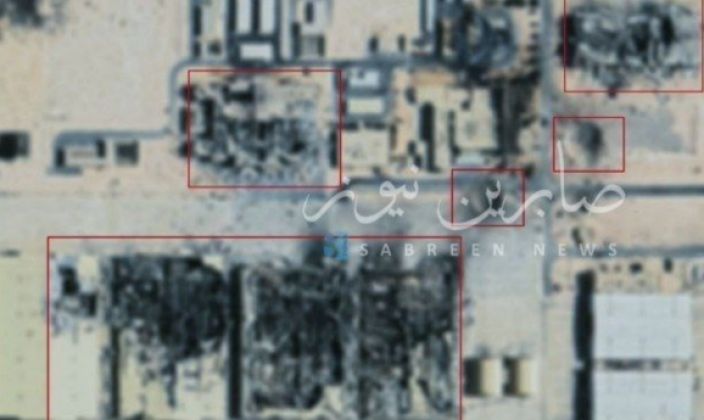
Al Udeid is the largest foreign air base operated by any country in the world, giving it critical importance for a U.S.-led assault on Iran, with satellite images indicating that missile defence efforts at the facility have been far from successful, and that it has suffered critical damage. Alongside the deployment of Eurofighters in Qatar, the British Royal Air Force has also deployed F-35B fighters at RAF Atkotiri in Cyprus, where they have reportedly also ben responsible for shooting down a single Iranian single use drone. The British Royal Navy has also dispatched the Type 45 class air defence destroyer HMS Duncan to further support regional air defence efforts against Iran, although the ship’s lack of any ballistic missile capabilities, a longstanding shortcoming, combined with its very limited arsenal of just 48 vertical launch cells, are expected to seriously limit its effectiveness.
