
Footage Shows Russian Su-35 Fighter Hunting Ukrainian FP-1 Drone Over Leningrad
Military Watch Magazine Editorial Staff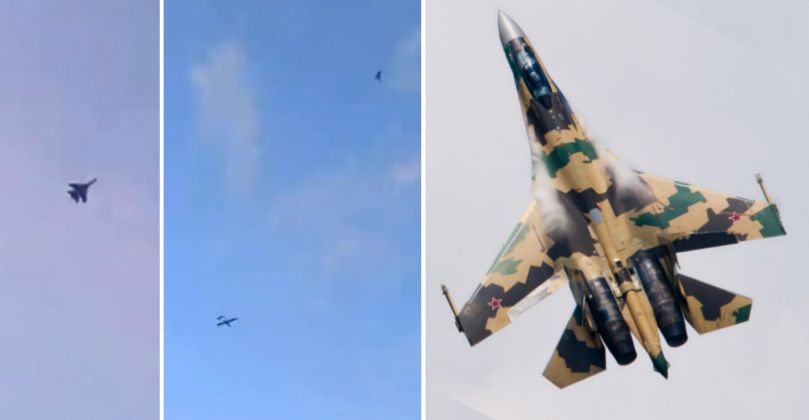
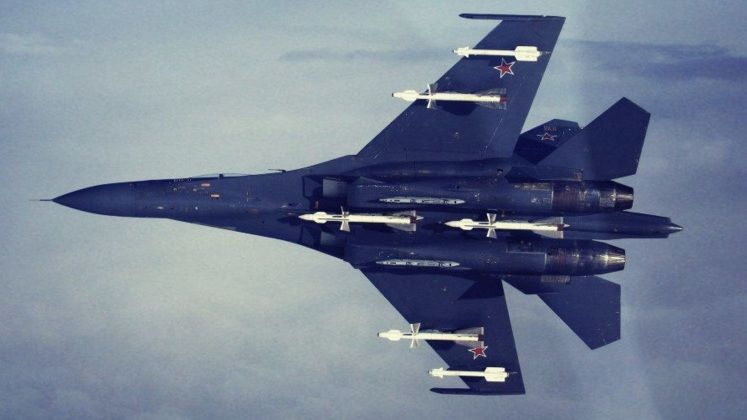
Su-35 Pursues FP-1 on July 25 (left) and Su-35
Footage taken on July 25 has shown a Russian Aerospace Forces Su-35S air superiority fighter pursuing a Ukrainian FP-1 drone over the Leningrad region, in an apparent effort to shoot it down using the fighter’s main gun. Among Ukraine’s vast and growing fleet of long-range one-way attack drones, the FP-1 has become a particularly central component of the ongoing campaign targeting Russia’s critical infrastructure, military bases, logistics hubs and industrial facilities hundreds of kilometres behind the front lines. The use of one of Russia’s most capable fighters to intercept relatively inexpensive unmanned aircraft underlines the growing strategic impact of long-range drones, while also highlighting the strain such attacks are placing on Russian air defences.
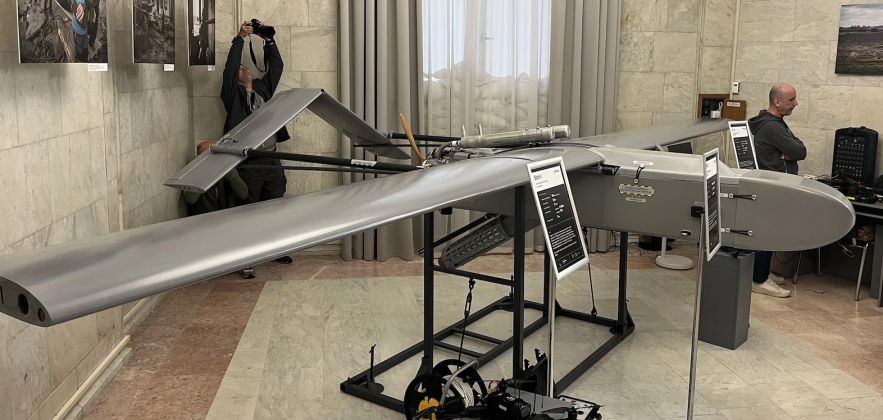
The FP-1 first emerged publicly in 2024 before entering wider operational service in 2025. Designed as a low-cost, expendable long-range strike platform, the drone has reportedly been produced in significant numbers with extensive support from Ukraine’s expanding domestic defence industry. Although exact specifications remain classified, open-source estimates indicate a range of approximately 1,000-1,600 kilometres, allowing it to strike targets deep inside Russian territory. The drone carries a substantial high-explosive warhead estimated at between 50 and 120 kilograms, depending on the mission profile, enabling attacks against fuel depots, aircraft shelters, industrial facilities and command infrastructure.
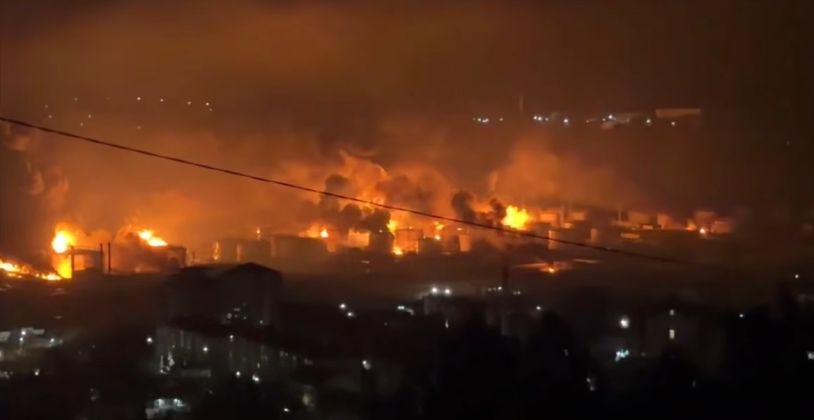
Unlike more sophisticated cruise missiles, the FP-1 is comparatively inexpensive to manufacture. Constructed using commercially available components where possible, it is intended to overwhelm Russian air defences through mass rather than survivability. Flying at relatively low altitudes and often programmed to approach targets from unexpected directions, the drone complicates interception efforts, particularly when launched alongside other unmanned systems intended to saturate defensive networks. The expanding use of the FP-1 has contributed to a sharp increase in attacks on Russian territory. Airfields housing strategic bombers, oil refineries, ammunition depots and defence manufacturing facilities have all reportedly been targeted.
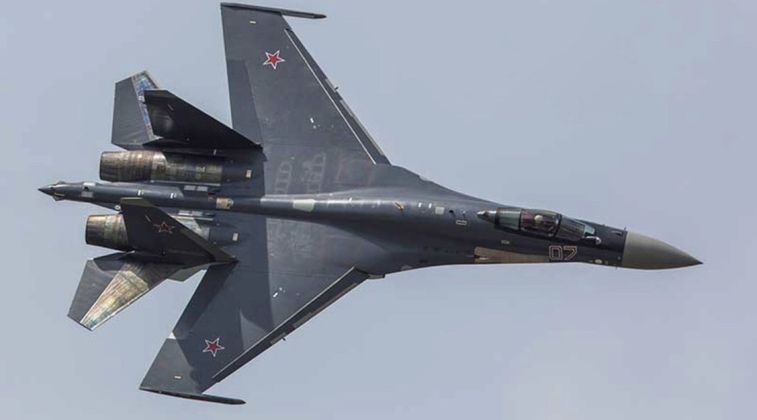
The Su-35’s Irbis-E radar is among the largest and most powerful even integrated onto a fighter, and is optimal for engaging low observable targets at range. The small heat signature emitted by the FP-1, however, will make targeting using an infrared search and tracking system much more challenging than engaging jet aircraft. A primary challenge when engaging the drones is that the Su-35’s air-to-air missiles are all considerably more costly than the targets themselves, which means it is necessary to manoeuvre for gun kills to make operations somewhat cost effective. Nevertheless, the considerable reserves of Soviet era R-27, R-73 and R-60 air-to-air missiles which Russia inherited, many of which are nearing the end of their service lives, could potentially be used for counter-drone operations, which would be less costly than decommissioning the missiles from service at a later date.
Russian analysts have highlighted the Armed Forces’ inability to provide a viable defence against launches of large scale Ukrainian drone attacks, publishing images showing large urban blocks in flames across multiple population centres in the country. In late March Secretary of the Russian Security Council Secretary Sergei Shoigu confirmed that Ukrainian long-range drones had begun to pose a direct threat to regions deep inside Russia, including the strategically critical Ural industrial area, raising the possibility that the air campaign will significantly further expand in scope. Ukrainian attacks on key strategic targets in Russia have received tremendous support from across the Western world, particularly within Europe. In July 2025, for example, German Army Major General Christian Freuding advocated for further Ukrainian attacks targeting Russian airfields and defence related production facilities. “Use long-range air warfare assets to strike aircraft and airfields before they are used.
