Footage Shows North Korean Nuclear Warheads and Production Facilities as Arsenal Expands
Military Watch Magazine Editorial Staff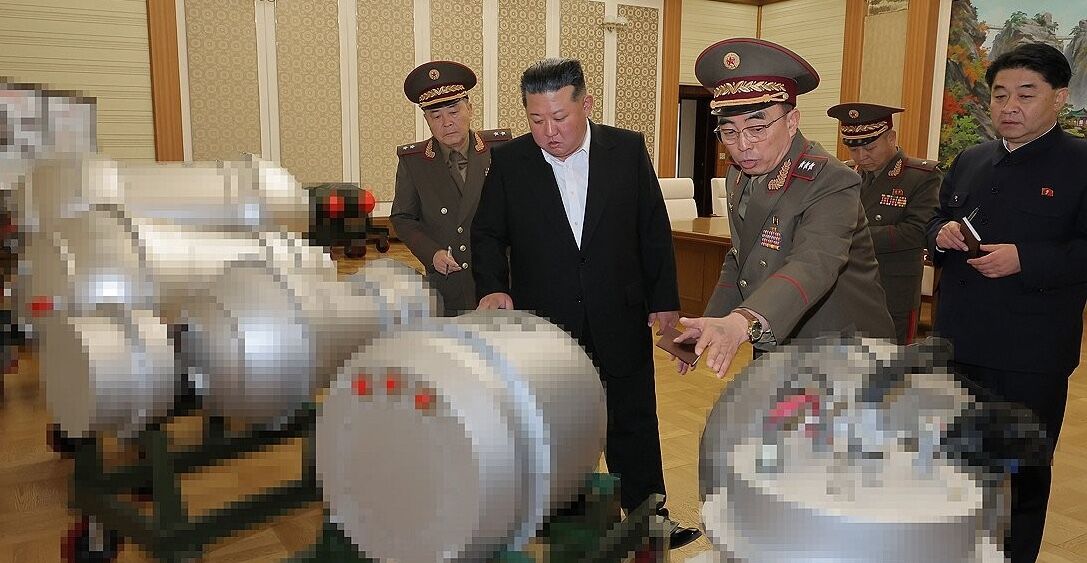
North Korean Leadership Figures Inspect Nuclear Warheads
New footage has shown North Korean leadership figures inspecting nuclear warheads and associated production facilities, as the chairman of the ruling Korean Workers’ Party Kim Jong Un has reaffirmed his commitment to expanding the country’s nuclear arsenal. Chairman Kim declared that Pyongyang would not seek recognition or approval from other governments for its status as a nuclear-armed state. He added that the country was “systematically and steadily expanding nuclear-material production capacity” to strengthen its arsenal. During inspections the chairman reviewed nuclear warhead designs and visited a uranium enrichment facility, the locations of which were not disclosed.
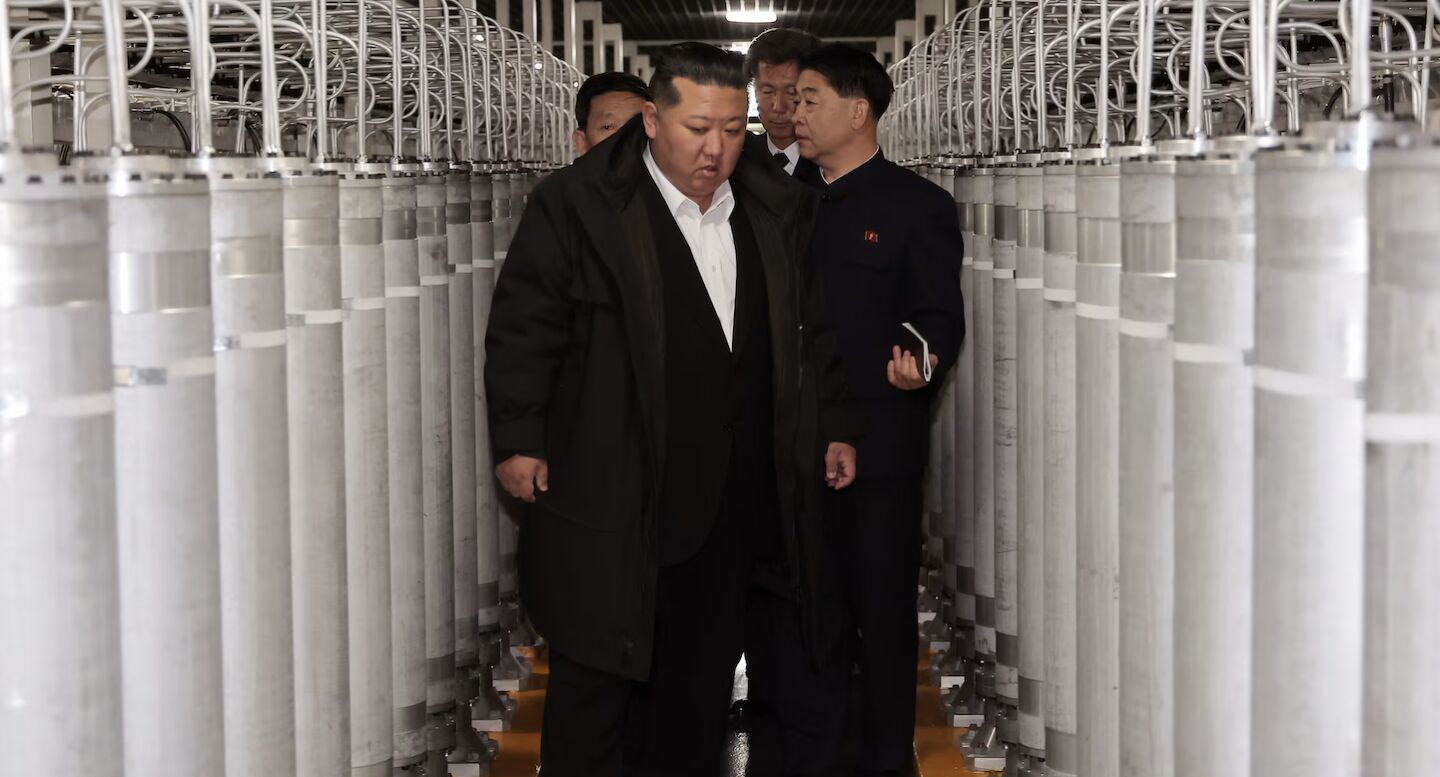
Chairman Kim specifically called for tactical nuclear weapons to be used across a wider range of missions, describing the task as urgent in view of modern warfare and what he characterised as the threat posed by the United States. This reflects a broader trend towards the widening of the military roles assigned to nuclear weapons, which were in the 2010s relied on purely for strategic deterrence. This also indicates that the arsenal has reached sufficient size that it can be relied on for roles beyond strategic deterrence, and that warheads are sufficiently sophisticated that their yields can be calibrated to the requirements of tactical strikes.
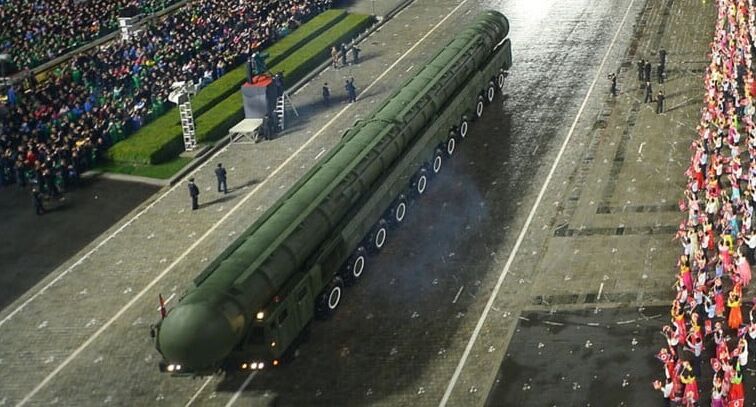
North Korea tested its first nuclear weapon in 2006, and would subsequently develop a miniaturised thermonuclear warhead which was declared combat ready in 2017. 2017 also saw the country complete development of two intercontinental range ballistic missiles, the Hwasong-14 and Hwasong-15, which both demonstrated a capability to deliver strikes against the United States mainland. This was seen to have brought about a more equal balance of power between the two longstanding adversaries. Chairman Kim has accused the United States of encouraging nuclear proliferation among its Northeast Asian allies through nuclear-sharing arrangements and joint nuclear operations. He characterised these efforts as the creation of a broader nuclear military alliance, which it was implied made further expansion of North Korea’s own arsenal necessary.