
Footage Confirms Two More U.S.-Supplied Abrams Tanks Destroyed by Russian Forces in Pokrovsk
Military Watch Magazine Editorial Staff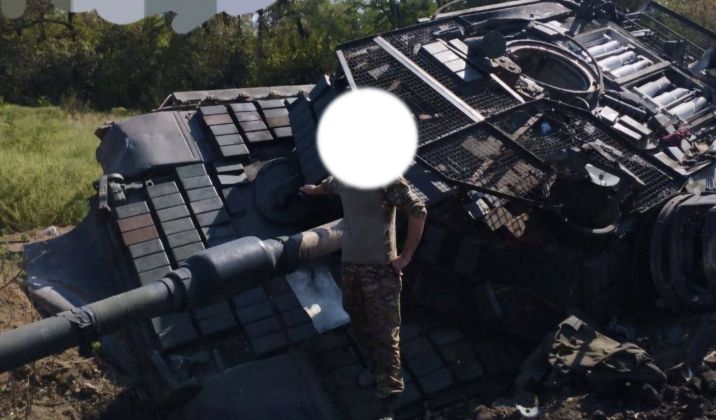
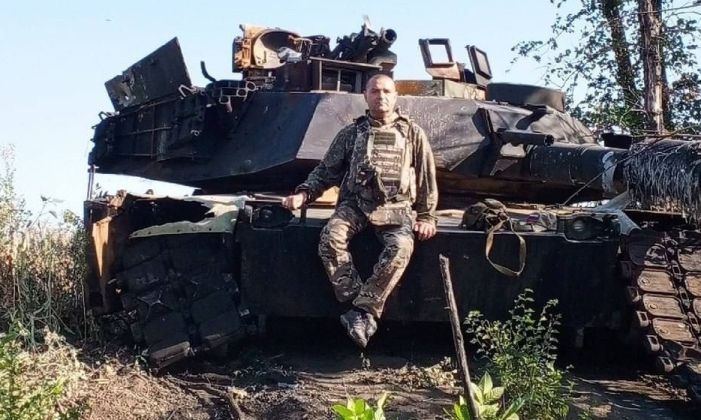
Destroyed M1A1 Abrams with Kontakt-1 Near Berdychi
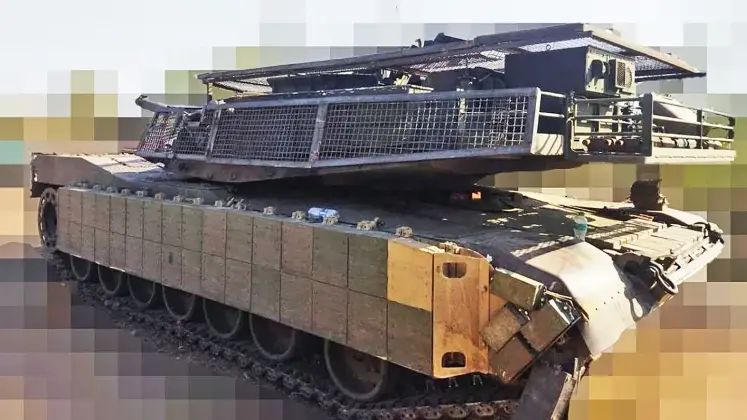
Recent footage has confirmed the destruction of two further M1A1 Abrams tanks operated by the Ukrainian Army, following a series of consecutive losses for the scarce U.S.-supplied vehicles. The first tank was seen near the village of Volchye in the Pokrovsk direction in the dispute Donbas region, in the vicinity of where the large majority of confirmed Abrams losses have occurred. The second of the two tanks was destroyed in the same region near the settlement of Berdychi. The second tank could be seen to have been up-armoured with additional plating, anti-drone cages and Soviet Kontakt-1 explosive reactive armour. The images were released only around a week after prior footage confirmed serious damage to another Abrams tank, which was filmed being captured and towed away by Russian forces near the strategically located town of Avdiivka alongside a Leopard 2A6 tank. The M1 Abrams is widely considered the most capable tank class produced in the Western world, and other than South Korean K2 tanks recently acquired by Poland, is seen to be the most formidable armoured vehicle in terms of its combat capacity operated by any NATO member.
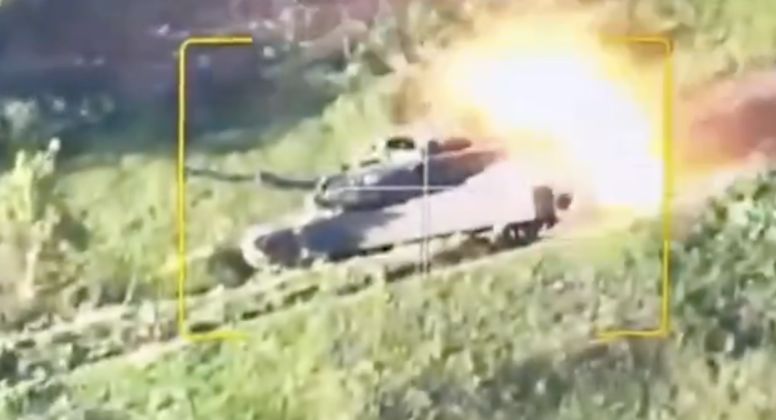
At close to 70 tons, and in some configurations closer to 80 tons, the Abrams is one of the heaviest tank classes in the world and carries significantly more armour than most other tanks. The first deliveries of the vehicles to Ukraine in September 2023 fuelled widespread projections in the Western world that they would provide overwhelming superiority over Russian armour and allow Ukrainian units to may important breakthroughs - potentially even spearheading an assault on the Crimean Peninsula. Over 20 of the 31 tanks delivered to Ukraine are now thought to have been destroyed, disabled or captured, with at least one of the kills having been achieved by a Russian T-72B3 tank after the two exchanged fire in the first week of March. The vehicles were notably deployed to the frontlines only after almost five months in Ukraine, with the tanks first seen deployed on February 23. The first loss of an Abrams tank was then confirmed three days afterwards. After multiple further losses in February and March, the Ukrainian Army in late April withdrew its remaining Abrams tanks. Losses have remained high, with some recent kills confirmed on July 30, on July 3, and previously in early May, all of which saw the vehicles filmed being destroyed by guided artillery. A more recent kill on August 11 was filmed being achieved by a drone.
The original M1 Abrams was developed with the primary mission of combating Soviet forces in the European theatre of the Cold War. A major factor adding urgency to development was the result of U.S. and Israeli assessments after the 1973 Yom Kippur War, which had seen the Soviet T-62 tank first engage Western armour. The T-62 was assessed to have significant superiority over the top American tank the M60, despite having been superseded in the Soviet inventory by the newer T-64 and the T-64’s lower cost derivative the T-72. Such concerns were heightened by the results of armoured clashes in the Iran-Iraq War, which saw Iraqi T-62 and particularly T-72s consistently win overwhelming victories against Iran’s U.S. and British supplied M60 and Chieftain tanks. The Abrams first entered service in 1980, although its 105mm gun was considered underpowered compared to the 125mm guns used by modern Soviet tanks.
Responding to concerns regarding the Abrams’ limited firepower, the M1A1 variant was put into production in 1986 with the improved 120mm smoothbore gun among other improvements. Entering service more than 20 years after the T-64, the M1A1 was seen to have belatedly bridged the performance gap with the older Soviet vehicles, although the American vehicle’s size and very high fuel and maintenance requirements raised questions regarding its suitability for operations on a large scale when logistics were expected to be heavily strained. It remains hotly disputed by both Russian and Western analysts today whether the latest variants of the Abrams or the Russian T-90, the latter a loose derivative of the T-64, is considered to have a greater combat potential, with neither country having operationalised a clean sheet new tank design since the 1980s. Where the Russian Army has continued to receive new T-90s at an accelerating rate, however, Washington has shown no signs of planning to supply new Abrams tanks to replenish Ukraine’s own losses.
