
Footage Shows Chinese J-16 Fighter Launching Long Range Precision Strike: How Capable is the KD-88 Missile?
Military Watch Magazine Editorial Staff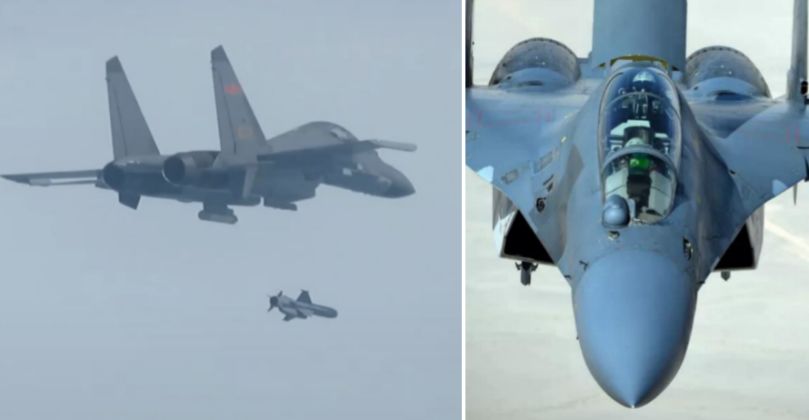
Chinese J-16 Fighter Launches KD-88 Missile
Footage released on Chinese social media has shown a J-16 fighter launching a KD-88 standoff ai rlaunched precision strike missile, highlighting the fighter type’s versatility and advanced air-to-ground capabilities. Designed to engage high-value land targets from outside the engagement envelope of most enemy air defence systems, and entering with the People’s Liberation Army Air Force around 2006, the missile is broadly comparable in concept to the Russian Kh-59 series that has been used extensively against targets in the Ukrainian theatre. Developed by adapting the YJ-83 anti-ship missile into a land-attack weapon, the KD-88 adopts YJ-83’s airframe and turbojet propulsion system, but replaces its active radar seeker was replaced with an electro-optical guidance system optimised for striking fixed and semi-mobile ground targets. Although J-16 fighters have more often been seen equipped for air-to-air combat, the KD-88 makes them highly capable in air-to-ground engagements.
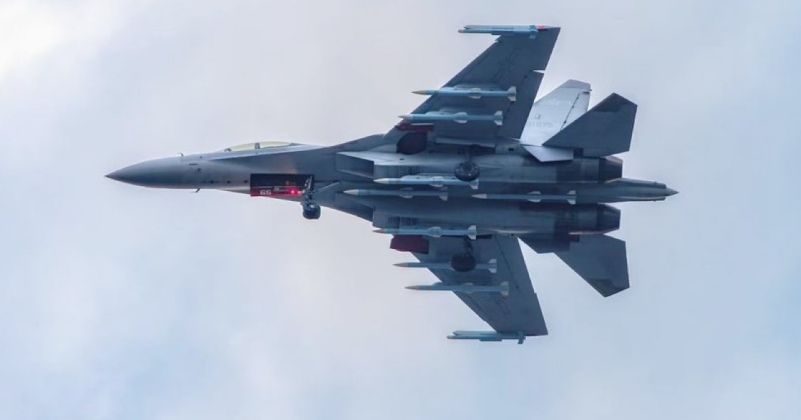
The KD-88 has a reported operational range exceeding 200 kilometres, allowing it to be used to strike targets without penetrating heavily defended airspace, thus reducing exposure to enemy fighters and surface-to-air missiles. Mission planners can program complex routes with multiple waypoints, enabling the missile to approach targets from unexpected directions and exploit terrain masking to complicate interception. One of the KD-88’s defining features is its multi-stage guidance architecture. When first brought into service, the KD-88 represented a major step in the evolution of Chinese air power by giving the Air Force a credible indigenous stand-off precision strike weapon. Its continued integration on China’s newest strike aircraft demonstrates that it remains a key component of the Air Force’s long-range conventional precision strike capability, complementing newer cruise missile types and providing flexible options for attacks against strategic land targets.
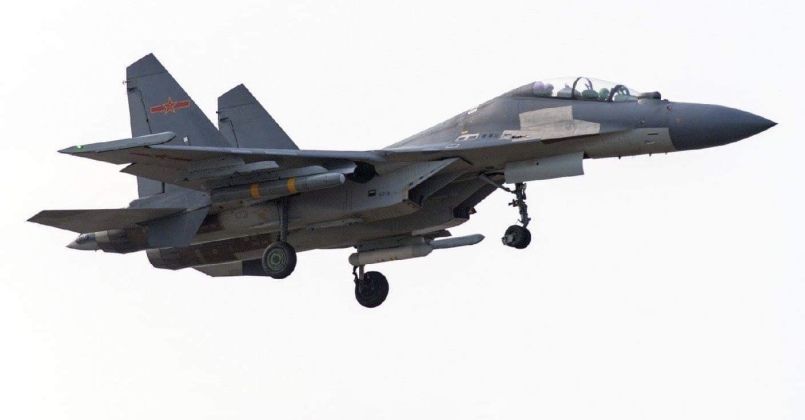
During the initial and mid-course phases, the KD-88 uses inertial navigation supported by satellite navigation and a programmable flight path. In the terminal phase, the original KD-88 employed a CCD/television seeker, transmitting imagery back to the launching aircraft via a data link. This allows the aircrew to verify the target and designate the precise impact point, improving accuracy against hardened structures or complex targets. The improved KD-88A replaces the television seeker with an imaging infrared seeker, providing greater effectiveness at night and in poor weather while enhancing resistance to visual obscurants. The missile’s range complements the J-16’s own considerable range and its high survivability, with the fighters having reduced radar cross sections, using advanced stealth coatings, having very high levels of manoeuvrability, and often operating with support from J-16D electronic warfare aircraft to further complicate hostile targeting.
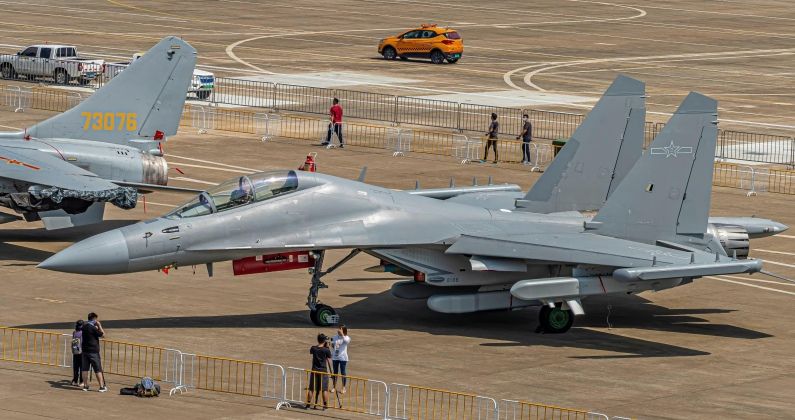
The J-16 is one of the heaviest fighter types in the world, allowing it to carry large numbers of cruise missiles, and an outstandingly large and powerful radar that can maintain situational awareness over wide areas. J-16s equipped with KD-88 missiles are expected to play significant roles in potential conflicts in Northeast Asia, including in the Taiwan Strait and possibly with Japan. The J-16 is a heavily enhanced derivative of the Soviet Su-27 Flanker design, and compared to Russian derivatives of the design such as the Su-35 it makes much higher use of more advanced composite materials, while integrated considerably more sophisticated avionics including use of an AESA radar. Despite its large size and high costs, the J-16 is currently in much larger scale production than any other fourth generation fighter type in the world, providing an effective complement to China’s cutting edge J-20 and J-35 fifth generation fighters, which although more sophisticated, lack similarly powerful sensors or large weapons carrying capacities.
