
Flaws in U.S. Apache Helicopters Leaves South Korean Forces Vulnerable - Could Seoul Begin to Look to Domestic Alternatives?
Military Watch Magazine Editorial Staff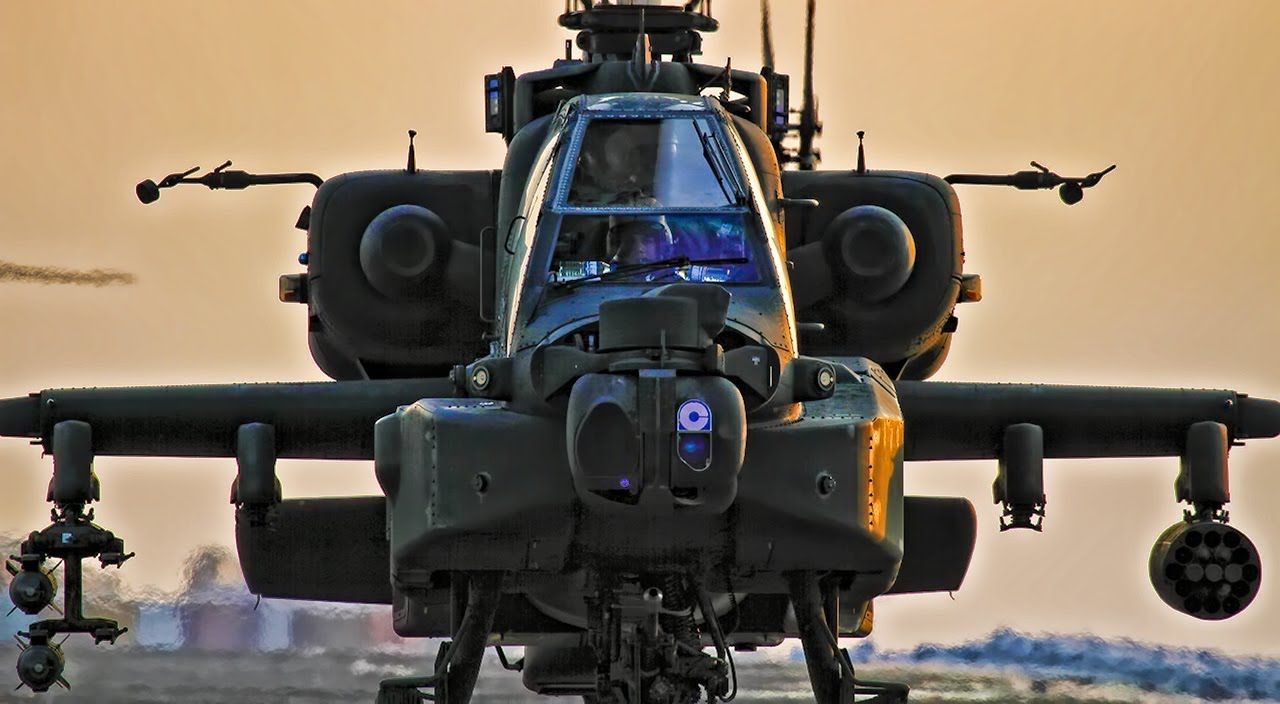
Apache Attack Helicopter
The South Korean Army’s AH-64E Apache Guardian attack helicopters have reportedly experienced severe deficiencies in their performance, leaving them unable to properly detect enemy targets. Software glitches and the absence of a naval detection capability are reportedly to blame, according to the Korean Defense Acquisition Program Administration (DAPA.) While the Army fields 36 of Boeing’s elite AH-64E helicopters, six of these were equipped with an advanced top mounted sensor suite for target acquisition - the Lockheed Martin Longbow fire control radar. This high end sensor suite is reportedly capable of simultaneously detecting 128 targets up to 12 kilometres away, and allows the Apache to make full use of its considerable firepower - striking multiple targets at long ranges with a high degree of precision.
Despite the high promise of the new Longbow equipped helicopters, Korean forces found the radar performed well below expectations. The Longbow was reportedly tested during an air assault operational test, in which it failed to properly recognise targets and mistook four designated targets for 101 targets - according to a DAPA report. In separate tests in a mountainous area, the radar mistook 18 targets that were 6 kilometers away for nine targets, and 18 targets that were 3 kilometers away for five targets. The most critical failure however came during a test over water, in which the radar failed to detect any target - leaving the Apaches effectively blind to attacks from the sea and highly vulnerable in the event of conflict. South Korea's extensive coastlines and the vastness of North Korea's naval assets makes this a particularly critical shortcoming.
A statement by members of the South Korean National Assembly’s Defense Committee indicated regarding the purpose of the Apaches, and the importance of restoring their sensor capabilities as quickly as possible: “The main purpose of acquiring these Apache attack helicopters was to help detect and thwart a possible infiltration by North Korean high-speed boats or hovercraft into the western coast of border islands... Without a proper operational capability of the radar, however, it could not be fully operated for such missions.” It was further noted that the Apaches were limited in their ability to transfer battlefield information to ground forces due to a lack of adequate data link communications devices. DAPA spokesman Kang Hwan Seok stated regarding plans to fix flaws in the helicopters with assistance from the U.S. military: “We’ve got a response from the U.S. Army that they could upgrade the software of the fire control radar in line with the service’s ongoing upgrade effort of the existing AH-64 Apaches.... But a naval detection device should be added to the existing radar system, probably on a paid contract basis.”
With South Korea’s defence sector increasingly self reliant, and actively competing with long established Western firms for exports with often superior products, it remains a possibility that the country will move to develop its own heavy attack helicopters with a role similar to the Apache. South Korean military aviation has advanced considerably in recent years and in the Asia-Pacific is second only to China, having developed what is very likely the world’s foremost trainer jet alongside a number of advanced light and medium helicopters and an upcoming fifth generation stealth fighter. Currently deploying two large helicopter carriers, and with the costly Apache helicopters’ performance being somewhat questionable, the Army and possibly the Navy may well in the year future seek to commission a domestic heavy attack helicopter.
