
F-35A Gaining New Long Range Air-to-Air Capability: Is the Meteor Missile a Significant Improvement?
Military Watch Magazine Editorial Staff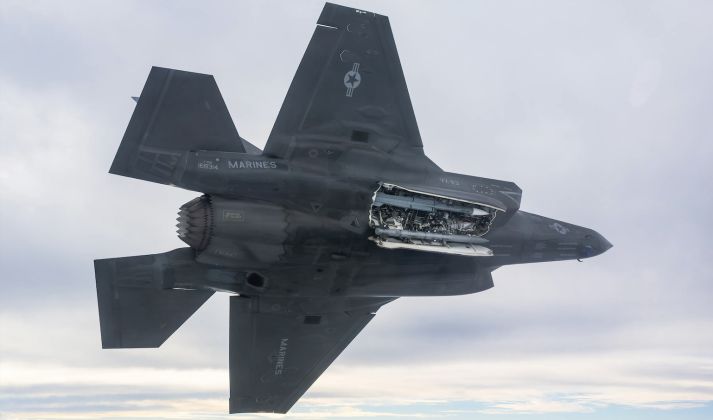
First Flight of the F-35B with Meteor Air-to-Air Missile
The F-35A fifth generation fighter is making progress in testing towards being able to integrate the European Meteor beyond-visual-range air-to-air missile, with multiple ground-based integration tests having recently been conducted in the United States. Lockheed Martin-led industry team’s official website recently announced to this effect: “Conducted at Edwards Air Force Base, California, the ground vibration testing and fit checks validated key hardware responses between the 5th Generation fighter aircraft and missile — a pivotal step before airborne tests begin… Engineers meticulously evaluated the data collected from the trials to confirm the safe stowage and deployment of the missile from the F-35A’s internal weapons bay, preserving the aircraft’s valuable stealth profile.” Only one outstanding ground test remains before clearance for the flight test phase occurs.
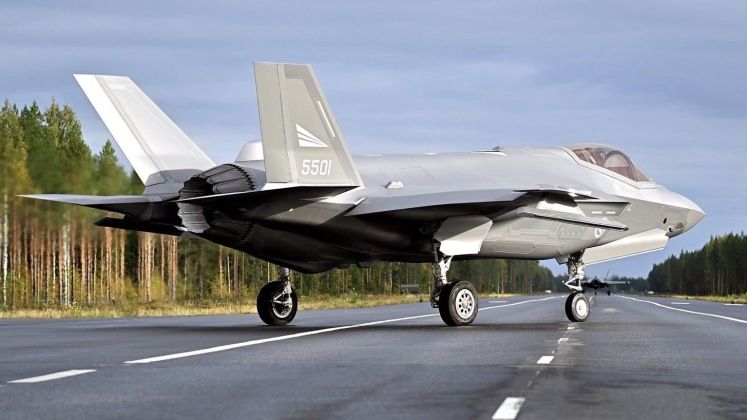
The F-35 can currently carry only a single type of air-to-air missile internally, the AIM-120C/D, with the more capable AIM-260 being under development as an enhanced successor. The Meteor was developed under a joint program by the United Kingdom, Germany, Sweden, France, Italy and Spain, and was designed with the goal of outperforming the AIM-120, although it reportedly benefitted from significant U.S. technology transfers to achieve this. The missile gained an Initial Operating Capability in 2016, and introduced a superior range and overall kinematic performance to the AIM-120. Due to European states’ more limited combined technological base and lack of experience in air-to-air missile development, the Meteor is not expected to match the performance of the AIM-260, nor to be competitive in terms of cost.
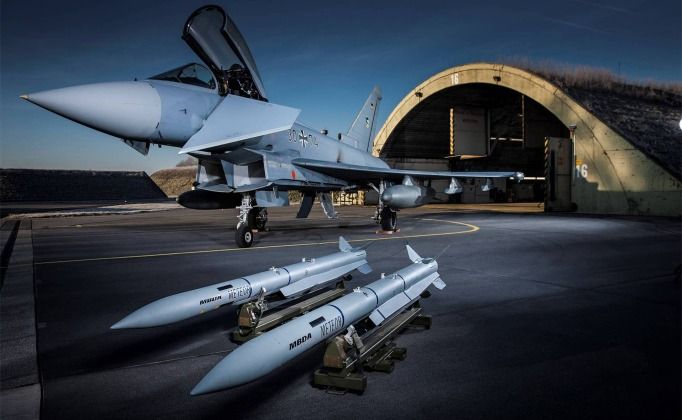
The Meteor’s most notable feature is the use of a propulsion system resembling that of a cruise missile, which relies on a variable flow ducted rocket (ramjet) in place of a rocket motor. This allows the missile to throttle its engine in flight, rather than expending its energy in a single unmodulated burn cycle, thereby maintaining more energy for its terminal attack phase to perform extreme manoeuvres and climb fast. The F-35 is expected to be made compatible with the missile once the aircraft are brought to a Block 4 standard, which has proven to be a highly protracted process that will now only be fully realised in the early 2030s. It remains uncertain how widespread demand for the missile will be beyond its developing countries, with the missile’s introduction expected to be far from revolutionary considering the new capabilities that are being provided by the AIM-260.
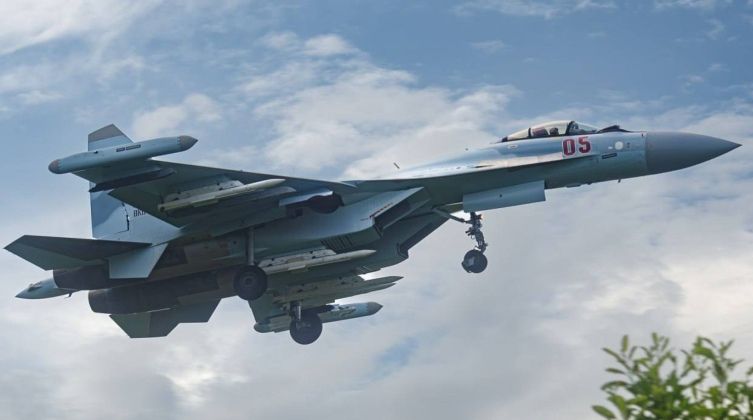
Although marketed as a revolutionary new development for fighter aviation, the underperformance of Indian Rafale fighters equipped by the missiles, which were reportedly outperformed by Pakistan’s Chinese supplied J-10C fighters carrying advanced PL-15 missiles has raised questions regarding whether the European missile design is as capable as has been advertised. Although the Meteor was previously expected to provide European fighter units with a distinct advantage over their Russian counterparts, much as the AIM-120D had already done albeit to a potentially greater extent, the service entry of the Russian R-77M air-to-air missile has significantly narrowed if not completely bridged the gap in performance. As European states continue to pursue a military buildup aimed at Russia, the possibility that Russia’s fast expanding fighter fleet will begin to widely field R-77M missiles makes it particularly urgent that Meteors and the latest AIM-120 variants quickly begin to be fielded in greater numbers.
