
Evaluating Russia's T-72B3: How a Modernised Tank Based on a Design Over 45 Years Old Can Match Newer Combat Platforms
Military Watch Magazine Editorial Staff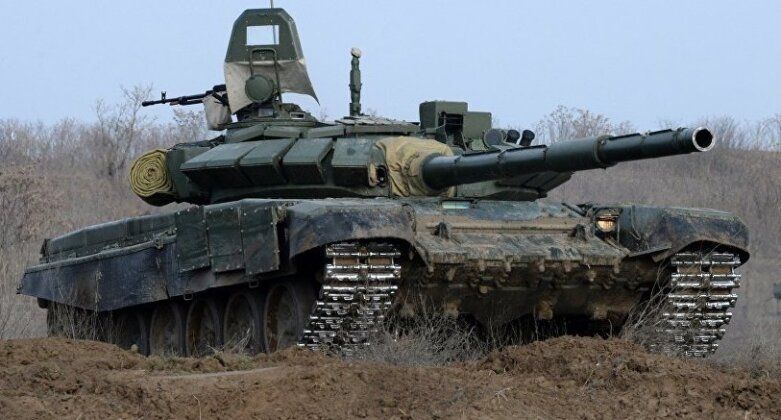
Russian Army T-72 Battle Tank
First inducted into service in the Soviet Army in 1973, the T-72 battle tank entered service with Soviet allies around the world and has since undergone several rounds of modernisation, with dozens of variants being produced by the USSR and Russia alone and over a dozen other operators also modifying and upgrading their own tanks. With more modern Russian battle tanks entering service since then including the T-80 from 1976, the T-90 from 1993 and the fourth generation T-14 more recently, the T-72 has required extensive modernisation to bring it up to the standard of newer generations of armour and prevent Russia's massive inventory of the vehicles from becoming obsolete. The most advanced of these upgraded T-72 variants today are Russia's T-72B3, which entered service from 2010, and its newer T-72B3M which joined the country's armed forces from 2017.
The T-72B3 itself represents a further upgrade of the T-72B design, which was first introduced in 1985 with capabilities far surpassing those of the original T-72. These included the addition of an 1A40-1 fire control system, vastly improved thicker and more composite armour including 20 mm of applique armour in the front of hull, as well as improved sights and laser guided missile capabilities. In the 1990s these were upgraded further with explosive reactive armour, cross wind sensors and improved V-92S2 engines. With such improvements the gap between Russia's T-72B battle tanks' capabilities and those of more modern third generation tank designs were narrowed considerably.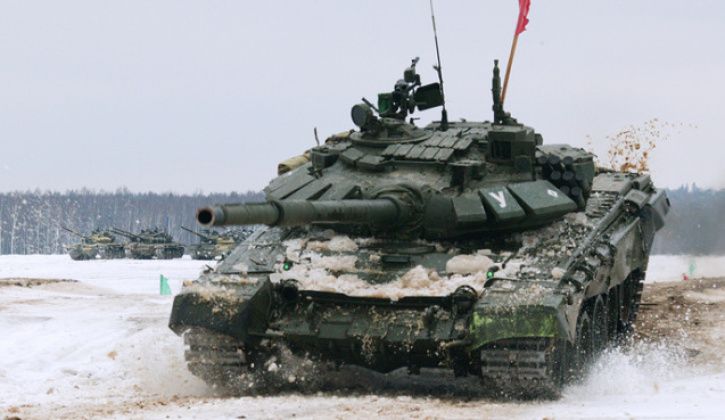
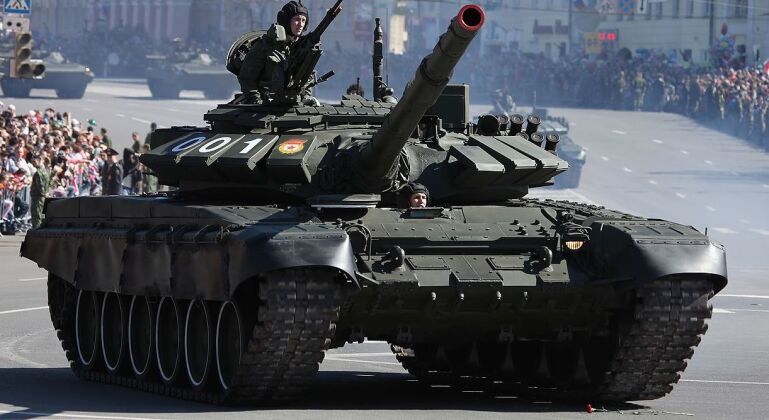
The T-72 was widely considered ahead of its time when first deployed, and even low grade export variants in the Iraqi Army proved almost completely invulnerable and had an overwhelming performance advantage over the latest Western export available tanks the Chieftain and M60 during the Iran-Iraq War. The Soviet tank design was so capable that its presence often prevented Iranian forces from engaging Iraqi forces on the ground, and suffered very few losses to enemy armour during the eight year war while taking a very heavy toll on Iranian armour. The tank also proved highly effective in combat during the Lebanon War in the 1980s where it faced Merkava I and M60 tanks, and was referred to as 'the best tank in the world' by Syrian President Hafez Al Assad for its performance. This provided a strong foundation for Russia to keep the platform viable through modernisation, with the T-73B3 demonstrating the extent to which older tank models can be upgraded to match or even exceed the capabilities of newer designs.
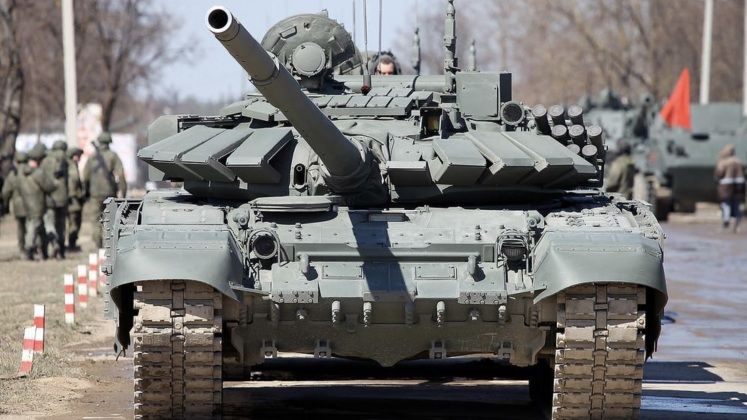
The T-72B3 is currently the most widely used tank in the Russian military with over 1300 in service. As upgrades are relatively simple to apply, and Russia has over 7000 T-72 tanks in storage, the possibility of increasing this number considerably in the event of a major war by quickly modernising and bringing into service the older tanks remains considerable. The T-73B3 is the primary battle tank of the Belarusian armed forces, and was provided as aid to the Syrian Arab Army to equip its 5th Corps which was established with extensive Russian support and supervision to battle the insurgency in the country from 2016. The T-72B3 has also been exported as an upgrade package to enhance older T-72s fielded by the Nicaraguan Army. Russia's faith in the T-72B3's capabilities is demonstrated by the fact that it relies on the tanks for the defence of Kaliningrad, a heavily militarised enclave on the Baltics which is separated from the Russian mainland and surrounded on all sides by NATO territory which has been prioritised for deployment of Russia's most capable weapons systems. Further exports of the T-72B3 as an upgrade package remain very likely over the coming years considering how widely the T-72 is fielded and the extent of the improvement the upgrade package can provide. The number of T-72B3 tanks in Russian service is expected to continue to grow at a considerable pace, in parallel to the deployment of newer T-14 and T-90M tanks which are currently in production.
