
Egypt’s MiG-29M vs. Turkey’s F-16C: Which Fighter Would Prevail in a Clash Over Libya?
Military Watch Magazine Editorial Staff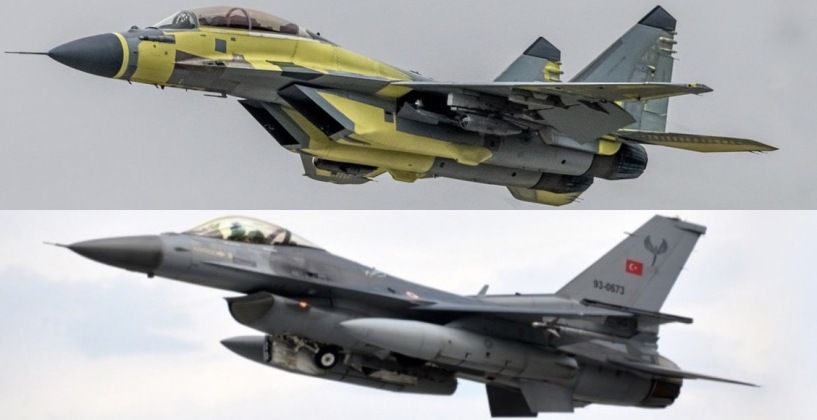
MiG-29M (top) and Turkish F-16
As long-standing tensions between Egypt and Turkey worsen over their ongoing support for opposing sides in Libya’s civil war, Cairo has threatened military intervention which could bring it into direct conflict with Turkish forces already deployed on Libyan territory. The Turkish military presence in Libya has seriously undermined the war effort of the Libyan National Army, which is receiving support from Egypt and the United Arab Emirates and has been bolstered on the battlefield by Russian military contractors. Turkey has also deployed a number of Syrian jihadist militant units to the Libyan front, after these units received training and support in their attempt to overthrow the Syrian government over the last decade, with their operations in Libya being been backed by Turkish officers and drone units.
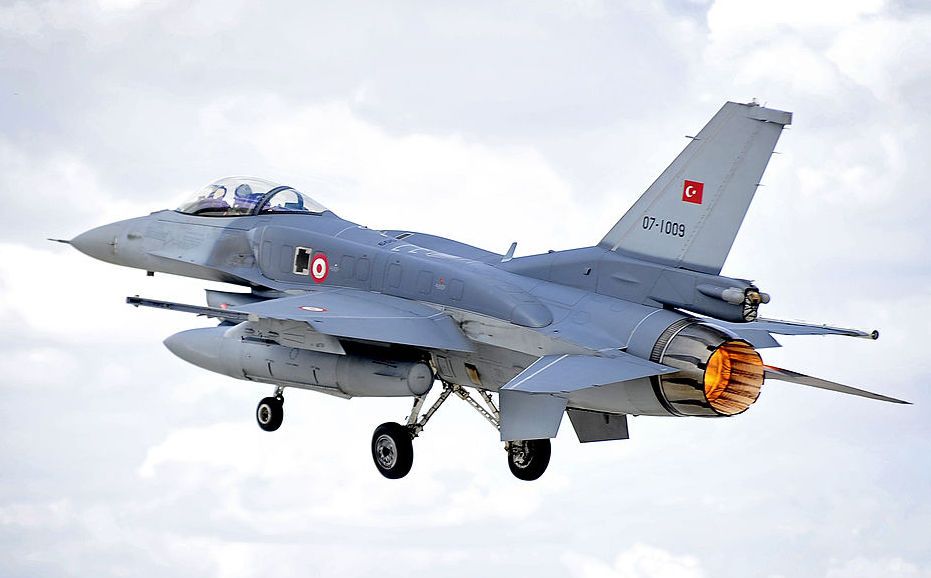
With reports that Turkey could deploy F-16C/D fighter jets to support its war effort in Libya, an Egyptian intervention would likely require the Egyptian Air Force to tackle this threat. The vast majority of Egypt’s fighter fleet is effectively obsolete for high intensity air to air combat, and while it is itself one of the world’s largest operators of the F-16C/D Egypt has not been provided with access to AIM-120 active radar guided missiles forcing them to rely on obsolete AIM-7 missiles from the 1980s. This combined with their heavily downgraded avionics and lack of standoff air to ground or anti ship weapons has left them effectively useless, which represents a direct results of U.S. efforts to limit Egyptian military power and Cairo's unwillingness before a change in government in 2013 to look to other sources. Turkey’s F-16s, too, use dated missile designs from the 1990s - the AIM-120B. These are considerably superior than the AIM-7 deployed by Egypt and benefit from active rather than semi-active radar guidance, but their electronic warfare countermeasures are limited and their range is restricted to just 75km. The majority of F-16 users today such as Pakistan, Morocco and South Korea deploy the AIM-120C which is considerably more capable with a range exceeding 100km.
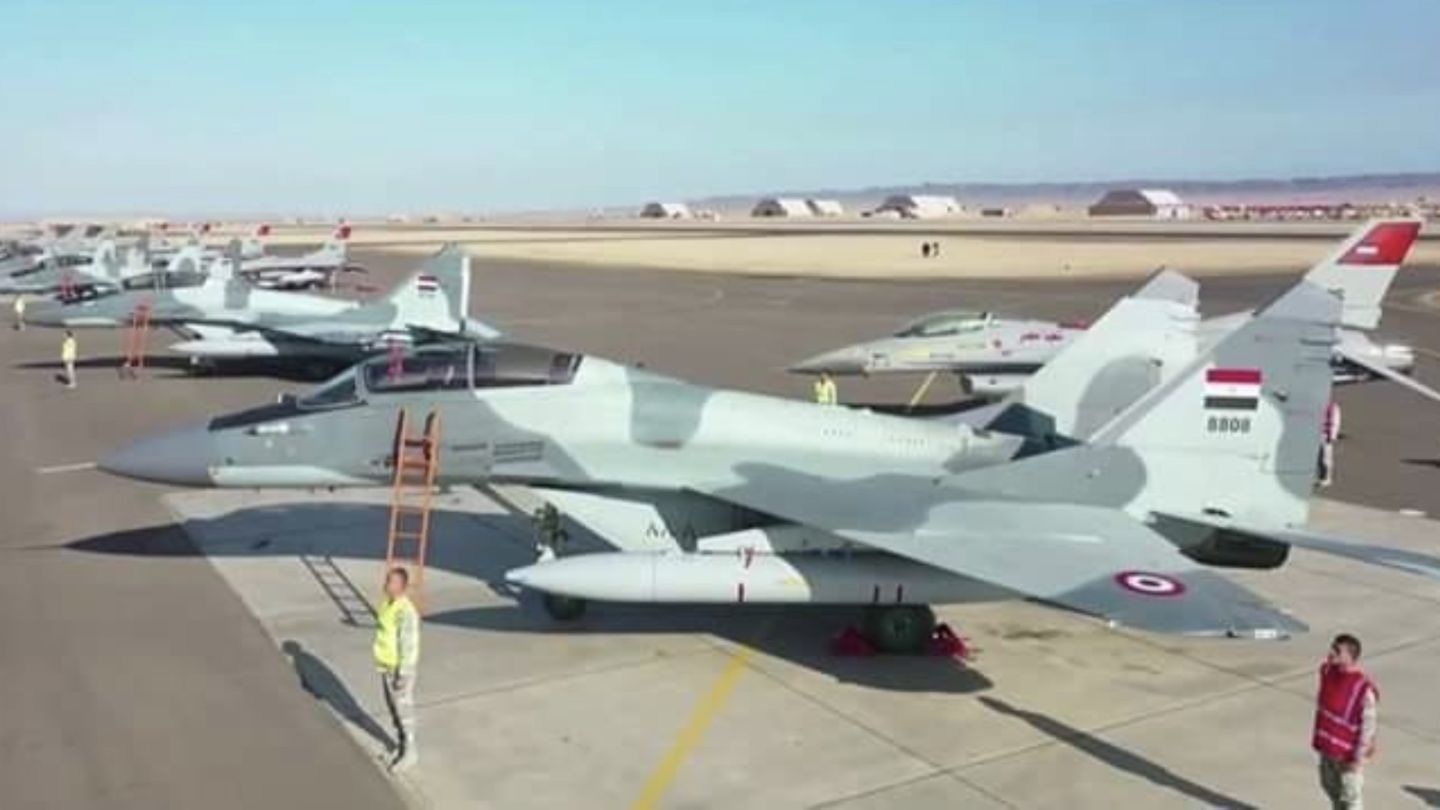
While Egyptian Air Force F-16s are poorly suited to engaging Turkish fighters, its most capable aircraft for air to air combat, the MiG-29M, is more likely to be used. Following the overthrow of Egypt’s western aligned islamist government in 2013 the country notably moved to enhance its Air Force with new fighter classes, most notably the MiG-29M, small numbers of French Rafales and more recently heavyweight Su-35 air superiority fighters which have yet to be delivered. With France, much like the United States, placing arbitrary restrictions on exports to Egypt, Rafales will not receive Meteor air to air missiles leaving them overwhelmingly outmatched by other modern fighter classes in the air to air domain, and leaving the MiG-29M as Egypt's only fighter capable of seriously confronting modern threats in the air. When comparing the fighter’s air to air engagement range with that of Turkish F-16s, the MiG-29M can engage at up to 110km with the R-77-1 missile, which carries heavier warheads than the F-16’s AIM-120B and uses newer electronics. In contrast to Western downgraded fighters which lack key weapons systems, Egypt's three MiG-29M units are better equipped than most fighter units in the Russian Air Force itself reflecting Moscow's lack of a similar agenda of limiting Egyptian military power.
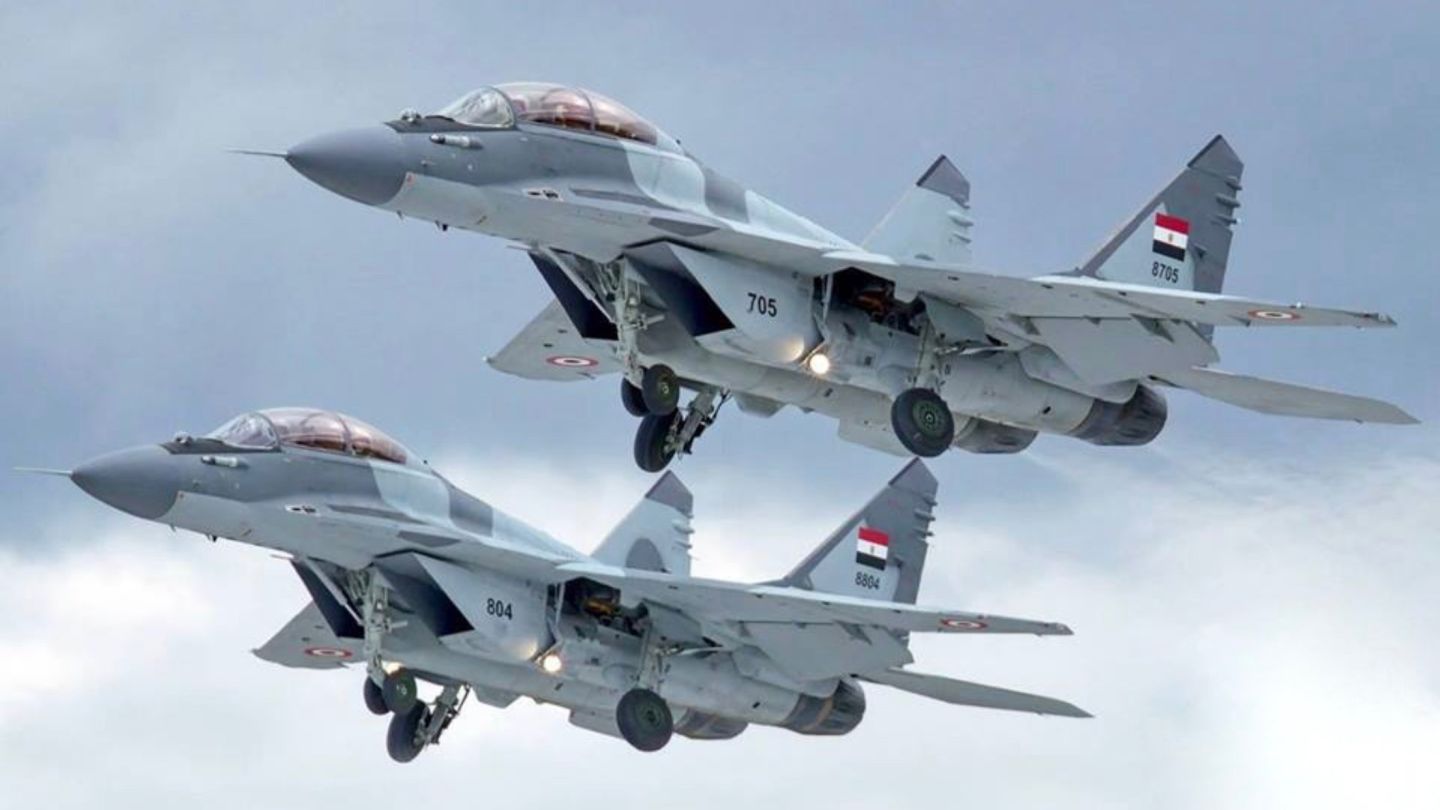
Beyond their missile capabilities, the Egyptian fighters hold very significant other advantages. The aircraft can operate at much higher altitudes of around 19km, compared to the F-16’s 15km flight ceiling, and are faster with the ability to reach Mach 2.25 where the F-16 cannot exceed Mach 2. The Egyptian fighters are also a lot more manoeuvrable with a superior thrust/weight ratio, and can accommodate larger radars. Where Turkish F-16s rely on mechanically scanned array radars, which in the 2020s are considered highly prone to jamming, MiG-29Ms integrate electronically scanned array radars which are significantly more reliable.
Perhaps the most significant advantage Egyptian fighters would have in a clash over Libya its their ability to undermine the Turkish Air Force’s ability to operate in the theatre, deploying advanced standoff missiles capable of striking possible airbases while Turkey’s ability to strike the far more numerous airfields on Egyptian territory would be limited. Turkish fighters will otherwise be forced to rely on aerial refuelling to operate over Libya, which given Egyptian MiG's large engagement range advantages represents a significant vulnerability. Turkish fighters will struggle to protect their refuelling tankers without long range air to air missiles of their own. The MiG-29M guarantees Egypt a qualitative advantage in the air, one which is set to grow considerably as the country looks to field its first Su-35 squadron providing far superior capabilities anything currently fielded in the region.
