
Effectiveness of Israel’s Iron Dome Called to Question; 80% of Palestinian Militants’ Makeshift Rockets Penetrate Defences
Military Watch Magazine Editorial Staff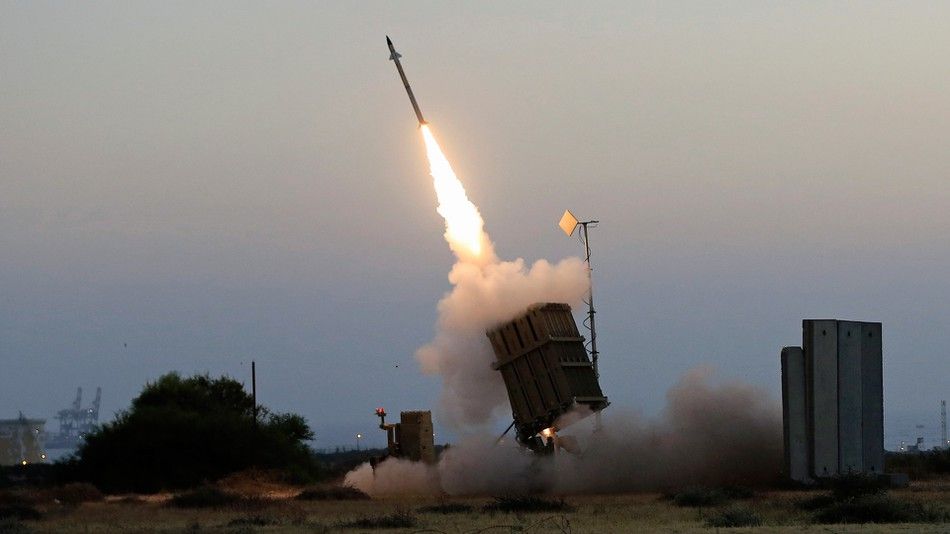
Iron Dome Surface to Air Missile Battery
Amid escalating tensions between Israel and a number of Palestinian militant factions, Israeli territory has been subjected to an attack by an estimated 300 rockets which have targeted Israeli population centres indiscriminately. A Palestinian anti tank missile was also reportedly used to target an Israeli bus, injuring a soldier, while larger rocket attacks caused a number of light injuries but were otherwise ineffective. The extremely primitive nature of Palestinian rocket capabilities, which have been compared to upgraded fireworks by some analysts, seriously limits their effectiveness - lacking the payload or the accuracy to have a considerable impact even when used in large numbers. Nevertheless, the attacks may have exposed a key weakness in Israel’s defences which could be exploited by some of the country’s other adversaries using far more sophisticated missile capabilities. Examples include the Korean KN-02 Toksa deployed by Syria and the Russian P-800 deployed by both parties.
Israel relies heavily on its Iron Dome surface to air missile system to defend its airspace from short range rocket attacks such as those launched from the Gaza Strip, but the platform’s capabilities have been brought to serious questions on several occasions - particularly if faced with more competent rocket and missile capabilities as would be the case in a potential war with Syria or the Lebanese militia Hezbollah. Both of these parties field cutting edge Russian and North Korean manufactured ballistic and cruise missiles, rocket artillery and other systems several orders of magnitude more threatening that the rockets deployed from Gaza. Nevertheless, on November 12th the Iron Dome intercepted an estimated 20% of the rockets - sixty of three hundred. As has often been the case in the past, the poor capabilities of the Palestinian rockets meant that the system’s inability to better defend Israeli population centres was never brought to serious question due to very limited damage done by the attacks.
The Iron Dome entered service in 2011, and was jointly developed by Israel Aerospace Industries and Rafael Advanced Defence Systems. Each launch platform is capable of deploying 20 interceptor missiles, with each interception costing an estimated $40,000 - far more than the estimated cost of a Palestinian rocket. 10 batteries of Iron Dome interceptors are currently deployed, with five more planned. The weapons system is reportedly set to be exported to Saudi Arabia in the near future, possibly in response to the U.S. manufactured Patriot system’s failure to protect the Arab Kingdom from Yemeni missile attacks, though whether the Iron Dome will fare any better remains to be seen. Given the sophistication of the missile capabilities deployed by Hezbollah in particular however, which have expanded considerably since the militia’s war with Israel in 2006, the fact that the Iron Dome’s capabilities can be called into question by extremely primitive rocket attacks bodes ill for Israeli security in the event of a future war.
