
Dutch MoD Highlights F-35 ‘Jailbreak’ Option For Greater Autonomy: Is It Realistic?
Military Watch Magazine Editorial Staff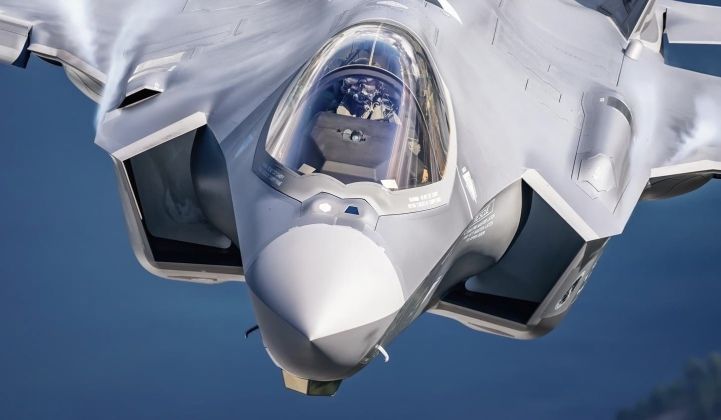
F-35 Fifth Generation Fighter
Dutch Defence Minister Gijs Tuinman has stated that there is an option for foreign operators of the F-35 fifth generation fighter to ‘crack’ its code, making it accept third party software against the restrictions imposed by its developer Lockheed Martin. “If, despite everything, you still want to upgrade, I’m going to say something I should never say, but I will anyway: you can jailbreak an F-35 just like an iPhone,” he observed. The minister did not provide any further details regarding what this process might entail, or whether it was an option that had been seriously been explored by any European operators. His statement was made at a time when a political rift between Europe and the United States, and multiple indicators of plans to annex the Danish territory of Greenland, have raised concerns that the U.S. could seek to place new restrictions on how the aircraft are operated by European clients and program partners.
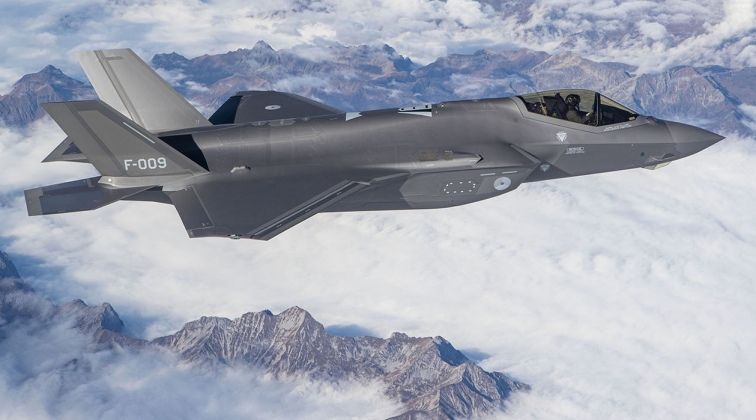
Tuinman’s statement has raised significant questions regarding the viability of F-35 operators gaining greater autonomy over their F-35 fleets, which could have a transformative impact on the program. The United States has imposed particularly strict restrictions on how its fighters can be operated, including from what military facilities and with what armaments, although restrictions have reportedly been more lenient for core NATO members. Unconfirmed reports indicate that Israel and Singapore have jointly achieved a degree of ‘jailbreaking’ for the F-16 fleets, allowing them to operated more autonomously and more deeply customised, which could be seen to set a precedent for clients for the F-35 doing the same. Nevertheless, the unprecedented complexity of the fifth generation fighter’s software makes this appear far from likely.
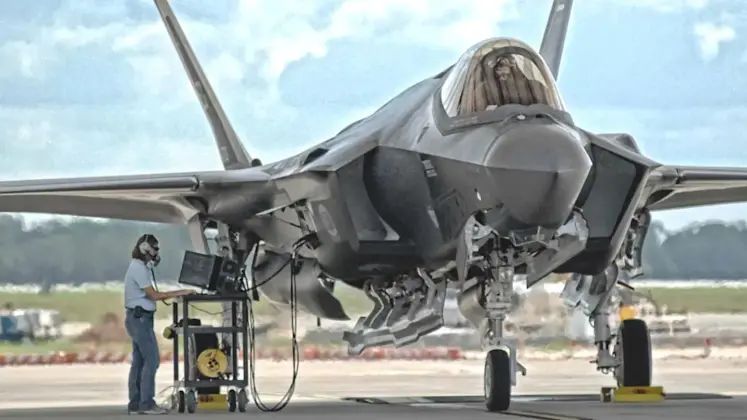
Observing the complexity of the F-35’s software, expert on the F-35 program Abraham Abrams noted in his recent book F-35 Joint Strike Fighter: A Great and Terrible Program:
“The percentage of the F-35’s functionality that was provided by software was unprecedentedly high, and having been under 10 percent for the F-4A introduced in 1960, 35 percent for the F-15A/B introduced in 1975, 65 percent for B-2 bomber introduced in 1997, and 80 percent for the F-22 introduced in 2005, it reached a significantly higher unknown figure for the new aircraft. Software accordingly grew from 1,000 lines of code in the F-4A, to 1.7 million lines on the F-22, and 5.7 million on the F-35.”
With the development of the F-35’s software having been a leading cause of delays to the program, the feasibility of other operators with much small defence sectors being able to develop their own alternative software from outside the program thus appears to be limited.
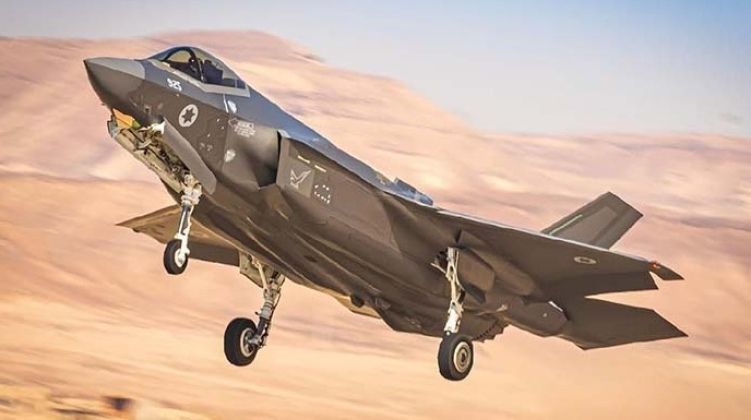
No foreign operator of the F-35 has gained the ability to modify its code, with only the Israeli Air Force having the ability to ‘plug in’ indigenous software on top of the fighter’s existing software without making any modifications to it. Israeli efforts to negotiation fuller access to the fighter’s code to make modifications were consistently rebuffed by the United States. Not only does the development of an alternative to the F-35’s existing code appear highly unlikely, particularly by European states due to the limitations of their defence sectors, but doing so would violate the F-35’s terms of use, and likely lead to a cutting off of spare parts and support from the United States. Although European states have sought greater autonomy and reduced reliance on U.S. military equipment, the F-35 has consistently demonstrated a truly overwhelming performance advantage over European-origin fighter aircraft, with the drawbacks of relying on the U.S. likely to continue to be more than compensated for by the stealth fighter’s tremendous performance advantages.
