
Dongfeng 5; China’s First Intercontinental Range Ballistic Missile and the Beginnings of Mutual Vulnerability
Military Watch Magazine Editorial Staff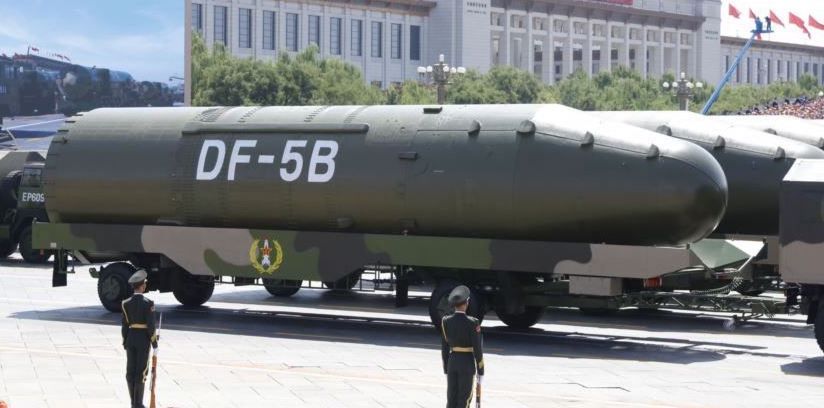
Dongfeng 5B Ballistic Missiles on Parade
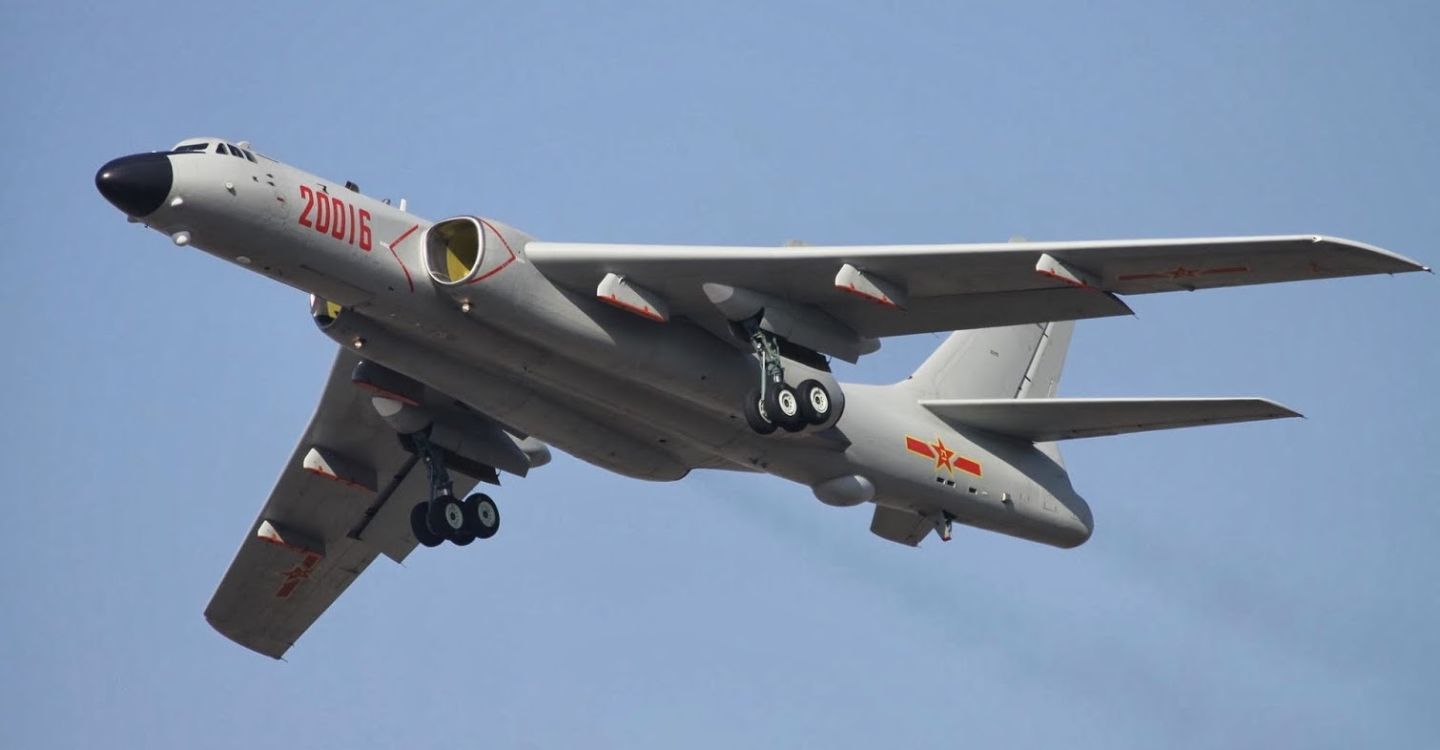
While China’s People’s Liberation Army (PLA) acquired its first nuclear weapons in 1964, it would be another seventeen years before it would gain the capability to deliver these to the United States with its first intercontinental range ballistic missile (ICBM) the Dongfeng 5 (DF-5). Prior to the missile’s induction, the PLA’s nuclear warheads were deployed from shorter ranged DF-3A missiles, which entered service in 1971 and capable of striking targets up to 5,000km away providing coverage of Northeast Asia and much of the Soviet Union. Early variants of the intermediate range H-6 theatre bombers, a derivative of the Soviet Tu-16 with a 3000km combat radius, were also capable of nuclear delivery. Having failed to acquire either ICBM technologies or the designs for an intercontinental range bomber from the Soviet Union before the Sino-Soviet split, China was left at a considerable disadvantage particularly relative to the United States - which retained the ability to deliver nuclear strikes across the Chinese mainland with both its own ICBMs and intercontinental range bombers as well as its shorter ranged nuclear assets deployed across the Pacific theatre from Taiwan and South Korea to Okinawa and Guam. The value of the DF-5 therefore could not be overstated, providing the PLA with a capability which previously only the Soviet Union had - and leading to the evolution of a form of Mutually Assured Destruction (MAD) with the United States.
The Dongfeng 5 has an estimated range of 1500km, five times that of the DF-3, and has been extensively modernised since its entry into service to develop the more sophisticated DF-5B and DF-5C variants. The missile was initially somewhat limited in its viability as a deterrent due to its liquid fuel - which meant it could not be stored fully fuelled and required up to an hour to fuel and prepare for launch. This has reportedly been compensated for by deployment of the missiles from heavily fortified tunnels built into the country's mountains, limiting their vulnerability to an enemy first strike. Decoy silos were also reportedly constructed to further stretch enemy resources should any party attempt a first strike. Unlike neighbouring Russia and North Korea however, which have deployed their ICBMs from mobile transporter erector launchers, allowing them to be fuelled underground or in fortified facilities and remain road mobile to enhance survivability, the DF-5 is thought to be deployed from stationary facilities exclusively.
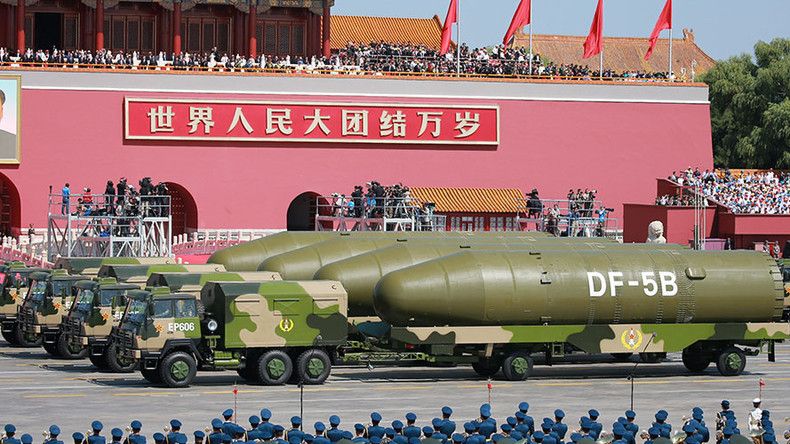
The DF-5 has been modernised since its induction to deploy a multiple independently targetable reentry vehicle, previously deployed by American and Soviet ICBMs, which allow the missile to deliver multiple warheads to multiple targets with a single strike. This significantly increases the damage a single missile can do, while also making nuclear attacks considerably more difficult for an adversary to intercept. The DF-5B is thought to be able to deploy up to eight thermonuclear warheads - and the technologies were reportedly implemented in response to the United States’ development of more advanced ballistic missile defences systems to ensure the country’s relatively small deterrent force remained viable. Other enhancements to the design include an increased range, improved targeting systems for better accuracy and an increased throw weight. The design is currently being further enhanced with development of the DF-5C - which reportedly carries more warheads than its predecessor.
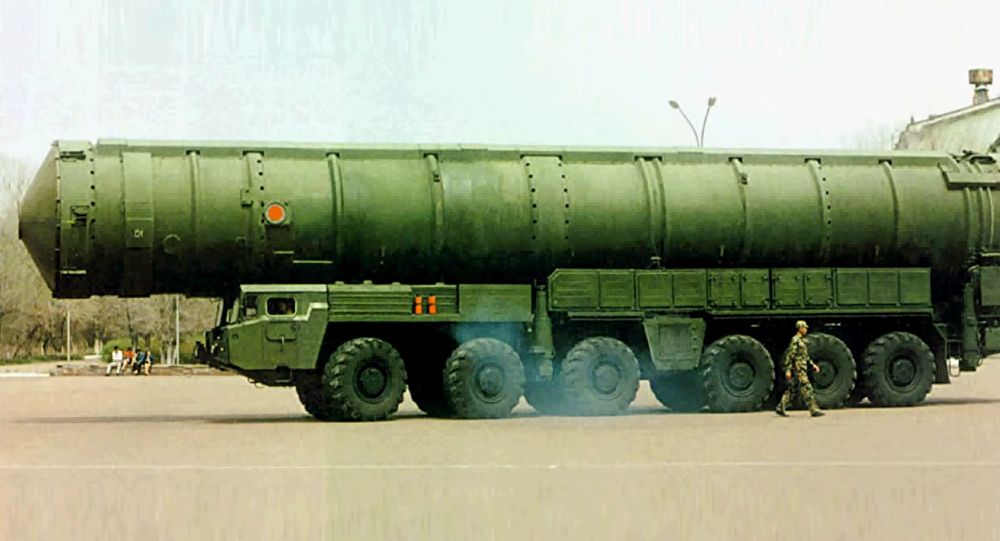
China’s People’s Liberation Army as of 2019 still lacks an intercontinental range bomber, and its ballistic missile submarine fleet leaves much to be desired relative to Russian and American counterparts - with a lack of deep waters near Chinese coasts also limiting its potential effectiveness. The PLA has largely compensated for this by developing what is perhaps the most capable ICBMs in the world to replace the DF-5 in the form of the DF-41, which retains hypersonic capabilities and high manoeuvrability while also making use of an advanced solid fuel composite which most Russian analogues have yet to use. The parallel development of air launched ballistic missiles for newer and more advanced variants of the H-6, which would allow them to strike at an intercontinental ranges despite the limited combat radii of the aircraft themselves. A more capable hypersonic glide vehicle, the Sky Star 2, is also reportedly in advanced stages of development. The DF-5 for its part is set to remain in the Chinese arsenal until at least the early 2030s, and continued modernisation will ensure that the system remains viable. Whether growing Sino-U.S. tensions will herald the beginning of an expansion in the Chinese ICBM arsenal, and weather as a result the DF-41 will be manufactured in larger numbers that the DF-5, remains to be seen. The value of the DF-5 for China’s position in East Asia, introducing a key aspect of mutual vulnerability with the United States mainland and providing the country with the prestige of superpower-level nuclear deterrence capabilities, cannot be overstated. The missile's induction marked a turning point in the PLA’s nuclear weapons program from a regional delivery capability to an intercontinental range - which in light of the Soviet collapse and deterioration of ties with the Western Bloc in the following decade was as a timely development.
