
Chinese PLA to Send 100 Personnel to Russia for S-400 Operational Training as Second Missile Regiment Nears Entry Into Service
Military Watch Magazine Editorial Staff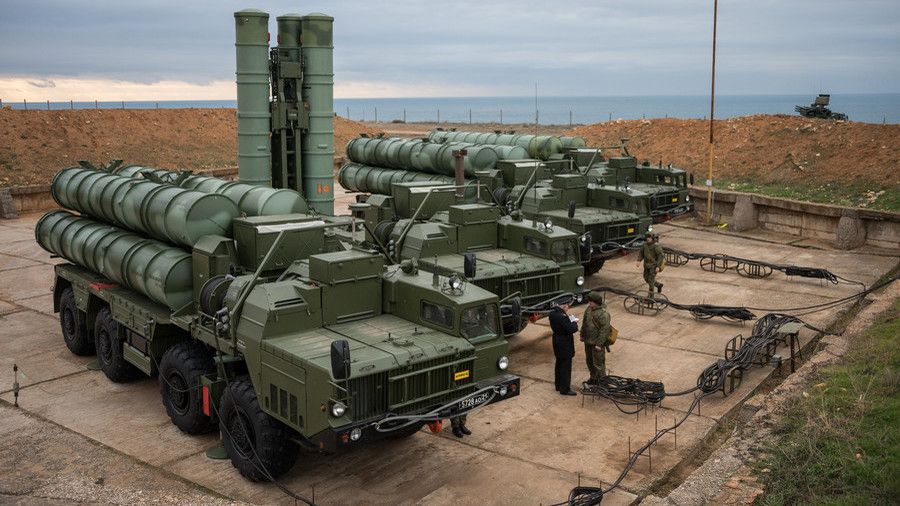
Russian S-400 Surface to Air Missile Batteries
As China's People's Liberation Army (PLA) prepares to deploy its second regiment of the S-400 surface to air missile system, around 100 personnel have reportedly been dispatched to Russia for training at an operational training centre. Training is expected to take several months, and delivery of the second regiment will reportedly be completed in the second half of 2019. While the first S-400 regiment entered service in the PLA in 2018, the size of the country's territory means that multiple systems are required to provide adequate coverage of national airspace. These systems will deploy alongside older Russian made long range surface to air missile platform, the S-300PMU-1 and PMU-2, as well as indigenous platforms such as the HQ-9B. The PLA emerged as the first international client for a new generation of Russian aerial warfare systems in the early 2010s when it placed orders for both the S-400 and the Su-35 '4++ generation' air superiority fighters, both purchases which led to economic sanctions by the United States. Russian arms imports have played a key role in modernising China's formerly negligible air defences since the early 1990 - which first included sales of large numbers of Su-27 fighters and S-200 batteries, later followed by the Su-30 and S-300.
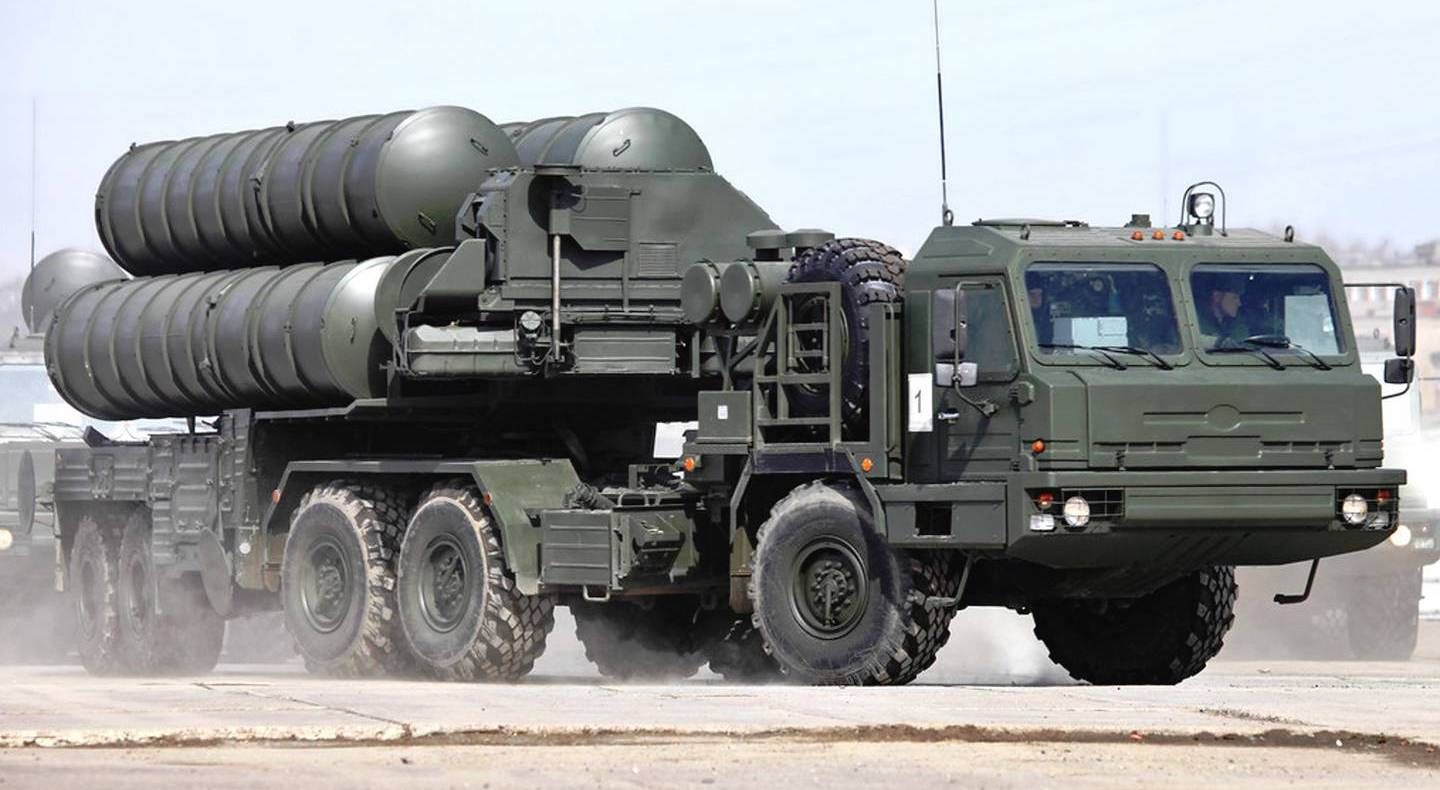
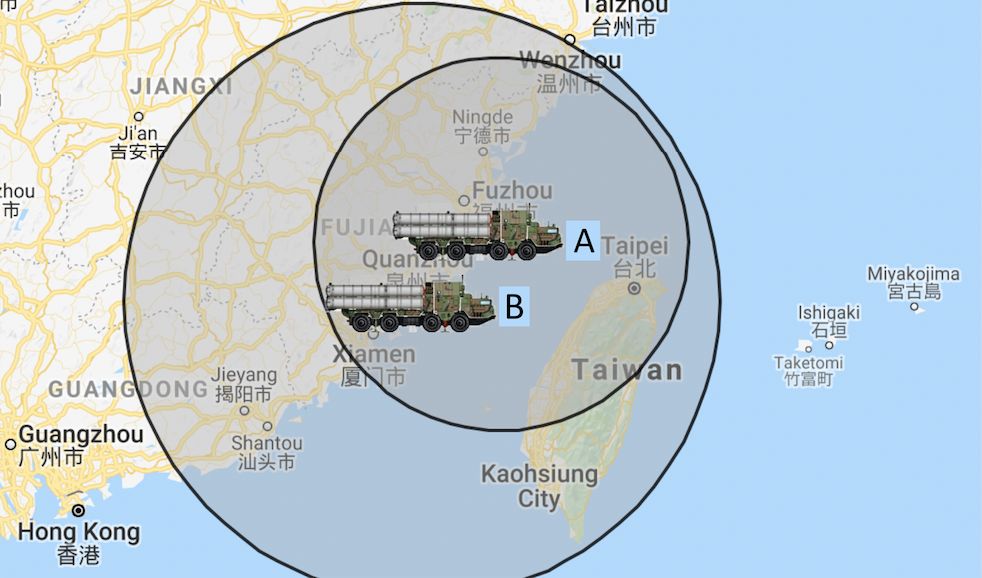
Due to the closeness of defence cooperation between China and Russia, which has come to involve technology and intelligence sharing at the most sensitive levels, S-400 variants exported to the PLA are widely considered to be more capable than those sold to other export clients. Systems sold to other defence clients such as NATO member Turkey, due to the risks that the Western Bloc will gain access to its technologies, notably lack the cutting edge capabilities of S-400 systems in Russian service. China has also emerged as the first and possibly the only foreign client of the S-400's specialised 40N6 hypersonic surface to air missile - a platform which extends the system's engagement range from 250km to 400km and allows it to target aircraft at altitudes as low as 5 meters over the horizon - a unique capability given altitude restrictions of other missile systems when operating at extreme ranges. It has previously been noted that the unique capabilities of the platform's munitions would allow the PLA it to enforce a very effective no fly zone over Taiwanese airspace even if lacking fighter support.
The S-400 retains a number of unique capabilities which make it considerably superior to its predecessor the S-300PMU-2 as well as its Chinese analogues. The system is capable of engaging up to 80 targets simultaneously with up to 160 missiles - more than twice the number of the S-300PMU-2 - which can include combinations of ballistic missiles, cruise missiles, drones and manned aircraft. Several of the system's munition types have hypersonic speeds, some over Mach 10, which combined with a high degree of manoeuvrability make them extremely difficult to evade even for highly manoeuvrable aircraft. The system's radars can track targets up to 600km away, and are capable not only of detecting but also of locking onto and targeting high end stealth aircraft such as the American F-22 Raptor - currently the most survivable combat aircraft in the world. The S-400 entered service very shortly after the Raptor in the mid-2000s, and was designed with the capabilities required to engage the top of the line American air superiority jet.
