Chinese H-6 Bomber Reveals Presence Near Philippine Capital in Show of Force
Military Watch Magazine Editorial Staff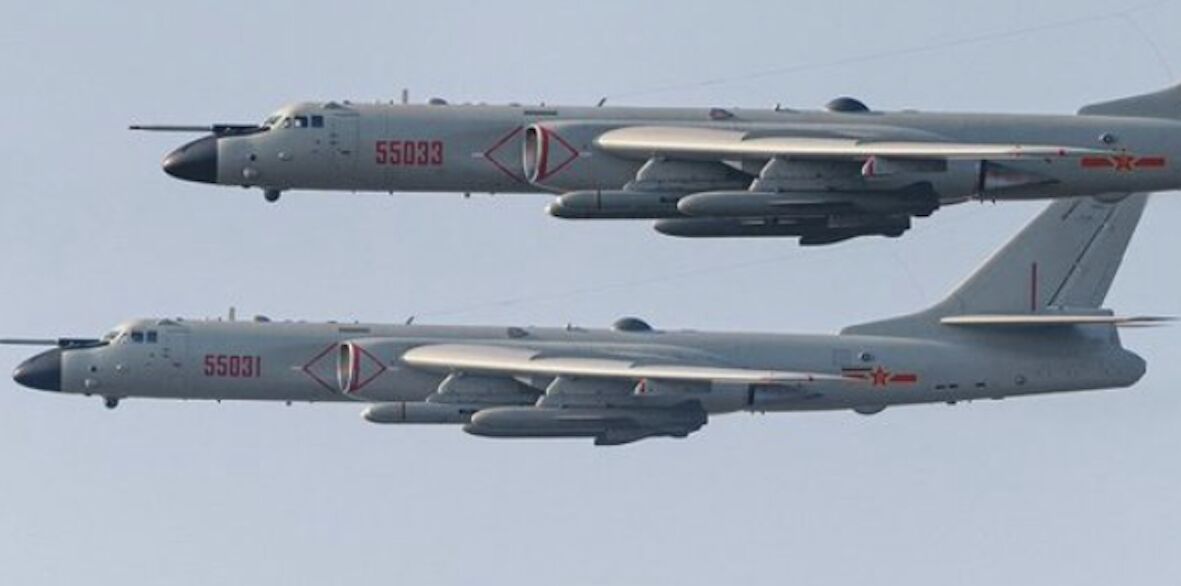
Chinese PLA Air Force H-6 Bombers
A Chinese People’s Liberation Army Air Force H-6 strategic bomber allowed itself to be identified by flight trackers over the South China Sea, between Scarborough Shoal and Luzon, in an apparent show of force demonstrating the reach of the long range aircraft. The aircraft had no publicly displayed call sign, and the tracking record was brief. The track appeared to show the bomber approaching from the north-west, turning towards the Philippine coast, making a tight loop, then heading back along its route. The turn was about 170 kilometres from Manila. The loop prompted speculation that the aircraft may have rehearsed an air-to-surface missile launch, with the KD-63B missile having a range of about 240 kilometres.
Disputed islets between China and the Philippines have been a central hotspot for tensions between China and the United States, with escalating U.S. military involvement in Sino-Philippine territorial disputes in the South China Sea, specifically surrounding the Second Thomas Shoal of the Spratly Islands, resulting in multiple confrontations. In mid-2024 U.S. Navy and the Chinese People’s Liberation Army (PLA) Navy reportedly engaged in intensive electronic warfare battles in the area, as reported by multiple local and U.S. sources. Electronic warfare engagements reportedly lasted a full twelve hours in the northern Philippines, and as a result American warships “faced an unprecedented crisis—screens full of static and a total loss of GPS signals,” with the fleet withdrawing due to the serious disruption of communication and navigation capabilities. The Navy’s electronic warfare equipment was assessed to be a full generation behind that of China.
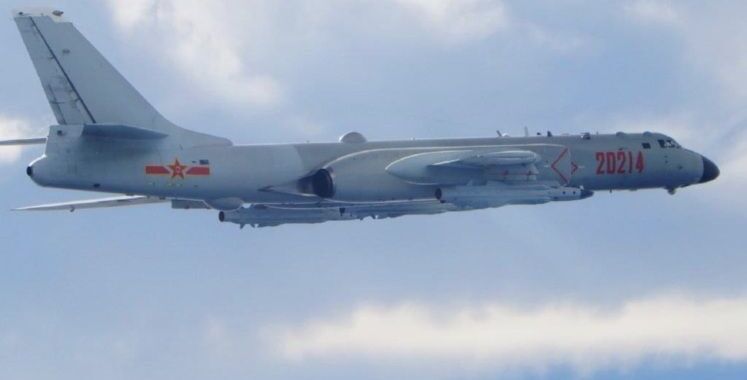
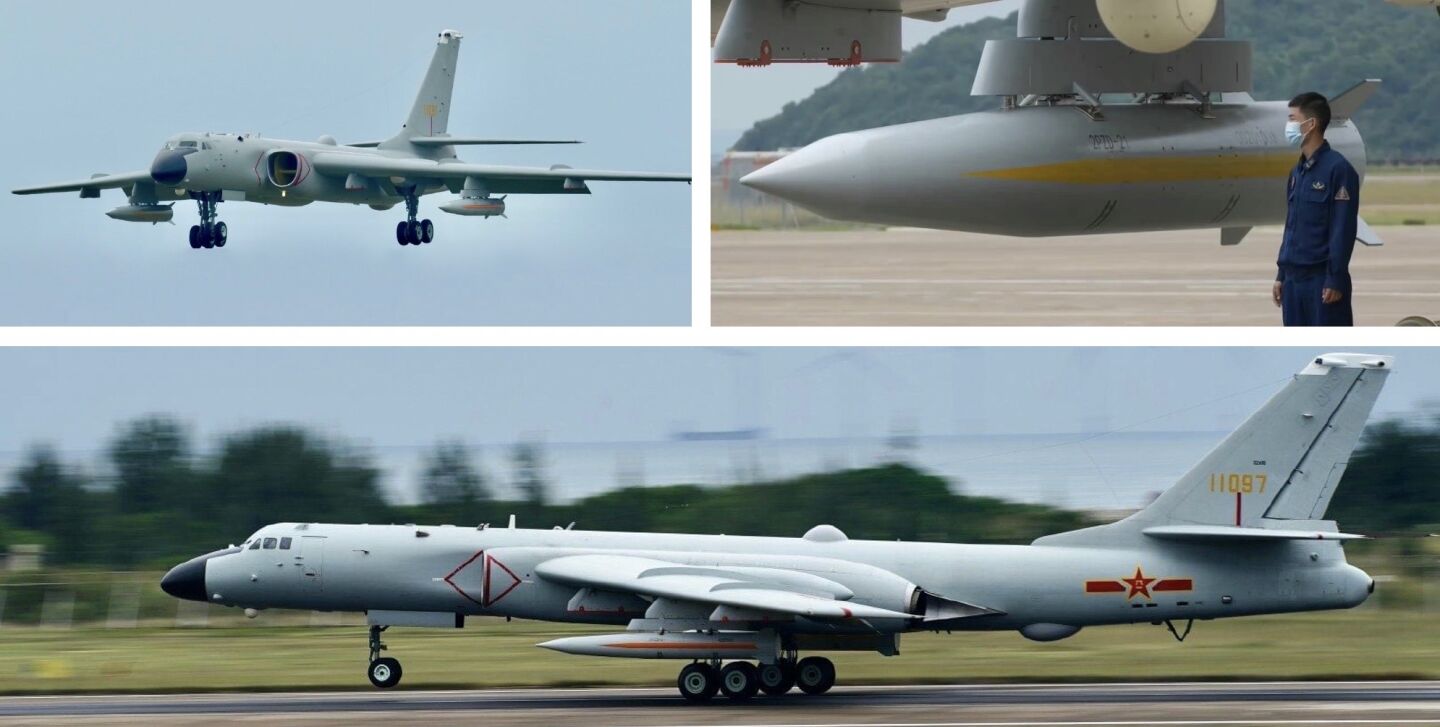
The H-6 is the most widely fielded type of bomber in the world, with approximately 270 of the aircraft estimated to currently be in service. The H-6K variant integrates YJ-12 anti-ship cruise missiles, which were developed in the 2010s for high-speed penetration of naval air defence systems, combining a 400 kilometre engagement range with a 200 kilogram warhead and a speed exceeding Mach 3. According to a United States Naval War College Review report, it not only has a superior range than equivalent Western missile types, but can also be launched from beyond the engagement range of shipborne air defence systems. It has been surpassed by the newer YJ-18, and more recently the YJ-21 hypersonic ballistic missile which has equipped H-6K bombers.