
Chinese Exercises Pit J-16 Long Range Fighters Against French Rafales in Simulated Air-to-Air Combat
Military Watch Magazine Editorial Staff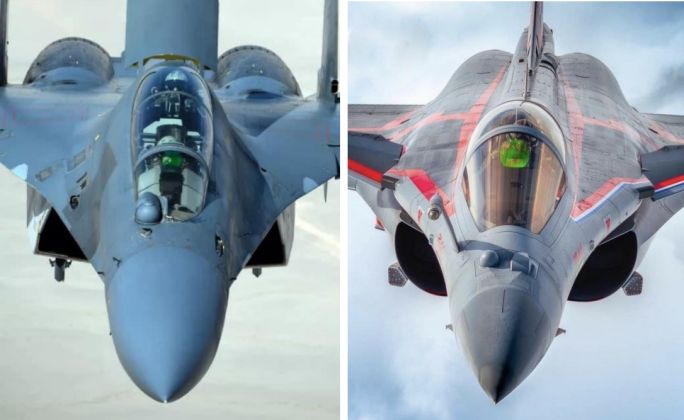
Chinese J-16 (left) and French Rafale Fighters
A China Central Television (CCTV) broadcast has provided insight into a simulation launched by the Chinese People’s Liberation Army Air Force in which J-16 fighter aircraft engage French Rafale fighters in air-to-air combat. The wargame exploded a range of air combat scenarios, including computer-assisted exercises aimed at exploring now tactics. The exercise one of several held in the Xuchang, Henan Province, in central China, and was attended by approximately 20 units from across the armed forces and various academies. Behind two Air Force officers was a board depicting an air combat scenario between eight J-16s and opposing Rafales, with one officer pointing out further threats on the board, the nature of which were not clear, indicating that the Rafales may have been operating as part of a network with other assets.
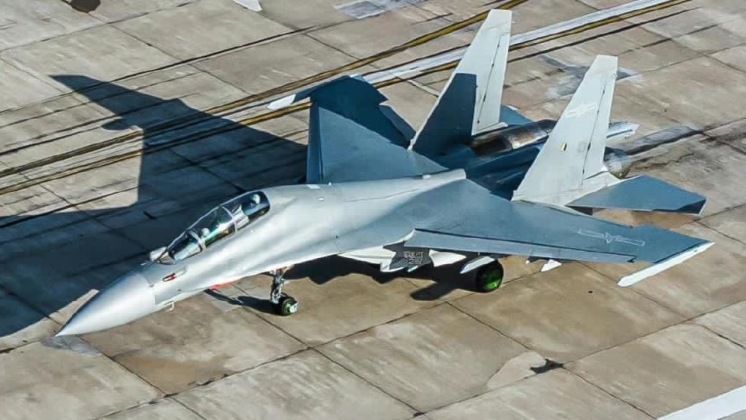
The selection of the J-16 and the Rafale was likely intended to simplify the wargame, allowing it to be used to teach wargaming techniques across multiple units. The J-16, although considered one of the most capable fourth generation fighters in service alongside its carrier-based counterpart the J-15B, is still significantly simpler and less complex to simulate the capabilities of than would be the case for the new J-20 and J-35 fifth generation fighters. The Rafale, meanwhile, is one of the least capable fighter types the People’s Liberation Army is likely to face in an engagement, with the United States, Japan, Australia, and growing numbers of NATO members deploying cutting edge and highly complex F-35A fifth generation fighters in East Asia. Like the J-20 and J-35, simulating the capabilities of the F-35 in a wargame would be significantly more complex. The U.S. Air Force is also set to permanently deploy F-15EX fourth generation fighters on Okinawa adjacent to the highly contested Taiwan Strait, which are overwhelmingly more capable than the much lighter and less advanced Rafale in almost all major metrics of performance.
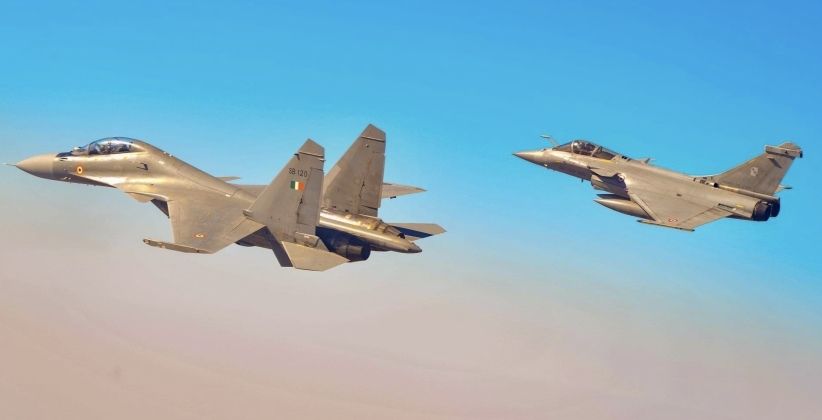
The possibility of J-16s engaging Rafale fighters in combat remain limited, with the French fighter type having consistently lost tenders in which it has competed either against the F-35 and F-15, or against advanced Russian fighters such as the Su-30MKA and Su-30SM. Although the possibility has been raised by the CEO of the Rafale’s producer Dassault of France marking the aircraft to equip the Republic of China Air Force, the Republic of China government’s lack of international recognition and ongoing civil war with the People’s Republic of China based on the Chinese mainland limits this possibility for political reasons. Although the Indian Air Force previously planned to field 126 Rafale fighters, this contract was terminated in the 2010s resulting in the procurement of just 36 fighters, which are concentrated near the country’s borders with Pakistan.
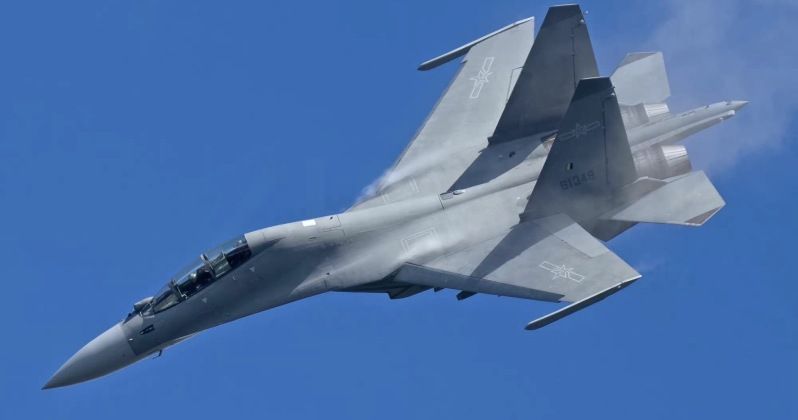
The Rafale’s performance was far from favourable in its first high intensity air-to-air engagements in May 2025, during which between one and four of the fighters in Indian service were shot down by Pakistan Air Force J-10C fighters, while achieving no kills. The J-10C was developed in parallel to the J-16 as a lighter and lower cost counterpart, and has approximately half the engine power and a radar with less than half the power of the larger aircraft. Should the J-16 engage the Rafale in air-to-air combat, the outcome is expected to be highly one-sided in the favour of the Chinese fighters, which within their generation are considered to be rivalled only by the American F-15EX, F-15SA/QA in terms of air-to-air performance.
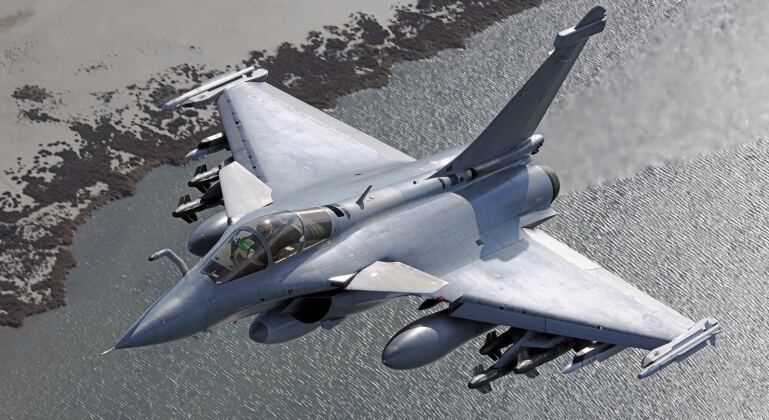
The J-16 carries a radar over triple the size of that of the Rafale, and which was developed by a significantly larger and more sophisticated electronics industry meaning it will likely also be more advanced. Its flight performance including manoeuvrability at all speeds, and its altitudes, are all significantly higher, while its weapons carrying capacity is far greater. The Rafale is restricted by its integration of M88 engines, which are by far the least powerful of any in production for fighter aircraft today. While the Rafale is considered the most capable European fighter type in terms of its air-to-air capabilities, its competitiveness against top performing U.S. and Chinese fighters of its generation like the F-15EX and J-16 remains highly limited, with its ability to engage even less advanced Russian fighters like the Su-30SM having also been brought to question.
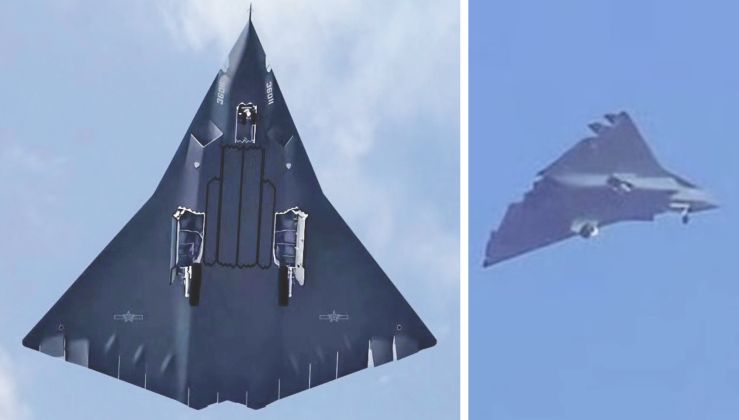
Although the Rafale provides an example of a relatively basic ‘4+ generation’ lightweight fighter type during wargames, the significance of the aircraft for China’s immediate security interests remains limited. The Rafale is expected to remain the most capable fighter type in French service into the 2050s, while China is set to lead the world by several years in fielding the first sixth generation fighters in the early 2030s. This highlights broader trends toward China and the United States increasingly emerging in a league of their own in fighter aviation, with China increasingly in the lead in many respects, while Russia tails very distantly behind with its less ambitious Su-57 fifth generation fighter program, and European states struggle to move beyond fourth generation designs.
