
Chinese Army Units Train For Rapid Helicopter Insertion: New Z-20s Enhance Ability to Deploy Behind Enemy Lines
Military Watch Magazine Editorial Staff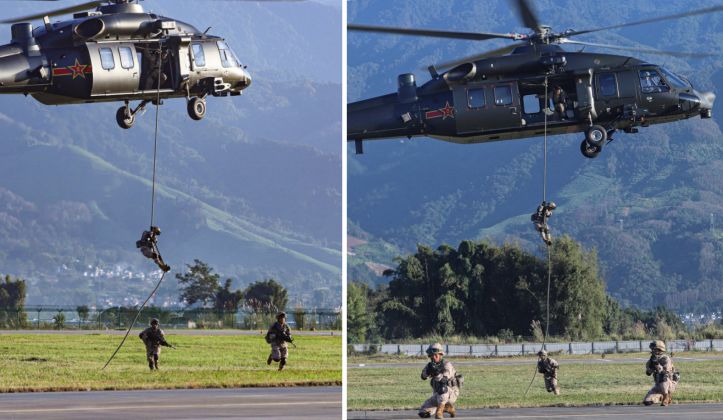
Chinese PLA Army Personnel Fast Rope Down From Z-20 Helicopter
Chinese People’s Liberation Army Ground Force personnel from the 75th Group Army have trained for rapid insertion by helicopter during a ground-aerial coordination training exercise, highlighting the rapid enhancements which have been made the service’s rotary wing airborne insertion capabilities. Personnel descended by fast rope from a Z-20 medium weight transport helicopter, a type which first entered service in 2019 and can carry an estimated 20 personnel. These were escorted by lighter Z-10 attack helicopters. The Army’s growing ability to insert personnel by air has significant implications in multiple theatres, most notably in the Taiwan Strait where the People’s Liberation Army remains officially in a state of civil war with the Republic of China Armed Forces based on Taiwan Island. Supporting forward units in the Himalayas, and responding to terrorism threats in Xinjiang, where Turkey has continued to support jihadist militant groups, could make insertions by Z-20 invaluable.
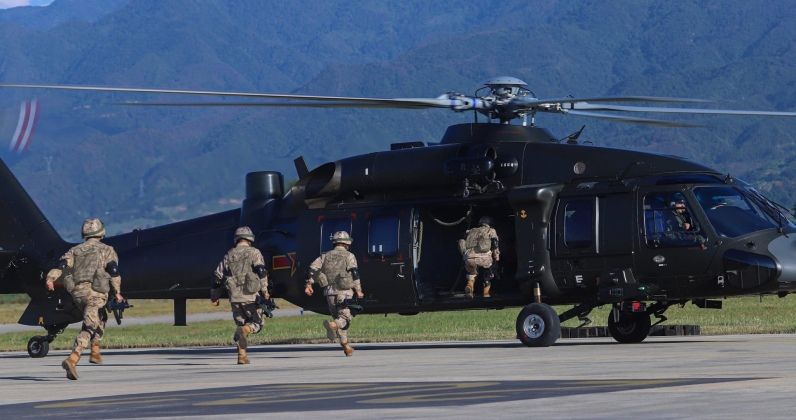
The Z-20 uses fly-by-wire controls and a five-bladed main rotor blades, and carries multiple defensive subsystems including radar warning receivers, with its more powerful and fuel efficient 1,600 kW engine providing a higher carrying capacity and greater endurance than its closest foreign counterpart the U.S. Army UH-60 Black Hawk. The Black Hawk’s design has significantly influenced that of its significantly more modern Chinese counterpart. The Z-20’s versatility has been improved with the service entry of the Z-20T helicopter gunship variant, which combines an airlift capability with integrated firepower in a single airframe. Elaborating on the Z-20T’s role, deputy chief designer at the China Helicopter Research and Development Institute Zhu Minfeng said it was designed to “assault transport and airlift operations in mountainous, forested, and urban areas,” and was able to “strike high-value enemy targets, counter both ground and aerial threats in plain and plateau regions, and provide fire support for ground forces.”
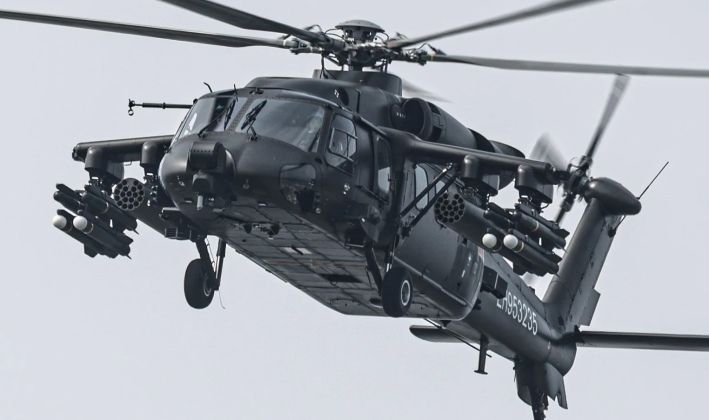
Comparing the Z-20T to the Z-10 dedicated attack helicopter, Zhu observed: “If the mission solely involves attack tasks, the Z-10 attack helicopter is the optimal choice… If there is a need to conduct airlift operations and troop transport in addition to attack tasks, the Z-20T, which combines transport capacity with air-to Com-ground capabilities, can be employed.” He emphasised that its ability to conduct both transport and direct fire missions without relying separate escort helicopters gives it a major edge. “The Z-20T assault helicopter achieves ‘multi-functionality with one aircraft,’ meaning that it can both transport troops and independently conduct fire strikes to ensure the safety of the entire flight process,” he added. At a time of high tensions in Taiwan Strait, the ability to insert personnel behind Republic of China Army lines remains invaluable. Following the U.S. Army’s insertion of Delta Force special forces to abduct Venezuelan President Nicolas Maduro on January 3, the value attributed to the ability to make helicopter insertions has grown.
