
China Strengthens Low-Altitude Air Assault Capabilities with New Z-20T Helicopters
Military Watch Magazine Editorial Staff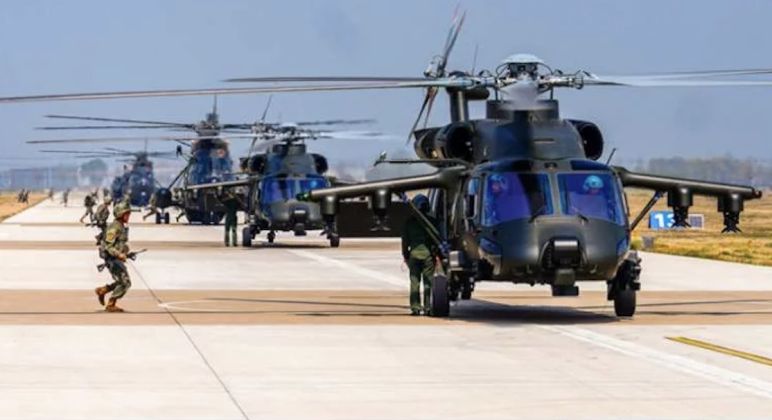
Z-20T Helicopter Gunships in April Exercises
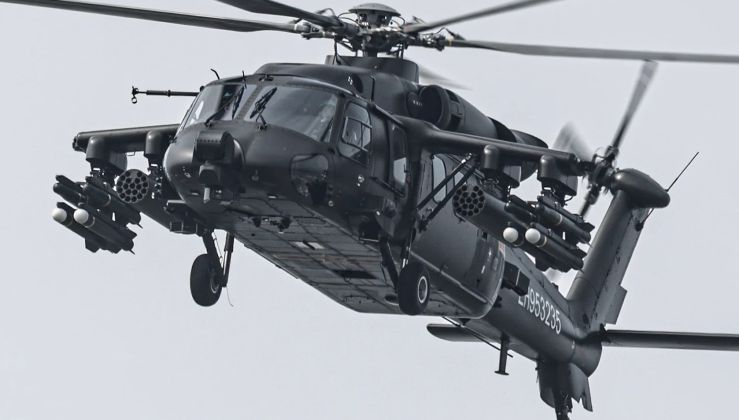
The Chinese People’s Liberation Army has moved the new Z-20T assault helicopter into air-ground training, reflecting a growing reliance on the new aircraft which is poised to revolutionise its airborne assault capabilities. Developed as the first heavyweight combat helicopter type in Chinese service, the Z-20T which was designed to complement the Z-10 attack helicopter, and made its first public appearance during a military parade on September 3, 2025. The aircraft combines an airlift capability with integrated firepower in a single airframe. Its confirmed integration into an air-ground coordination training cycle follows the release of images showing large scale ground-air coordination drills carried out in early April 2026, which saw the Z-20T and the Z-10 deployed together.
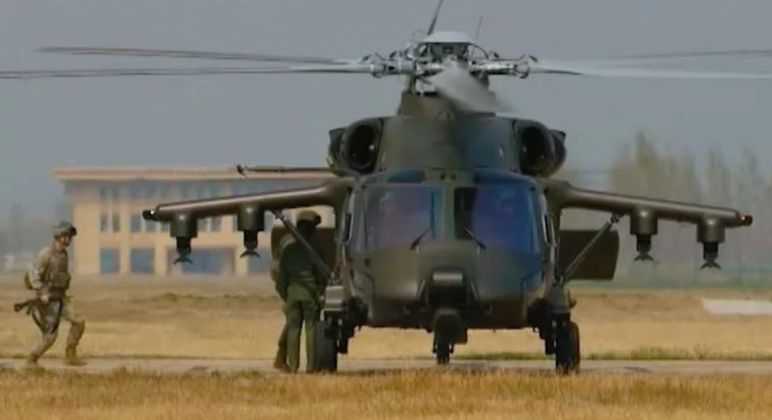
Training is reported to have focused on using the Z-20T for rapid deployment, low-altitude penetration, and fast-roping insertion techniques. Rather than a clean sheet design, the aircraft was developed as a variant of the Z-20 medium-lift utility helicopter which had first been brought into service in 2019. Although far less heavily armoured and well optimised to combat roles than dedicated attack helicopters such as the U.S. AH-64 Apache or Russian Mi-28, its versatility is significant greater. As observed by deputy chief designer at the China Helicopter Research and Development Institute Zhu Minfeng: “If the mission solely involves attack tasks, the Z-10 attack helicopter is the optimal choice… If there is a need to conduct airlift operations and troop transport in addition to attack tasks, the Z-20T, which combines transport capacity with air-to Com-ground capabilities, can be employed.”
The latest exercises involving the Z-20T reflect a comprehensive air assault training profile rather than a routine helicopter transport operation, with the emphasis on rapid response and deployment indicating that brigade rehearsed the full sequence of force generation, embarkation, and manoeuvre under compressed timelines. Such preparation is critical for seizing key terrain or reinforcing vulnerable positions, allowing forces to rapidly react to new contingencies. The integration of low-altitude penetration profiles allows helicopter units to exploit terrain masking in order to reduce radar exposure and compress adversary reaction times, complementing the protection provided by electronic warfare. The value of these capabilities was highlighted during a U.S. helicopter assault against Venezuela on January 3, which resulted in the abduction of the country’s president, Nicholas Maduro.
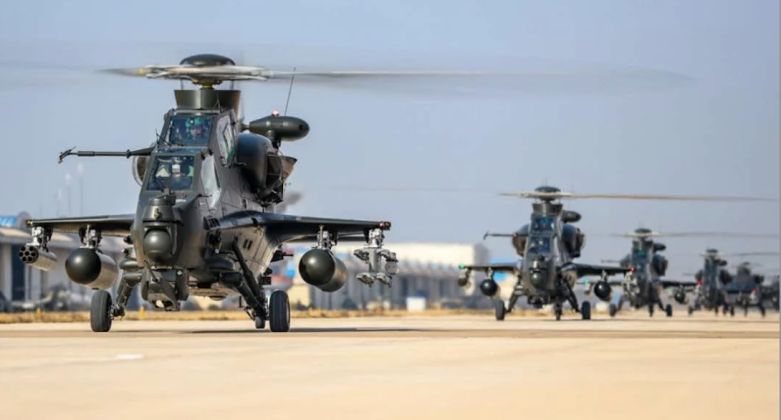
The presence of Z-10 attack helicopters during airborne assault training highlights plans to use the two complementary helicopter types for penetrate operations, with the Z-10 representing a dedicated combat asset focused an armed escort, suppression of ground threats, and provision of close air support to disembarked infantry. The Z-10 is a relatively lightweight design, and is set to be supplemented by the Z-21, a specialised heavyweight attack helicopter type which is currently at prototype stages and may be brought into service close to the end of the decade. First seen in March 2024, the Z-21 is a significantly heavier design with more armour and a much higher weapons carrying capacity. It lacks the Z-20T’s ability to function as a helicopter gunship, as not does not have a personnel transport capability.
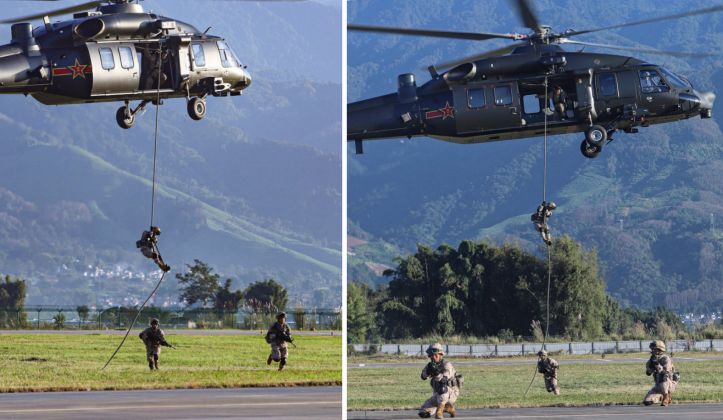
Elaborating on the advantages of the Z-20T’s design over those of other attack helicopter types, Zhu Minfeng stressed that its ability to conduct both personnel transport and direct fire missions without relying on an escort. “The Z-20T assault helicopter achieves ‘multi-functionality with one aircraft,’ meaning that it can both transport troops and independently conduct fire strikes to ensure the safety of the entire flight process,” he observed. Airborne assault capabilities have considerable implications in multiple theatres, including in the South China Sea, where helicopter carriers are increasingly widely deployed, on the Korean Peninsula where China remains treaty bound to protect North Korea against potential attacks, and in the Taiwan Strait where the Western-backed Republic of China government based in Taipei remains in a state of civil war with Beijing.
