
China’s Strategic Submarine Missile Test Sends Warning to Australia, Raises Questions Over Nuclear-Free Zone
Military Watch Magazine Editorial Staff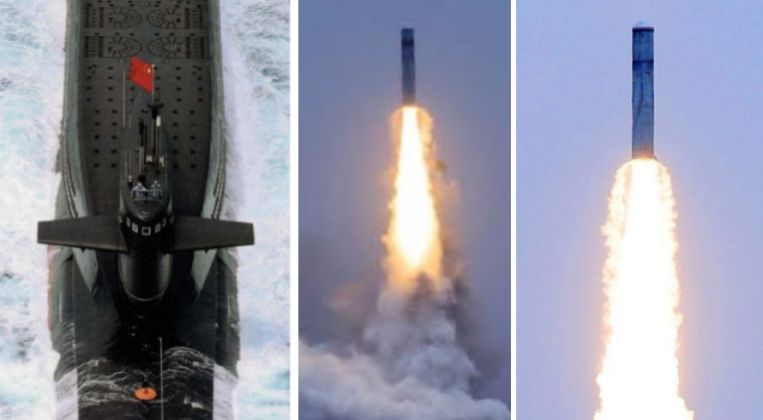
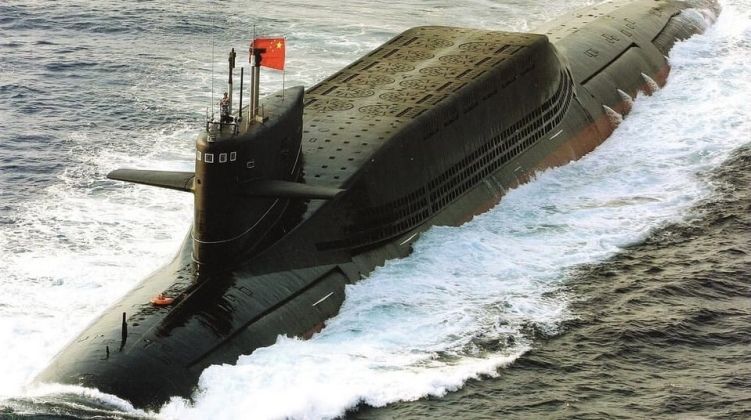
Type 094 Class Missile Submarine and JL-2 July Missile Launch
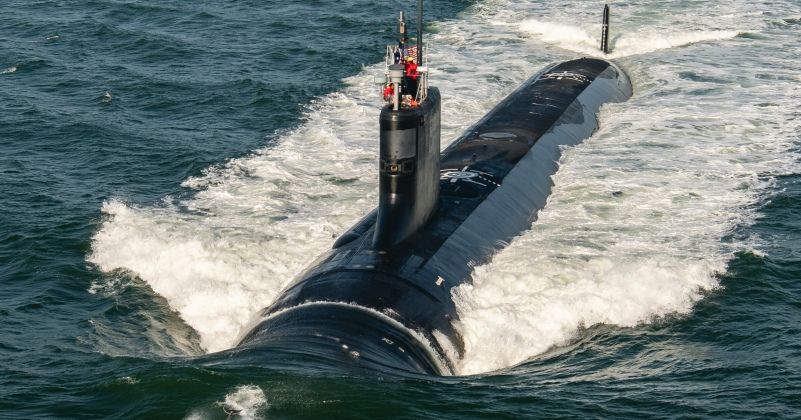
The Chinese People’s Liberation Army Navy’s launching of a JL-2 submarine-launched intercontinental range ballistic missile into the South Pacific on July 6 has raised serious questions regarding the credibility of the region’s long-standing nuclear-free status. Although the missile was reportedly unarmed and the launch did not violate the terms of the Treaty of Rarotonga, the decision to target an impact area within the South Pacific has been interpreted by analysts as carrying a broader strategic message beyond the technical validation of China’s strategic deterrent. One interpretation is that the test was intended to highlight what Beijing sees as a contradiction in the security policies of Australia and New Zealand. While both countries are parties to the South Pacific Nuclear Free Zone established under the Treaty of Rarotonga, which prohibits the stationing, manufacture, and testing of nuclear explosive devices within the zone, Australia has moved ahead with nuclear submarine procurements from the United States and hosted growing numbers of U.S. long range strategic assets on its territory.
China’s missile test may have been intended to signal that strategic realities have overtaken the political symbolism of the South Pacific’s nuclear-free status, as Beijing has consistently criticised the AUKUS agreement for facilitating the proliferation of nuclear-powered attack submarines to Australia as contributing to military competition and weakening regional non-proliferation norms. Although Australia’s future submarines will not carry nuclear weapons, at least initially, China has argued that the transfer of naval nuclear propulsion technology represents an important strategic development with implications extending well beyond Australia’s own defence posture. Analysts have widely highlighted that nuclear submarine proliferation could be a stepping stone to a nuclear sharing agreement with the United States.
The firing of a submarine-launched missile has been interpreted by a number of analysts as conveying a broader message: if Australia chooses to become more deeply integrated into U.S.-led strategic military planning and deterrence architectures, it should not expect the South Pacific to remain insulated from great-power strategic competition. In this view, the region’s status as a nuclear-free zone does not prevent it from becoming relevant to the operations, signalling, and planning of nuclear-armed states. Supporters of this interpretation argue that Australia and New Zealand cannot simultaneously deepen their participation in security arrangements aimed at balancing China’s growing military power while continuing to regard the South Pacific Nuclear-Free Zone as providing strategic separation from the rivalry between major nuclear powers. In their view, once regional states become integrated into military structures designed to deter or, if necessary, confront another nuclear-armed state, they should expect that state’s strategic planning to increasingly encompass the surrounding region.
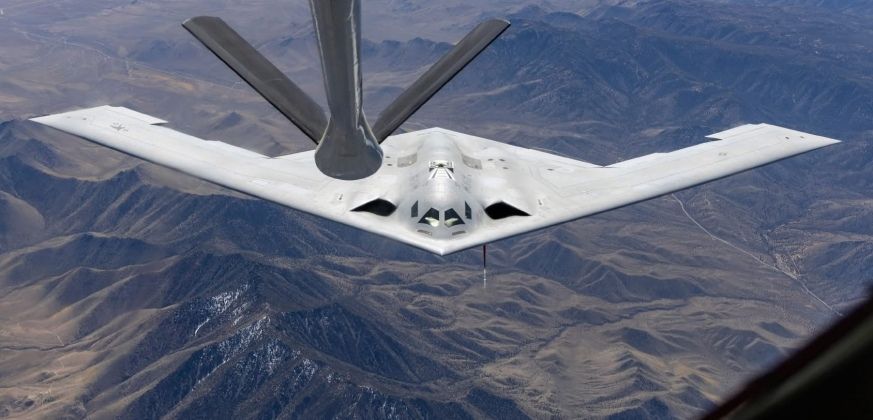
The missile test illustrates the growing tension between Cold War-era regional arms-control arrangements, and the strategic realities of intensifying competition in the Pacific. While the South Pacific Nuclear-Free Zone remains legally intact, its ability to insulate the region from the signalling and force posture of major nuclear powers may increasingly be called into question. As strategic competition between China and the United States continues to expand, political declarations of nuclear-free status alone may prove insufficient to prevent the region from becoming part of the broader strategic calculations of the world’s leading military powers. The United States’ plans to continue expanding the basing of nuclear attack submarines and nuclear-capable strategic bombers in Australia may also lead it to press for a revision of the Treaty of Rarotonga to allow it to store nuclear weapons on or transit them through Australian territory.
