
China and Russia Jointly Deploy Strategic Bombers For Operations Near U.S. Bases in Korea and Japan
Military Watch Magazine Editorial Staff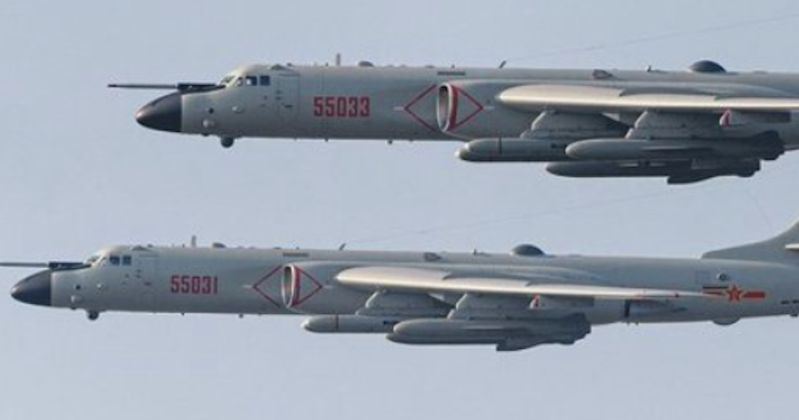
Chinese PLA Air Force H-6 Bombers
Chinese and Russian forces on June 27 launched their 11th Joint Strategic Air Patrol, continuing a series of increasingly complex long-range bomber operations that began in 2019. The formation reportedly consisted of Chinese H-6K and Russian Tu-95MS strategic bombers accompanied by fighter escorts. Chinese escorts included J-11B, J-16, Su-30MKK/MK2, and J-10B fighters, making it the most diverse escort on record, while Russian escorts included Su-30SM and Su-35 fighters. The inclusion of Chinese YY-20 aerial refuelling tankers significantly expanded the scale of the operation, with air-to-air refuelling allowing Chinese fighters to escort bombers much farther from the mainland while maintaining sufficient fuel reserves for combat operations. The YY-20 has become a key enabler of the Chinese People’s Liberation Army Air Force’s transition from a force capable of sustained long-range operations over the Pacific.
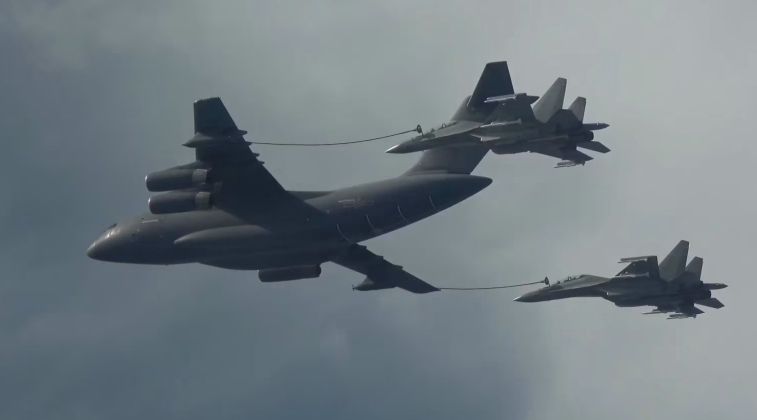
Commenting on the joint patrol, the Russian Defence Ministry reported that the aircraft involved “carried out air patrols over the waters of the Sea of Japan, the East China Sea, and the western Pacific Ocean. The combined flight lasted approximately six hours.” Joint patrols have become a regular demonstration of military cooperation between the two countries, with routes typically passing through the Sea of Japan, the East China Sea, and the western Pacific. Although the aircraft entered South Korea's Korea Air Defense Identification Zone, they remained in international airspace and did not violate South Korean sovereign airspace. South Korea nevertheless responded by scrambling fighters in accordance with standard operating procedures.
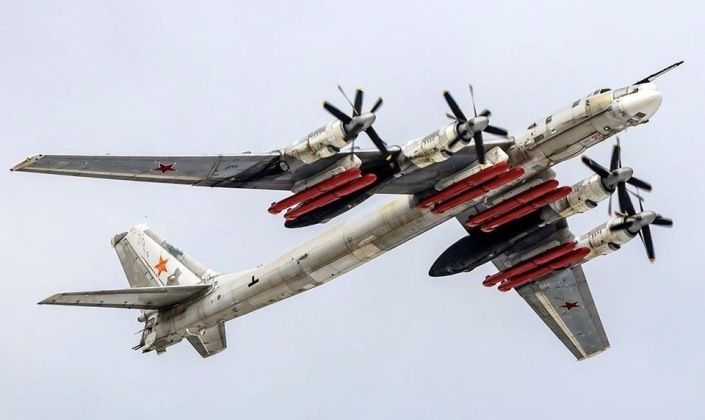
China and Russia are the only two countries with strategic bombers currently in serial production, namely the H-6 and Tu-160, although Russian efforts to expand production of its aircraft have faced significant delays resulting in an increased reliance on the older Tu-95MS fleet. While the two countries have conducted multiple joint bomber patrols since 2019, including as recently as May 2026, a major landmark in their evolution was the deployment of H-6 bombers from Russian territory, and in July 2024 the first patrol involving Chinese bombers operating off the coast of Alaska using bases in Russia. Although new variants of the H-6 are in many respects more advanced than Russian or U.S. bombers types, as much lighter and shorter ranged aircraft they are heavily reliant on aerial refuelling and carriage of very long range missiles to strike targets across intercontinental ranges such as the U.S. mainland.
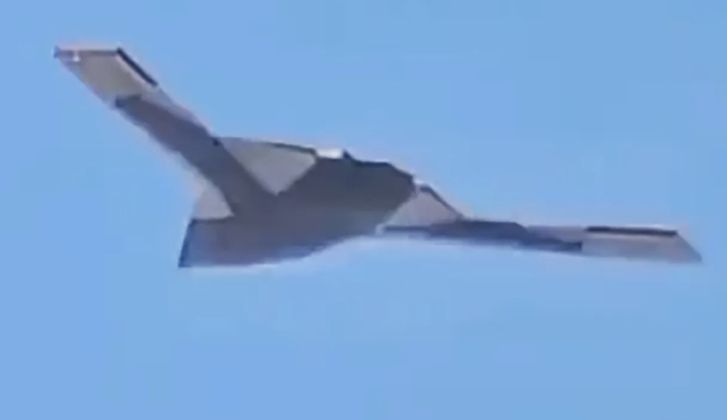
While Russia is not expected to field a next generation bomber for the foreseeable future, China’s bomber fleet is expected to transition to rely increasingly heavily on unmanned aircraft with advanced stealth capabilities. An intercontinental range unmanned stealth bomber of unknown designation was first seen in satellite images in June 2025, before making its first flight in October that year. The aircraft is larger than the U.S. B-21 strategic stealth bomber currently under development, and is expected to enter service in the early 2030s in parallel to Chinese sixth generation fighters. This will further widen the gap between Chinese strike capabilities and those of the U.S. and Russia, which are increasingly falling behind. The rapid modernisation of Chinese combat aviation capabilities is expected to continue to have positive implications for Russian security, as it continues to take pressure of Russian defences in the country’s Far Eastern regions while forcing hostile Western Bloc states to divert more forces and resources to the Pacific theatre.
