
China Deploys Space-Based AI Integrated With Satellite Sensors: A Game Changer For Next Generation Warfare
Military Watch Magazine Editorial Staff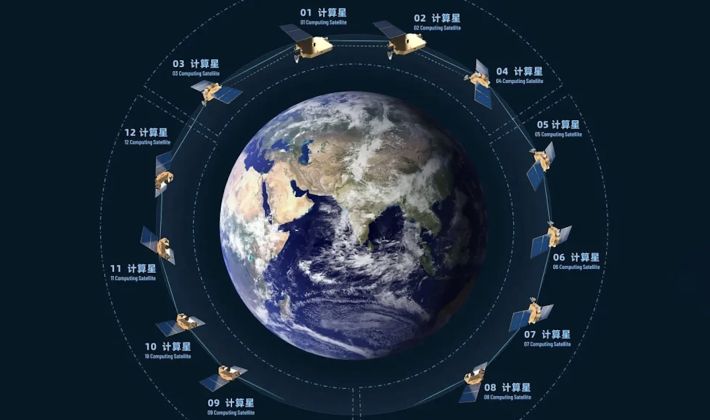
Adaspace Technology Constellation of 12 Satellites with AI-Powered Computing Systems
The Chinese firm Alibaba’s Qwen-3 on January 25 was confirmed to have become one of the world’s first general-purpose artificial intelligence models to be uploaded and operated in orbit, marking a major milestone in China’s emerging leadership in space-based computing sector. Chinese aerospace start-up Adaspace Technology deployed Qwen-3 to a space computing centre in orbit, where it executed multiple inference tasks in November. This included real inference tasks, rather than passive benchmarking or post-mission analysis, indicating that the system was integrated with onboard processors and satellite subsystems to enable near-real-time data processing without relying on constant downlinks to ground stations. Adaspace has previously promoted radiation-hardened, AI-optimised edge computing payloads as a means to process Earth-observation imagery, signals intelligence data, and satellite health diagnostics in orbit.
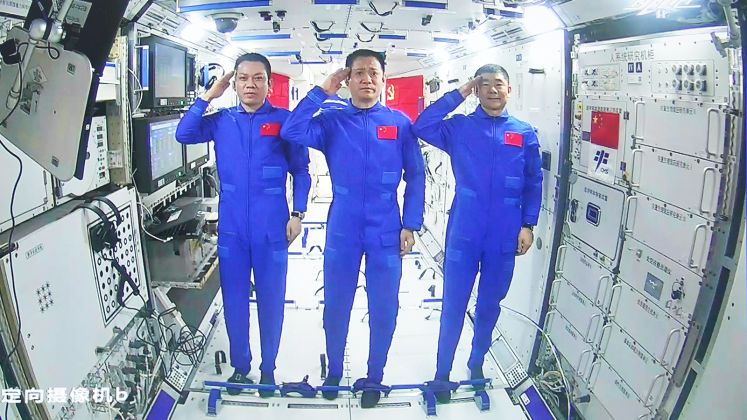
The deployment of Qwen-3 strengthens China’s position in space-based computing and autonomous satellite operations, dramatically reducing latency, bandwidth demand, and vulnerability to jamming or cyber disruption by almost totally eliminating reliance on ground infrastructure. As satellite capabilities have become increasingly central to next generation warfare, this is expected to enables faster target recognition, autonomous surveillance cueing, and resilient command-and-control support in denied environments. This is expected to allow satellite networks to play more central roles in surveillance, reconnaissance, and command and control. Beyond its military implications, the deployment positions Chinese firms to shape standards in an early-stage sector, which could underpin next-generation Earth observation, disaster response, and global connectivity services.
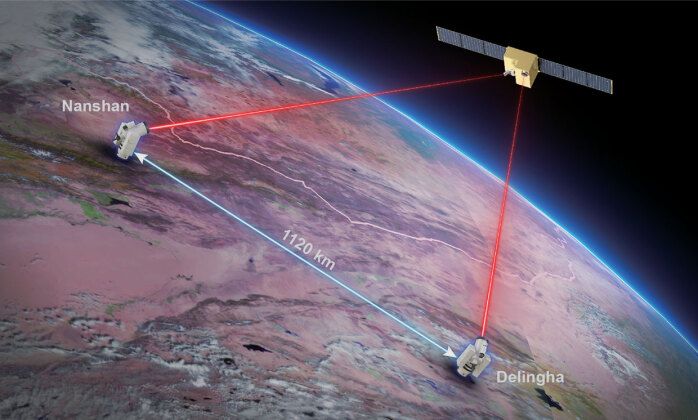
China has increasingly led the world in developing new space capabilities, including leading by close to a decade in operationalising a space-based quantum communications network, where no other countries have taken serious steps to contest its leadership. The world’s first quantum satellite Micius, which was launched in August 2016, has demonstrated satellite-to-ground quantum key distribution, creating cryptographic keys based on quantum physics rather than mathematical complexity. This provided the foundation for a growing quantum internet, while providing communications that are resilience against cyberattacks, and making command and control significantly more robust. In December 2025 China’s first reusable methane-fuelled rocket, the ZhuQue-3, was launched into orbit, under a program which is expected to significantly reduce the costs of placing payloads into space. China already deploys the world’s most advanced manned space station and the heaviest solid fuelled satellite launch rockets, with its space industry expected to secure leadership in a growing number of other fields, mirroring trends towards emerging primacy being achieved by its defences sector on land.
