
China’s Landmark Reusable Space Rocket Landing to Allow For Cost Effective Orbital Warfare Logistics Chains
Military Watch Magazine Editorial Staff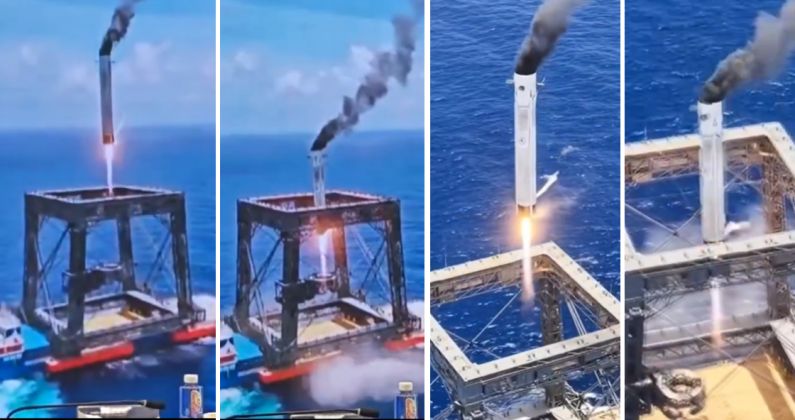
Chinese Long March 10B Rocket First Stage Recovery
China has achieved a major milestone in reusable launch technology by successfully recovering the first stage of an orbital-class rocket for the first time. The achievement was accomplished using the new Long March 10B launch vehicle, the booster from which returned to Earth after stage separation and was captured by a floating offshore platform using a net-and-hook recovery system. This provided an alternative to the landing legs used by U.S. reusable rockets. The mission successfully placed its payload into orbit, while more significantly also demonstrating China's first operational recovery of an orbital launch vehicle booster.
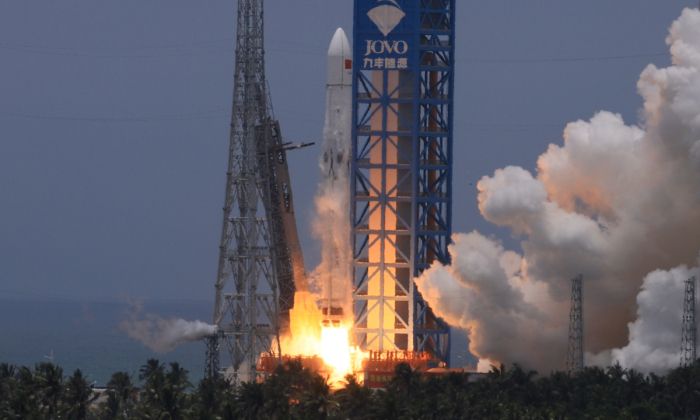
Unlike SpaceX's Falcon 9, which performs a powered vertical landing on deployable legs, the Chinese system uses four hooks mounted on the booster that engage a large net suspended above a sea platform. Engineers argue that eliminating landing legs reduces structural weight and complexity, allowing more of the rocket's mass to be devoted to payload while simplifying refurbishment. The recovered booster is expected to be inspected and reflown before the end of the year, demonstrating that reusability rather than one-time recovery is the ultimate objective.
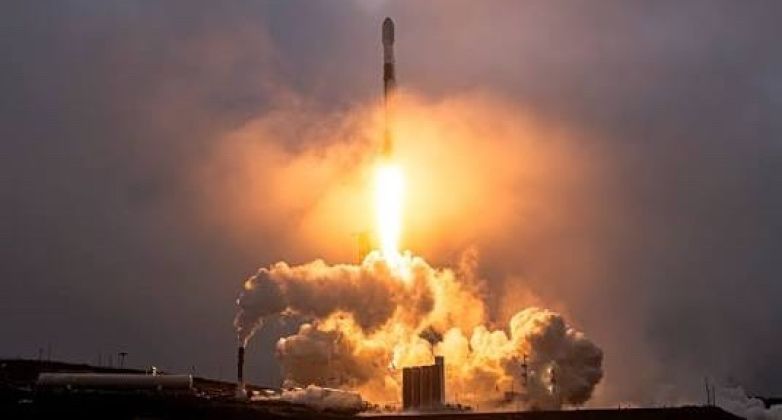
The Long March 10B represents a significant step in China's broader effort to reduce launch costs and dramatically increase launch cadence. Developed by the China Academy of Launch Vehicle Technology (CALT), the rocket is capable of placing approximately 16 tons into low Earth orbit, making it suitable for launching large communications satellites, military spacecraft and future elements of China's expanding orbital infrastructure. Reusable launch systems are viewed as essential if China is to deploy satellite constellations on a scale comparable to the United States' Starlink network while also supporting ambitious lunar exploration plans before 2030.

The launch and recovery of the Long March 10B highlights the rapid progress China has made in reusable launch technology, and raises the possibility of the country quickly overtaking the U.S. in this area. This is considered critical as space plays an increasingly central role in warfare, while reducing the costs of placing payloads into orbit remains a leading challenge for both of the world’s leading powers. China has already led the world in multiple aspects of its space program, including building the first space based quantum network, launching the world’s most powerful solid fuelled rockets, and more recently developing the most powerful electric propulsion system for satellites, which enables the development of larger and heavier satellites and provides greater orbital manoeuvrability.
