
China Building Two New Fields With 230 Nuclear ICBM Silos Able to Strike America - Reports
Military Watch Magazine Editorial Staff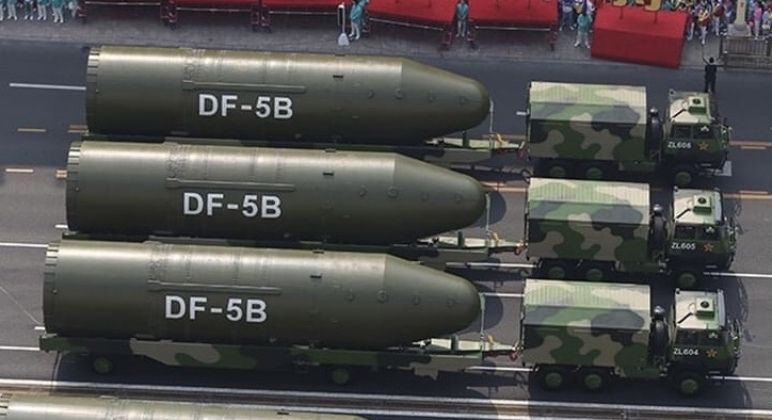
Chinese DF-5B Silo Based ICBMs
Experts from the Federation of American Scientists have claimed to identify a new field of silos for intercontinental range ballistic missiles (ICBMs) in China’s far western Xinjiang province, with the findings being published in the New York Times on July 27. This is the second recent reported finding of new ICBM fields in China, and the potential remains that more will be discovered. The first field was located in near Yumen city in Gansu province further to the south east, and appears to have been under construction since February to house 120 missile silos. The second field is expected to be slightly smaller and house 110 silos. This represents a very major expansion of the Chinese People’s Liberation Army (PLA) Rocket Force’s inventory, which previously stood at an estimated 20 silo based ICBMs. China’s nuclear arsenal has long been dwarfed by those of the United States and Russia, which are over an order of magnitude larger, and even Ukraine in its brief period as a nuclear weapons state had an arsenal several times as large as the Chinese one. As the U.S. and much of the Western world have increasingly placed China in their crosshairs, however, and escalated tensions considerably since the Obama administration began the Pivot to Asia initiative in the early 2010s, the need for a stronger Chinese strategic deterrent has appeared increasingly urgent.
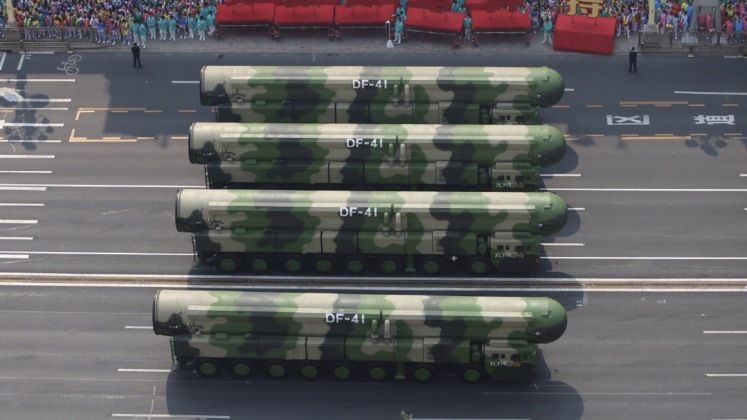
China’s ground based ICBM arsenal is notably comprised of a combination of silo based and mobile missiles. By contrast the U.S. exclusively uses silo based missiles, while North Korea and India exclusively use mobile launch vehicles. Only Russia also uses a combination of silo based and land based ICBMs. Silo based missiles are more durable due to being stored underground, but can be more vulnerable as their locations are fixed and they cannot be redeployed. China’s only current silo based ICBM is the DF-5, which was the country’s first ever ICBM, and of which an estimated 20 are deployed. These are complemented by much more recent designs for mobile ICBMs, namely the DF-31 and DF-41 of which close to 80 are thought to be in service.
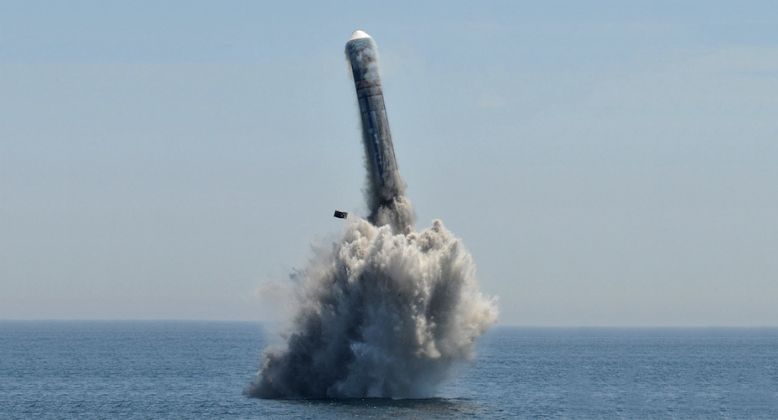
It remains uncertain whether the new silos will accommodate the DF-5, likely in a new variant, or whether they will deploy an entirely new class of silo-based missile. China is also moving to modernise its naval nuclear deterrent with the induction of the Type 094A Class ballistic missile submarine and the development of its successor the Type 096, the latter which is speculated to be the quietest submarine in the world and could be launched before 2025. Parallel development of the JL-3 submarine launched ICBM reportedly concluded in early 2021, with the missile having an estimated range of between 10,000 and 12,000km, and benefitting from many of the latest technologies which have also been integrated onto the land based DF-41.
China’s ICBM silos are considered a major target for a potential Western attack on the country, with the U.S. reportedly developing its B-21 intercontinental range stealth bomber specifically to be able neutralise them. The Pentagon has also reportedly considered the development of a long range fighter, the Penetrating Counter Air Fighter, especially to reach those areas of western China where the silos are located as escorts for the B-21. This is one of the best defended targets in the world, and is much more difficult to reach than targets on the Chinese east coast. The expansion of the silo based missile arsenal, in parallel to modernisation of accompanying defences, will make an American first strike to neutralise the Chinese missile force far more difficult. The pursuit of an early warning system against enemy ICBM attacks, similar to those of Russia and the U.S., has also signalled China's investment in becoming a top tier nuclear weapons state. China was notably the first country in the world to deploy a ground based hypersonic glide vehicle with the DF-17 missile, and its new silo based missiles may deploy similar vehicles to allow them to better evade defences which guard the U.S. mainland.
