
China Increases Production of JF-17 Fighters: Production Lines for Block 2 Variant May Soon Close
Military Watch Magazine Editorial Staff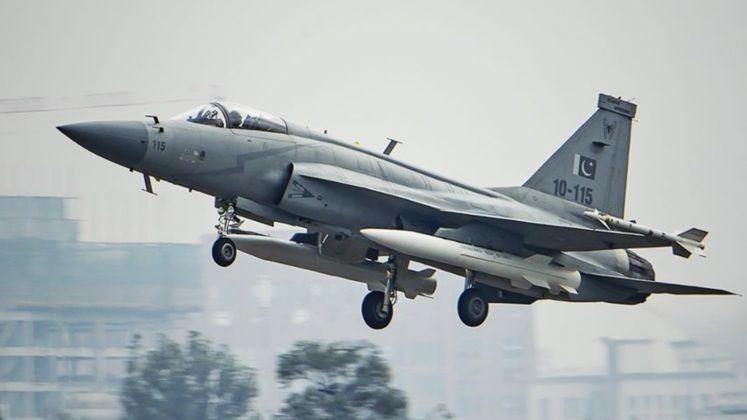
JF-17 Lightweight Fighter
The Aviation Industry Corporation of China (AVIC) has reported a significant increase in production of JF-17 lightweight fourth generation fighter jets in the first half of 2020. The fighter was developed jointly by China and Pakistan as a lighter and less costly counterpart to the J-10, a more capable class of single engine jet, with the JF-17 prized for its very low operational costs and maintenance requirements allowing it to be fielded in very large numbers. Although differing in appearance, the design has been widely compared to the Swedish Gripen, which comes from the same weight range, prioritises similar capabilities and has a similar relationship to the American F-16 as the JF-17 has to the J-10. The JF-17 notably does not serve in the Chinese People’s Liberation Army (PLA) Air Force - although this may change in future as more capable variants enter service - but it has been successfully marketed for export to Pakistan, Myanmar and Nigeria with production lines being set up in Pakistan was well as in China itself.
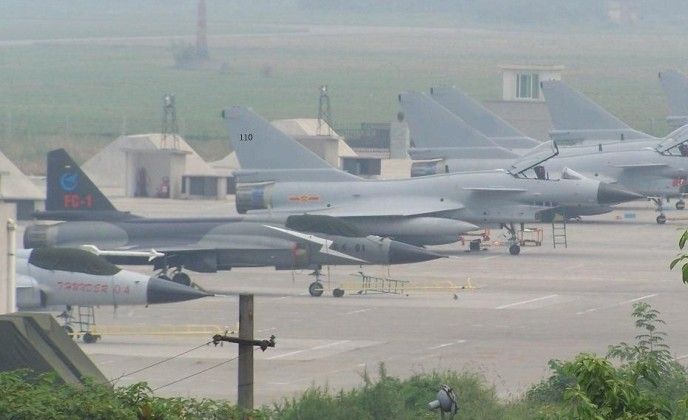
As of June 30th, which marked half way through the year, the average production period for a single aircraft on the production line in China shortened to one every 15 days, although the cause for the increase in production rate remains uncertain. This notably follows a previous increase in production in 2019. It is possible that China is expectingg a major export order for the fighters, or has received one already, with leading potential clients including Iran and Egypt. The Iranian Air Force is notably in urgent need of an upgrade for its air to air capabilities, with just two of it’s 17 fighters squadrons equipped with active radar guided long range air to air missiles and even these having already served for over 40 years. The JF-17 could provide a very cost effective means of enhancing the fleet, although as Iran will be under a UN arms embargo until October 2020 it is possible that China is preparing to transfer a large number of fighters once this expires.
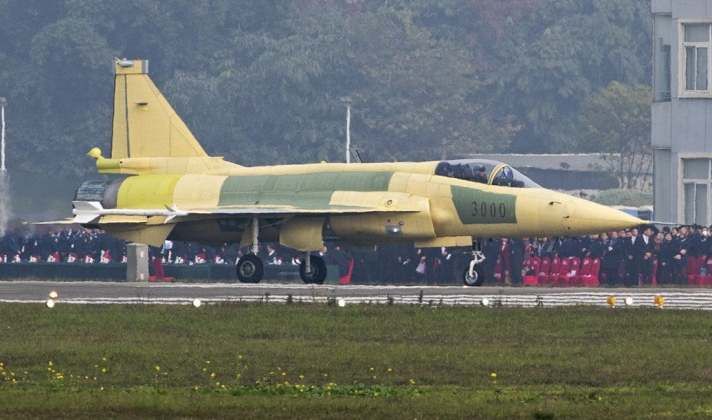
JF-17 fighters currently in production are of the JF-17 Block II variant - including both single and twin seat variants. China and Pakistan are notably expected to cease production of the JF-17 Block II in the near future, with the much more capable JF-17 Block III fighter with ‘4+ generation’ capabilities having made its first public flight in December 2019. The new variant incorporates a wide range of new features including a more powerful engine, a radar cross section reducing profile, new helmet mounted and cockpit displays and new electronic warfare systems. Most notable, however, are its integration of an AESA radar, providing vastly improved situational awareness and making its sensors more difficult to jam, and its PL-15 long range air to air missiles. The PL-15 is widely considered the most capable air to air missile in the world deployed by fighter-sized jets, and has an estimated range of 250-300km, high manoeuvrability and an AESA radar for guidance. It is possible that JF-17 Block II fighters currently being produced could be intended for storage until a client emerges, allowing China to retain a surplus for export before initiating production of the more costly Block III variant sometime in the near future.
