
China’s FC-31 Carrier Based Fighter Begins Trials on Deck
Military Watch Magazine Editorial Staff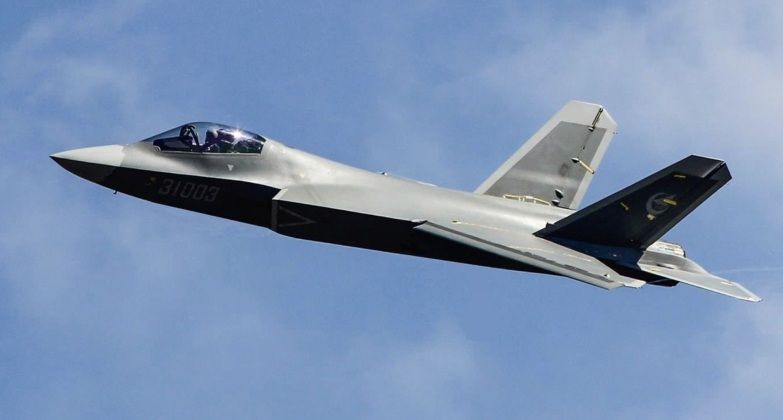
FC-31 Fifth Generation Fighter Prototype
The carrier based variant of the Chinese FC-31 fifth generation fighter, the service designation of which remains unknown, has begun its first shipboard trials onboard the aircraft carrier Liaoning. The Liaoning is one of three carriers in the country capable of accommodating fixed wing aircraft, and is one of the world’s largest carriers outside the United States with a displacement of close to 65,000 tons. The FC-31 was notably previously expected to be deployed exclusively from the supercarrier Fujian, which uses an electromagnetic catapult launch system, and from future supercarriers with the same systems. The Liaoning and China’s second carrier the Shandong both require fighters to take off with their own engine power alone using a ski jump ramp system - something the FC-31 was previously not thought to have been designed for. The Liaoning and Shandong previously deployed J-15 fourth generation fighters as their only fixed wing combat aircraft, with the fifth FC-31 alongside the enhanced ‘4+ generation’ J-15B and the electronic warfare specialised J-15D expected to provide a much more formidable air wing.
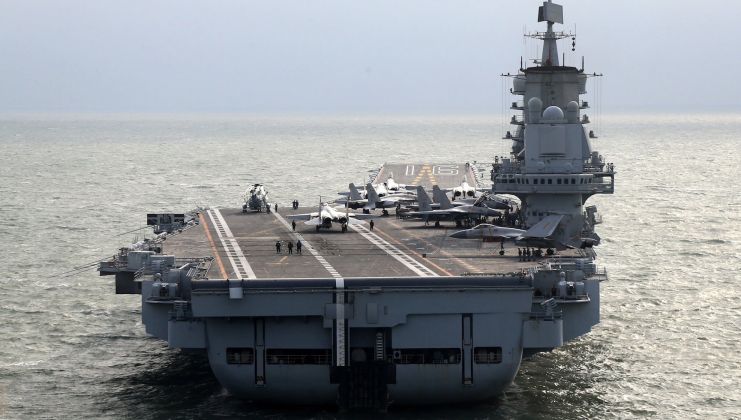
Senior noncommissioned officer on the Liaoning Zhang Naigang revealed the FC-31’s deployment for carrier operations on September 11, stating: “The new combat aircraft landed on the carrier as my service career has approached its end.” The officer described the aircraft as “very beautiful,” adding that the weather was clear during its first takeoff and landing trials. Nevertheless, it was not fully certain at the time that the FC-31 was the fighter he had referred to. The FC-31 has been developed into two known variants, including a carrier based variant, as well as a ground based variant that is being marketed for export. The fighter is China’s second fifth generation fighter to have been developed, and follows on from the much larger J-20 air superiority fighter which entered service in 2017. It is expected to benefit from a range of technologies seen on the J-20, including cutting edge stealth features and use of engines with single-crystal turbine blades for an improved lifespan and performance. The latter is thought to be an important contributor to the fighter’s impressive flight performance. The FC-31 is notably not expected to joint the People’s Liberation Army (PLA) Air Force, which will continue to focus investments on the J-20, but is favoured by the Navy as its smaller size can be more easily accommodated on carrier decks.
