
China’s 71st Group Army Deploys Type 96 Tanks For Ground War Training: Are They Ready For Replacement?
Military Watch Magazine Editorial Staff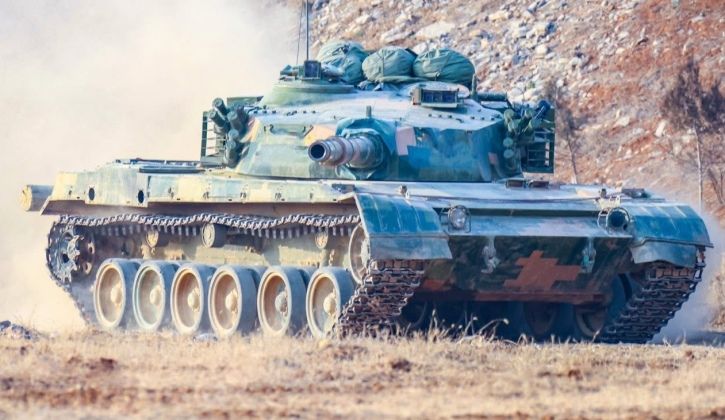
Chinese PLA Ground Forces 71st Group Army Type 96 Tank During January Exercises
The Chinese People’s Liberation Army Ground Forces 71st Group Army have deployed Type 96 main battle tanks for driving training exercises in the country’s eastern regions, drawing attention to the capabilities of the vehicles which form the backbone of the country’s fleet fleet. Subordinated to the Eastern Theatre Command, the 71st Group Army is comprised of six combined-arms manoeuvre brigades, four of which are equipped with heavy armour. Each brigade leads four combined-arms battalions. The 2nd, 35th and 178th Combined Arms Brigades all field Type 96 tanks, with the vehicles estimated to have begun to be brought into service from around 1997. The design benefitted from significant technology transfers that decade from post-Soviet states’ defence sectors, with over 2000 having been built. The tank have been widely modernised to the Type 96A standard with additional modular armour and improved fire controls, including modern thermal imaging systems.
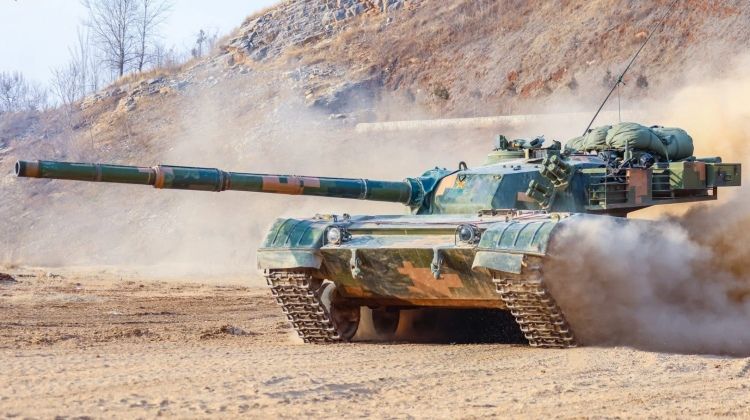
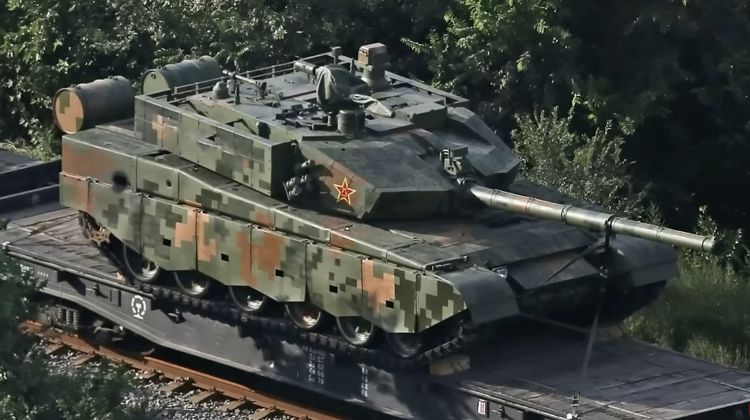
The Chinese Ground Forces have brought multiple more modern tank types into service since the Type 96’s service entry, with production of the older tank design reported to have contracted in the mid-2000s, and to have ended near the end of the decade. Nevertheless, the newer Type 99 main battle tank has not been produced or brought into service in comparable numbers, and while having had an unprecedentedly formidable standing for a Chinese tank design, its higher procurement and operational costs limited the numbers that were brought into service. A primary factor in this has been the limited perceived need for large numbers of cutting edge main battle tanks, as China faces primary threats from the air and sea. With the Type 99 fleet having recently been brought up to the Type 99B standard, it has been widely speculated that a portion of the Type 96 fleet could also benefit from a new round of upgrades.
While the Type 99 was long speculated to have a world leading standing among main battle tanks, China’s defence sector has recently gained a much more decisive global lead with the confirmed service entry of the Type 100 design in September 2025. The new tank integrates optical, infrared, and radar sensors with networked communications, which connect it to aviation, artillery, and electronic warfare assets, and places a particularly high emphasis on data connectivity, active protection, and multi-domain coordination. It was designed to serve as a node within an integrated combat structure, rather than acting as an isolated platform, and allows crews’ ability perceive and engage the battlefield from all directions and over much longer distances. The Type 100 tank’s light weight and greater emphasis on active protection systems rather than heavy armour, and its unique layout which provides outstandingly high crew protection levels, are considered optimal for the era of drone warfare.
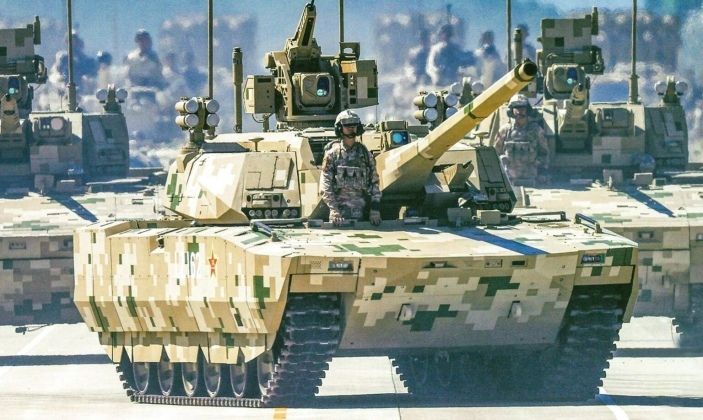
While Type 96A tank brigades operating under Eastern Theatre Command have previously repeatedly been deployed for exercises simulating operations on Taiwan Island, where Beijing remains in a state of civil war with the Republic of China government based in Taipei, it is likely that these older vehicles will be replaced by Type 100 tanks in such sensitive frontline roles. The Type 100’s reduced weight and size have made it appear likely that its operational costs may be more competitive than those of the Type 99, while its weight could allow the vehicles to be transported to Taiwan to take part in operations in ways that would be more difficult for the Type 99. The tanks are expected to have overwhelming superiority over the M1A2, M60 and M48 tanks of the Republic of China Army. Type 96 tanks are expected to be reallocated to reequip lower priority units that currently deploy obsolete Type 59 tanks.
