
China Reveals First Footage of New Type 99B Tank in Live Fire Exercises: How Capable Is It?
Military Watch Magazine Editorial Staff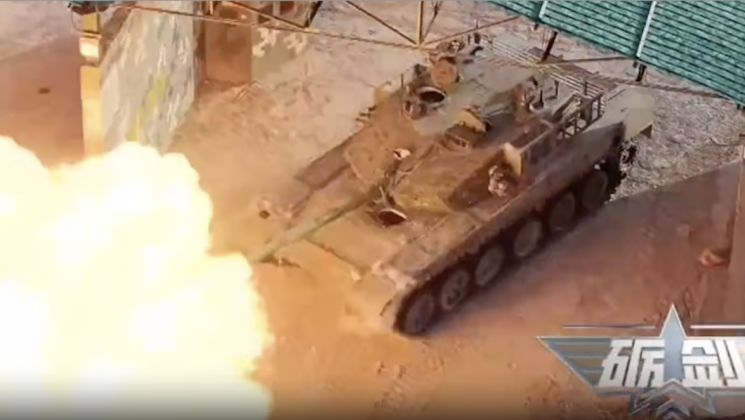
Chinese Type 99B Tank During Live Fire Drills
Chinese state broadcaster CCTV has for the first time aired footage of the People’s Liberation Army’s new Type 99B main battle tank participating in live fire drills. The new type of main battle tank was first unveiled at a military parade on September 3, 2025, during which tanks from the 112th Combined Arms Brigade of the 82nd Group Army led the ground vehicle column through Tiananmen Square in central Beijing. The tank’s design appears to respond to several emerging trends in armoured warfare that have become increasingly clear in the Russian-Ukrainain War, with improvements over the preceding Type 99A focused on improving situational awareness and active protection. The tank integrates two GL-6 active protection system launchers and four radars, and has far superior network centric warfare capabilities due to its upgraded information technology and data sharing subsystems.
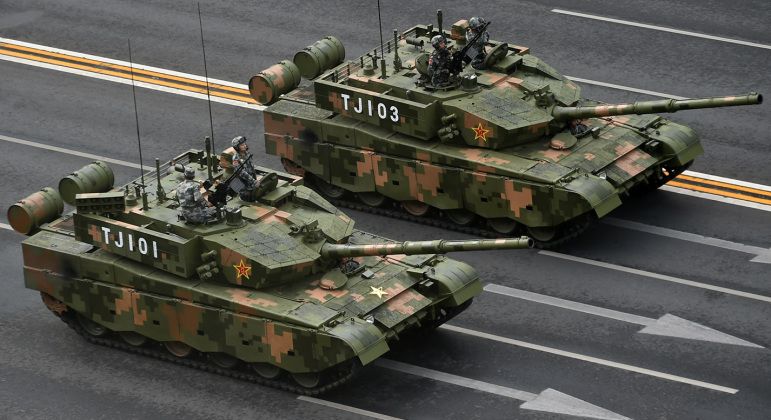
The Type 99B’s situational awareness is reportedly further improved by the integration of a 360-degree vision system for the crew. Its more modern fire controls include a new generation of thermal imaging systems, which unconfirmed reports indicate may have set a new standard as the world’s first fourth generation system. A new photoelectric and sensor systems further improves battlefield awareness. The tank reportedly also benefits from improved explosive reactive armour modules, although further details remain limited. The Type 99 was developed as part of a high-low combination with the lighter and much less costly Type 96, which was procured in greater numbers to re-equip units across the country.
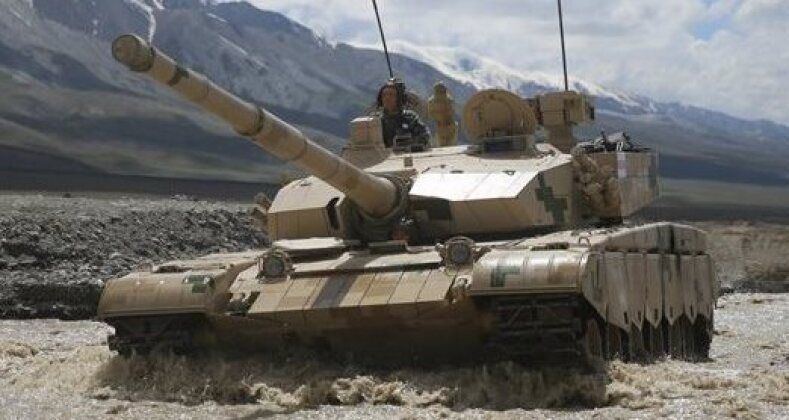
Chinese state media reports have specifically highlighted the Type 99B’s high optimisation for high altitude and cold weather operations, with its design intended to facilitate rapid and sustained combat operations in mountain regions such as the Himalayas. The preceding Type 99A was notably deployed during Sino-Indian border disputes, and was considered to have provided a significant performance advantage over the Russian T-90MS that forms the backbone of the Indian fleet. It remains uncertain how long the Type 99 will remain in production, and whether the majority of planned Type 99B tanks will be procured from production lines, or acquired through upgrades of older Type 99 tanks to the new standard. China currently serially produces six tank types in parallel, of which the Type 99 is by far the heaviest and best protected, with the tank having been succeeded by the newer Type 100, which was also unveiled in September.
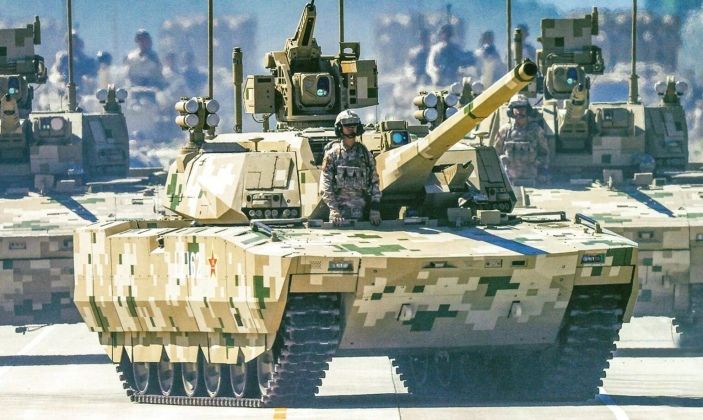
Following the demonstrated high vulnerability of both Western and Russian tanks in the Russian-Ukrainian War, growing questions have been raised among Western analysts regarding the viability of traditional tank designs, including new tank types built around traditional concepts such as the British Challenger 3 and German Panther. The Chinese Type 100 program deeply revised traditional tank design priorities, and is much lighter, more mobile and less well armoured, while using a less powerful 105mm gun compared to the 125mm gun on the Type 96 and Type 99. It instead places a higher emphasis on active protection systems to defend against both missile and drone attacks, and particularly focuses on data connectivity and multi-domain coordination to operate at safer distances and and work closely alongside unmanned aircraft for reconnaissance and targeting. The Type 99B is thought to have adapted the Type 99 design in a similar direction, albeit on a much heavier more traditional chassis that relies on thick armour protection and a powerful main gun. The entry of the Type 100 into serial production has raised the possibility that production of the Type 99 may soon come to an end.
