
Can Russia’s New ‘Predator’ High Altitude Recon Plane Match Its Soviet Predecessor the MiG-25R Foxbat?
Military Watch Magazine Editorial Staff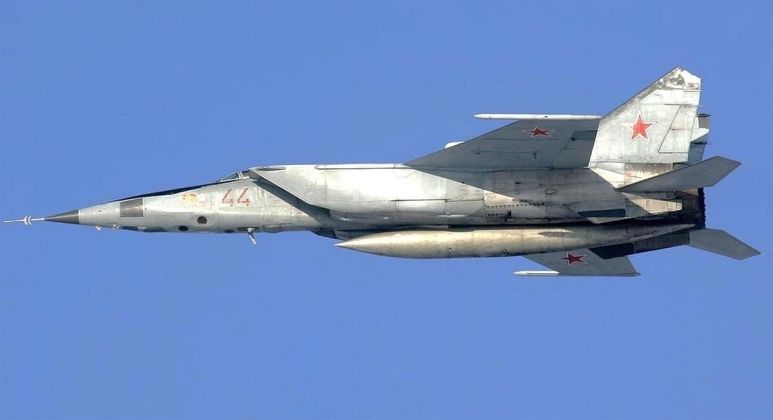
MiG-25RB Reconnaissance Aircraft
CEO of the Russian unmanned aircraft developer Geron, Vladimir Tabunov, has announced the development of the 'Predator' stratospheric unmanned multifunctional platform, which was designed for long range high-altitude missions to partially replace certain functions of satellite and ground-based systems. Designed to fly at low subsonic speeds of Mach 0.46, the aircraft will have a 12,000 kilometre range, 15,000 metre operational altitude, and payload of up to 500 kilograms. It will integrates artificial intelligence and a 3D scanning mode, and according to Tabunov will be able to accomplish near-space exploration."The development of the ‘Predator’ incorporates solutions that, in our opinion, will be able to yield considerable technological results for scientific and technical progress and completing tasks related to the exploration of near space," he said. This indicates that its sensors may be able to provide targeting data for anti-satellite warfare roles.
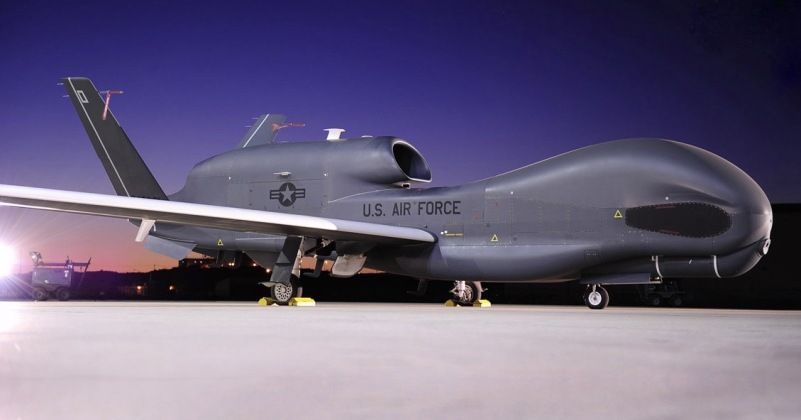
Comparing the new unmanned aircraft to Russia’s most iconic strategic reconnaissance aircraft, the MiG-25R, which served until 2013, highlights a significant difference in design philosophy. Although marketed as a high altitude aircraft, the new Predator’s operational altitude of just 15,000 metres is far from outstanding, with all modern fighter aircraft capable of operating at altitudes of at least 16,000 metres, while many such as the Soviet Su-27 can comfortably operate at altitudes of well over 20,000 metres. The MiG-25, by contrast, holds the world altitude record at 37,650 metres, and usually operates at close to 22,000 metres for strategic reconnaissance. The two aircraft are also at opposite ends of the spectrum in terms of speed, with the MiG-25 having a cruising speed of Mach 2.4, while being able to reach Mach 3.2 speeds.
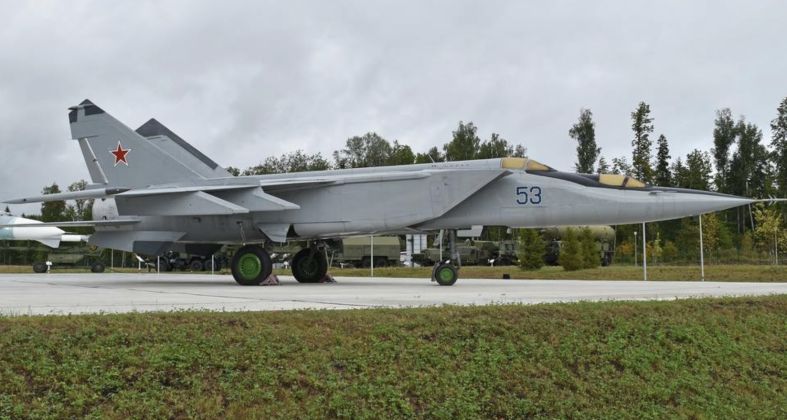
The Predator and MiG-25 were designed over 60 years apart, and although both were intended for high altitude reconnaissance, they have vastly different design philosophies. The Predator is likely to have far lower sustainment costs, and to rely far more heavily on its advanced avionics to conduct reconnaissance without overflying its targets. The MIG-25, by contrast, was designed to be able to operate in very heavily defended airspace, as it repeatedly proved capable of doing, with conducting photo and electronic reconnaissance. The retirement of the MiG-25 from service in 2013 was largely a result of cuts to available funds for much needed modernisation of the aircraft’s avionics, with the Russian Aerospace Forces having struggled to replace the fleet over the following decade.
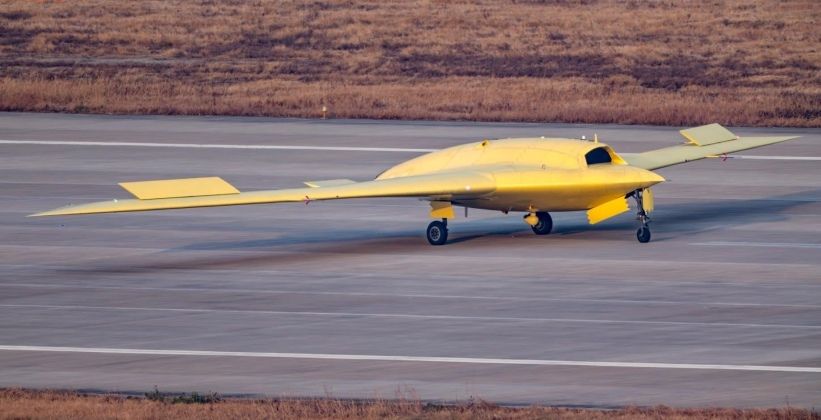
The Russian Aerospace Forces significantly modernised their reconnaissance capabilities with the procurement of Israeli drones, most notably the Forpost, and their production domestically under license, allowing it to create an effective reconnaissance-strike complex. The service has nevertheless continued to struggle with major limitations on its reconnaissance capabilities particularly when compared to China and the United States, which lead the world in developing unmanned aircraft for such roles. There remains a significant possibility that China will play a major role in providing support to the Russian Predator program, including components, expertise and technology transfers, particularly as the two countries retain a significant shared interest in safeguarding the Russian Arctic at a time of escalating Western military activities in the region. The Predator’s outstandingly long range makes it likely that it will be relied on particularly heavily for Arctic operations.
